

BIRMINGHAM, Ala.—It’s Thanksgiving 2020, and for many within the credit union community, vendors and CU leaders alike, the biggest thanks many are expressing is that a tough year is just about over.
So CUToday.info asked: What are you thankful for, and what from 2020 would you most like to give the bird?

From ineffective or non-existent pandemic plans to having to turn in-person operations on a dime to remote work, many within credit unions say that despite the problems, they have learned a great deal from the fight. But that doesn’t also mean they won’t be happy to see many challenges eventually going away.
“I know all credit unions and our clients are about ready to put the COVID turkey behind them once and for all,” said former NCUA Chairman Dennis Dollar. “While it is quite evident there are still months to go before we can truly say we are operating in a post-COVID environment, it is unanimous that credit unions are ready to move forward with strategic planning with a solid set of numbers to build upon.”
The principal partner at Dollar Associates said credit unions have been skilled at managing the uncertainty.
“And they have absolutely put their members first—at significant costs and diminished earnings,” said Dollar. “But everyone is ready to start thinking more strategically and putting some workable plans together for the next several years. The impact of COVID will last much longer than the disease itself. However, credit unions are looking forward to actually planning post-COVID.”
Good Riddance
In Lakewood, Colo., Aux President and CEO Doug Burke hopes to say “good riddance” to stale credit union business models and outdated ways of managing.

Doug Burke
“If there is anything 2020 has taught us it’s that everything can change in an instant,” Burke said. “The need for collaboration, backup and depth, and mitigation of key person risk in back office departments is more apparent than ever. And we are seeing once-hesitant credit unions turn the corner and realize how important—and beneficial—sharing services is. Goodbye inefficient, costly, and risky practices, and hello to a new era of teamwork and trust for stronger credit unions.”
‘And On and On and On…’
COVID-19 caught many credit unions off guard and without a true pandemic plan, which was certainly the case at the $848-million Point Breeze CU in Hunt Valley, Md., explained CEO Bernie McLaughlin.
“Having to close our lobbies to our members for several months earlier in the year was a very difficult situation which we hope we never have to experience again,” said McLaughlin. “Because of COVID state restrictions, and for the safety of our employees and members, we were abruptly faced with closing our branches and dealing with several difficult questions, for which there was no playbook.”
McLaughlin said the questions were wide-ranging, from when does the CU close lobbies, how does it protect employees who still have to come to work, and how to best communicate changes that were happening quickly.
“What about staffing schedules? What do we do with the employees who won’t be needed in the branch because of a drive-up only scenario? Are our drive-ups at each branch capable of handling the increased volumes they would see? What about traffic flows and potential gridlocks in our drive-up lane areas?” said McLaughlin, adding those were just a few of the questions his team and others had to answer.
The CEO emphasized Point Breeze was able to withstand the challenge of having its lobbies shut down for nearly three months.
“We learned some valuable lessons when we had to close our lobbies and we are much stronger for it,” said McLaughlin, who added the closings also created challenges for the reopening period.
“When should we reopen and under what conditions? How should we prepare—plexiglass partitions, queuing spots on the floor, masks and other COVID aids for employees and members? How do we deal with an ever-changing state-imposed limit on how many individuals can be in the building at one time? And on, and on and on…,” he said.
McLaughlin said the safety of employees and members drove all decisions.
“Now, as we look at possibly having to close our lobbies again with the Thanksgiving resurgence of cases in Maryland and across our nation, we are much better prepared to handle it,” he said. “Having gone through this experience and updated our disaster recovery plan with real-life experience, we don’t believe we will face this again without a playbook.”
Goodbye and Hello
In Tampa, Fla., Trellance is reporting it tackled the unprecedented demands of 2020 by “saying goodbye” to many of its prior business practices and “embracing new solutions.”

Bill Lehman
“First and foremost, we focused on our staff's safety and learned to quickly and efficiently to pivot to a remote work environment that allowed us to find new ways to stay connected,” said Bill Lehman, SVP of managed services. “The result is we continue to serve our clients and continue collaborating without missing a beat. We said goodbye to the physical and hello to the digital, as we immediately converted all contracts, addendums and administrative paperwork to 100% electronic records.”
Since fewer members were entering the branches as the pandemic spread, Trellance accelerated its digital marketing efforts to help credit unions convert and retain members remotely.
“The result is that credit unions could collaborate, approve creative, determine rates and disclosures remotely, and target members with offers,” Lehman said. “These members could sign up and receive a new card without having to leave the safety of their own homes.”
Lehman added Trellance also found new ways to give back to its communities and members.
“We strongly promoted skip-a-payment promotions to help members who might have been affected by the economic downturn. We also highlighted our usage program that gave back to charities, like Teach for America and the Breast Cancer Research Foundation,” Lehman explained. “Every time our credit unions' members used their cards, we matched their payments to donate over $40,000 across multiple charities. And as we head into 2021, the next charity we will be supporting is the Organization for Autism Research.”
The Pivot
Mark Hein, CEO of San-Antonio-based SWBC's Financial Institution Group, hopes credit unions never have to pivot as quickly as they did in 2020 to a remote workforce.
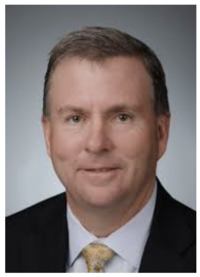
Mark Hein
“A lot of our clients really were not prepared to have everybody work from home in an instant,” said Hein. “One client came to us and asked if they could borrow 20 of our employees to be their customer service reps, and I was so happy when we put a plan together to make that happen. Our customer was able to get their calls answered.”
SWBC, as well, understood the challenges of shifting to a remote workforce, which the company was able to do quickly in March. As CUToday.info reported, SWBC rapidly expanded its own workforce to accommodate credit union demand for greater outsourcing of call center activity.
“We have hired employees in an environment in which people are losing their jobs. That makes me feel good,” Hein said.
‘Numerous Shifts’
In St. Petersburg, Fla., PSCU pointed out just about every piece of the economy has been touched by the health crisis.
“From ways in which members interact with their credit unions to how they choose to pay at the point of sale or online, there have been numerous shifts impacting credit union operations and member expectations,” said Glynn Frechette, SVP, Advisors Plus at PSCU.

Glynn Frechette
He noted many credit unions have had no choice but to make strategic decisions during extremely challenging times.
“While the effects of the pandemic thus far have been unprecedented, the future—such as when this pandemic will subside and what life might look like in the new normal, among other uncertainties—is also somewhat unpredictable,” he said.
In order to help its owner credit unions navigate the challenging times and prepare for whatever the future may hold, Frechette said PSCU began sharing real-time transaction insights on a weekly basis beginning in mid-March, which CUToday.info has regularly reported.
“These reports—which we plan to continue for the foreseeable future—are intended to not only help our credit unions understand the current economic and social environment, but to also help them prepare for potential impacts on their members, credit union operations and more,” he said. “It has been extremely important to get this information in front of our owners to help them make educated decisions that best position their members for financial success.”
Frechette said based on data in weekly transaction trends reports, the CUSO saw early on members began shifting the way in which they make purchases as stay-at-home orders were implemented.
“We worked with our owner credit unions to make sure they had access to the offerings and solutions to which members were gravitating, and that they were educating members about the benefits of using them. For example, contactless tap-and-go transactions via dual interface cards have gained significant traction, with debit showing notable strength. Debit contactless transactions as a percent of card-present activity on contactless debit cards have nearly doubled from around 8.4% in mid-January to 16.6% in mid-November, while contactless credit transactions have also grown from 6.5% in mid-January to 11.3% in mid-November,” he said.

Greg Hagan
Frechette added the data made it clear credit unions need to offer contactless options and make sure members know how to use them.
The Move to Video
At CURevl, Richardson, Texas, one of the biggest challenges this year has been learning to reach its target market digitally, and serving current clients in the “new normal” effectively, said Greg Hagan, SVP of sales.
“As a CUSO it is important to our company to serve our credit unions with a personal yet professional touch. Although most of the team has always worked remotely, transitioning to video calls from in-person meetings has been difficult. This is especially challenging when building new relationships. We know this has been a challenge for our CU partners as well,” said Hagan, who added he is thankful as Thanksgiving arrives that no one in his organization has had to personally battle COVID-19 .
Getting Beyond Zoom
In Washington State, Jamie Strayer is hopeful above all else that everyone can leave behind the terrible grief brought on by COVID-19 during 2020.

Jamie Strayer
“Most of the country, including myself, wants to leave behind the mourning,” said the founder of Tacoma-based CU Strategic Planning. “Devastatingly, one of our team lost a young parent to COVID. Our entire organization is present and supportive of our team member throughout the ongoing grieving.”
Strayer said she is proud of the work her company is doing to help credit unions unlock opportunities to change their communities in inspiring ways, helping them achieve Community Development Financial Institution certification and to receive grants to help the underserved.
“The truth is vulnerable families need their credit unions more than ever before,” Strayer said. “I'm looking forward to 2021 when we can move beyond Zoom and back into credit union boardrooms, conference rooms, and community centers.”