

WASHINGTON–Credit union leaders were given some keen insights into leadership, how to build and execute on strategies and even who to promote by a decorated military commander and the former national security advisor to the president.
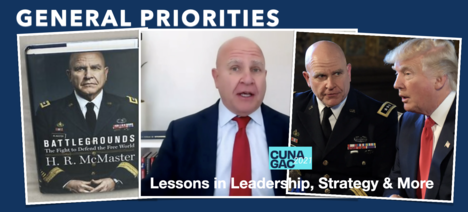
Lt. Gen. (Ret) H.R. McMaster, well-known for his long career in the military, including his roles in the Gulf War, Operation Enduring Freedom and Operation Iraqi Freedom, served as National Security Advisor to President Trump from 2017-18 and was the opening keynote speaker to CUNA’s virtual GAC.
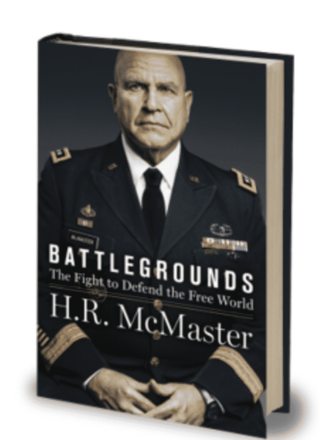
McMaster, who earned a Ph.D. in American history from the University of North Carolina and who has written or co-authored numerous books, including Battlegrounds and Dereliction of Duty, participated in a Q&A with Tony Hernandez, president of the Defense Credit Union Council.
Here’s a look at that discussion:
Hernandez: What can credit unions do now and what is your message for those in the people helping people business?
McMaster: We are emerging from a pandemic and this vitriolic divisive political season that culminated in an attack on our capitol. I think credit unions are in a great place for the kinds of respectful, meaningful discussions we need to have as Americans for how we can build a better future for generations to come. I think this is a group that can make a difference.
Hernandez: I am impressed by your career as a commander. We have many Crashers in the audience who are moving into higher leadership positions--what can you tell them about leadership under stress?
McMaster: In any organization, you want to build confidence. In combat it’s particularly important because confidence is a bulwark against fear. So, how do you build confidence? I think these are lessons that apply across business and the military.
The first thing is you need a complete understanding of your organization. What do you stand for? Then the question to ask is how do you prepare your organization for the worst-case scenario? You do that through training. (In Iraq battle) we encountered an enemy that was about five times larger than us, so the organization needed to know how to fight together as a team. The confidence of our team was bolstered by the confidence in our organization.
In a big organization centralized control is not possible. You need leaders who can take initiative. In combat, a military organization takes on the characteristics of a family. What you don’t want to do is let each other down. I think that’s what gave us the lopsided victory. It was confidence that came from leaders and from the culture to take initiative and not wait for orders, and then finally from the confidence in one another.
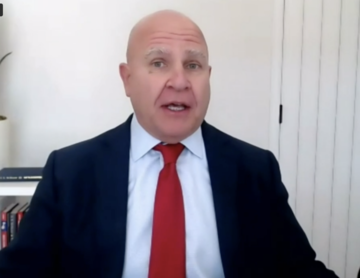
Lt. Gen (Ret.) H.R. McMaster during CUNA keynote.
Hernandez: You have led some very large organizations culminating as our national security advisor. What is your advice on executing a strategy, including one that may have been inherited?
Hernandez: First of all, assess the organization and how happy people are within it. There are many ways to do it. What I used to do was hand out five-by-eight cards and ask what do you think we should sustain, what’s going well, what can we do better? And do it in the context of your vision and mission. This is your initial draft; solicit feedback.
The next word is collaborate—collaborate and solicit their feedback. You might come up with the right strategy on your own, but you want buy-in. You want them to know they had a say. Ninety percent of what needs to happen in an organization is people just wanting to do the right thing.
As you put that strategy together you can frame it in many ways, but the best way is to think about what is our mission, what do we need to deliver, what are the key tasks we need to accomplish to satisfy that mission. What objectives do we need with people and their knowledge of the organization? What resources do we need? And then think about what you need to do to get to that objective state.
That’s a framework, but the key things are assess, collaborate and after that establish a commonly understood mission and vision. After that it’s about leadership and continually assessing.
We have a phrase, “Lead from the front.” Gen. Ulysses S. Grant thought he was in a desperate battle and he goes to the front and finds out the situation is stable. He said, “The distant rear of an army engaged in battle is not the best place from which to judge correctly what is going on in front.” Leaders have to wander around the organization. A lot of your time should be unscheduled. You want to bump into people where they work.
And the last thing, leaders at senior levels have to listen. One of the key skills is to listen. And we’ve all seen leaders as they get more senior tend to listen less.
Hernandez: While serving as National Security Advisor, you said you wanted to restore America’s strategic confidence. What did you mean by that?
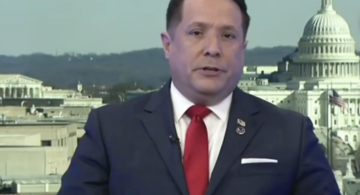
The DCUC's Tony Hernandez moderates discussion during CUNA GAC.
McMaster: I came quite unexpectedly into the White House. I walked in the next day after I was hired to do the job. There was not a lot of contemplation time. What I was really grateful for was the experiences I had. In places like Iraq and Afghanistan I was on the receiving end of policies that were more the result of fantasies than realities on the ground. I also brought with me into that job the great gift of having been able to research and write about a flawed decision-making process during the Vietnam war (for the book Dereliction of Duty). So, I was determined to restore our strategic confidence in four areas:
- The first was that members of the LBJ (Lyndon Baines Johnson) administration didn’t spend enough time thinking about the nature of the problem in Vietnam. I put into place a process where we would start with a small group training session. We wanted to think further out and just focus on design thinking and framing the challenge. We developed papers collaboratively and we crafted a goal and more specific objectives, but most importantly, to identify the assumptions upon which the objectives were based. That paper was the basis for discussion.
- The second lesson was that (President Johnson) received only one option and that was the option he wanted to hear. That was a disservice to him. So I always insisted we provide him multiple options. And Donald Trump is reflexively contrarian; he might choose the opposite of the one option just to spite everybody.
- Domestic politics really influence everything. I wanted our process to be insulated from all that. For national security we should have bipartisan support for those policies. I didn’t want the process we were running to be compromised.
- I decided not to do things to retain influence with the president. I think that was the result of my ability to look at my duties and responsibilities from a historical perspective.
Hernandez: How do you prevent the process from coming down to who has the power?
McMaster: Progress is never linear. The key element of this competence is the integration of all efforts. What I write about is how often our military instrument becomes disconnected from what we are trying to do politically. What you have to do is get people together to bring those elements of power and resources to focus on a problem. They have to be there for the conceptualization and then you have to solicit from them, ‘Hey, what can we do to integrate all of our efforts?”
It doesn’t happen naturally; people like to go back into their cylinders. And some people just aren’t collaborative. If you look at it, who do you want to promote in your organizations? Maybe not the person who is a bit of a control freak and not collaborative. Don’t promote that person. You want the “There’s no limit to what you can achieve if you don’t care who gets the credit” person.
Hernandez: Is it possible with an impatient population and a political system that changes every two-to-four years to achieve strategic consistency?
McMaster: I think it is. This is what we did with the approach to China. This was most important shift since end of the cold war. We did that with consultations with Congress and the private sector. This is not just a government/public sector problem set; these all apply in the private sector, as well.
We have to demand more from our leaders. We have to demand that our leaders not compromise our principles or long-term interests to score partisan points. I think it’s possible to craft more of a consensus approach.
Hernandez: What is strategic narcissism?
McMaster: I led a cavalry regiment where part of our mission to patrol the East/West Germany border. We went from one moment staring down East German border guards to the next moment seeing them throwing the gates open. We won the Cold War. After the Cold War and that lopsided win in Iraq we became overly confident and had a lot of hubris.
When we won the Cold War we assumed the ideological competition was over. We thought the great power competition was a relic of the past. And we attributed our win in Desert Storm to our technological and military prowess. We assumed future wars would be different from all wars in the past.
All of this was a setup for the difficulties we encountered after 2000. With 9/11, al-Qaeda bypassed our technology and military power. With the wars in Afghanistan and Iraq, we should debate who the heck thought it would be easy?
What happened was our foreign policy shifted from overconfidence to complacency. I think the complete withdrawal from Iraq in 2011 was an example of underestimating the cost of inaction and disengagement, as it allowed for the creation of ISIS.
Hernandez: How can credit unions help in finding common ground so we can move ahead as a society?
McMaster: I think credit unions are so well positioned across the country and across social strata in communities. I am a big fan of the Stoic philosophers who said we should consider what is in our power. There is a lot that’s within our power. Education, for example. How can it be these days that your ability to participate in the great promise of America is limited by what zip code your born into?
There are so many examples of what we can do, whether it’s homelessness or any problem you see at the local level.
I have this understanding of America, and I spent half my career overseas, but I think the farther away your perspective on America is, it can look pretty ugly. But when you get to the local level you see so much good that’s going on. There is so much to do.
Credit unions have strong leadership and strong connections to the community and I think you can be a real fulcrum for real change.