

NASHVILLE, Tenn.–When the THINK Conference meets here this week it will share its last thoughts, as this is to be the final time the event will be held.
The meeting, created by Samantha Paxson and others with Co-op Solutions, became well-known for bringing in voices from outside credit unions to share provocative, unique and often entertaining insights that forced attendees to, well, think.
THINK held its first meeting in 2008, with one of its early headline keynoters including Steve Wozniak, the co-founder of Apple, and the conference would go on to become a popular annual event for many.
However, following the merger of Co-op Solutions and PSCU, the company has announced this year’s THINK Conference in Nashville will be its last.
CUToday.info has had extensive coverage over the years from the meeting. Below, we highlight some of the perspectives that were shared at various THINK meetings, and include links for the full stories.
The Need to Flip the Funnel & Why the Old PFI is Obsolete
TUCSON, Ariz.–New research reveals the long-held, traditional marketing funnel at credit unions needs to be “flipped,” that there is something that when combined with good rates really drives growth, and that the concept of “PFI” is officially obsolete.

Those findings and others, along with strategies for how credit unions can leverage the new information, were shared during Co-op’s THINK 23 conference by Samantha Paxson, the company’s chief experience officer, who unveiled the research Co-op conducted with EY and Mastercard.
This was the fourth year Co-op has partnered with EY and others for deep dive research into the behaviors and thinking of both members and non-members. At the heart of that research, according to Paxson, is the question.
For a look at what the research revealed go here.
Getting Lean, Getting the Love
TUCSON, Ariz.–Credit unions gathered here were told if they really want to grow and prosper, they need to be thinking in terms of “costovation.” The best part: it’s usually cheap to do.
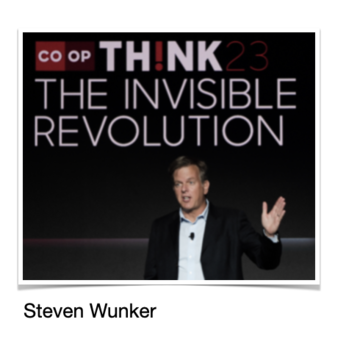
That was the message from Stephen Wunker, who has authored a book of by the same name, and who founded in 2009 New Market Advisors, which consults with a number of well-known brands.
In remarks to Co-op’s THINK 23 event here, Wunker outlined just what “costovation” is about and why credit unions—especially long-term leaders at credit unions—need to be thinking in a new way. According to Wunker, companies that use the costovation model build leaner, lower-cost businesses that “customers love.”
“We are in a difficult time as businesses, and costs matter. But there is good news,” Wunker said. “There is this orthodoxy that cost efficiency and innovation are opposites. That is not true. Done right, they can be partners.”
For the full story, go here.
A Lesson from Amazon: ‘Magic Wasn’t About the Glove’
TUCSON, Ariz.–An ambitious initiative around health care launched by Amazon and then abandoned offers some lessons for credit unions, according to one person who helped lead the effort.

Speaking to Co-op Solutions’ THINK 23 event here, Jennifer Becker, a long-time health care executive who joined Amazon in 2020 to lead its Amazon Care offering during its brief life, shared her experiences with credit union leaders. Despite a huge investment, the company pulled the plug on the program in August of 2022.
Becker themed her remarks, “The Power of Care: Building a Customer-First Ecosystem.”
“I’m going to tell you a story about birth. I had the opportunity to be one of the mothers of a new product that was all about ecosystem integration. The thing that kept coming up was to make the seemingly impossible possible.”
For the lessons Amazon learned and why, go here.
Innovation? It’s Not Really for You, Credit Unions
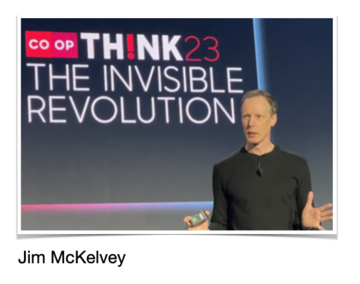
TUSCON, Ariz.–The man who co-founded the hugely successful start-up Square had what many would consider a surprising message for credit unions here—they really shouldn’t be trying to innovate.
That is a position that runs counter to nearly every presentation made to and by credit union leaders in recent years, and yet Jim McKelvey told Co-op Solutions’ THINK 23 event there is a much better alternative for every CU unless it has absolutely no other choice. And in those cases, the payoff can be big.
McKelvey has one of the most diverse resumes of anyone. He was a professional (and successful) glassblower who went on to co-found (with Jack Dorsey) the near ubiquitous among small business payments solution Square (now called Block); who founded the venture capital firm Cultivation Capital; who was appointed to the board of the Federal Reserve Bank of St. Louis, who authored a book, and who then co-founded the company Invisibly, which seeks to give consumers control of their data.
For the lesson he learned across all that experience, go here.
To Go Forward, You Need to Do Things Backward
CHICAGO–How does an enterprise the size and scope of Amazon continue to grow and innovate? It’s a deliberate process that involved the complete rethinking of processes and hiring, doing things “backward,” and even requiring leaders who have an idea/initiative to pitch to first write a “press release,” according to one person with first-hand knowledge.
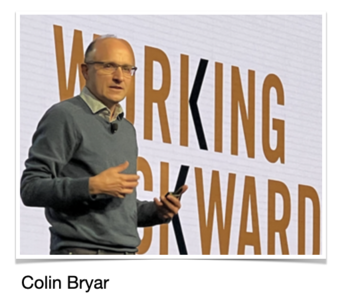
Those practices and others were shared with Co-op Solutions’ THINK 22 Conference by Colin Bryar, who was with Amazon and worked as founder Jeff Bezos’ right-hand man as the company was expanding far beyond its book-selling roots in the early part of this century.
Bryar co-authored the book “Working Backwards: Insights, Stories and Secrets from Inside Amazon” along with former Amazon executive Bill Carr, said he had been fortunate enough to be in the “catbird’s seat” as the company was laying the groundwork—and quickly learning from its mistakes- it is today.
Bryar, who eventually became technical advisor and chief of staff to Amazon founder Jeff Bezos from 2003-05, shared what he came to learn here.
The Best Way to Think About the Credit Union? As a Food Truck
PHOENIX–The food truck is the ideal metaphor for how the marketplace has evolved, according to one person.
While street food has always been around, the food truck makes the experience mobile, uses social channels to alert people of its location, uses big data/analytics, and accept mobile payments, said James Wester, research director with IDC Financial Insights.
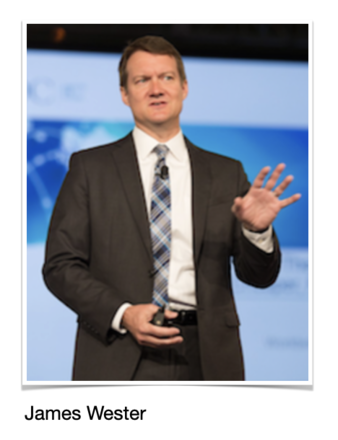
“We have reimagined the restaurant,” Wester told CO-OP’s THINK 18 meeting. “And that’s what digital transformation is doing.”
What is the much-discussed digital transformation, which is sometimes also abbreviated as DX, really about? According to Wester, IDC defines it as the “continuous process by which enterprises adapt to or drive disruptive changes in their customers and markets by leveraging digital competencies to innovate new business models, to blend digital, physical and business and customer experiences, and to improve operational efficiencies and performance.”
For more on the credit union/food truck parallels, go here.
The Playing Field of 21st Century? 'Pragmatic Realism'
SAN DIEGO– Pragmatic idealism will be the playing field of the 21st century, and credit unions are well-positioned for that if they take full advantage, according to one person.
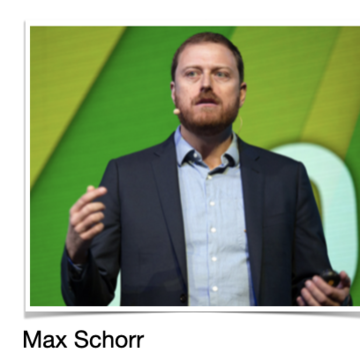
Max Schorr, the co-founder and community director of GOOD, which bills itself as an integrated media company for people who want to live well and do good, told credit unions attending CO-OP’s THINK 16 Conference that the challenge is to figure out how to Make things happen “at the intersection of brand DNA, society’s needs, and what get’s people engaged. What does that mean?”
What that means, said Schorr, who called credit unions a “best-kept secret” but who also compared CUs to the “DMV,” is an opportunity moving forward for those secret financial cooperatives.
Here's more of what he had to say here.
The Importance of Content 'Snacks'
SAN DIEGO–Are mobile devices the “cigarettes of the 21st century?”
Yes, says one analyst, who believes the devices will go through much the same lifecycle, including eventually being seen as “bad for you” due to too much exposure—as well as their eventual replacement by something that is now coming into the market.
That was just one of the observations offered on the future for which credit unions should prepare by Uwe Hook, the principal behind the consulting firm Gretchenfrage.
“I believe we are at the peak of the mobile revolution,” Hook told CO-OP Financial Services’ THINK 16 meeting. “If you think about what people did 50 years ago, people smoked everywhere. Doctors said it was good for people. I think we are beginning to understand that being on that device all day is not good for us, but we’re not sure what to do with it. People 50 years from now will look back and say these people were crazy for being on these devices all the time.”
Fresh off a year-long trip around the world, Hook said one of the things that was readily apparent, “is how message apps are taking over outside the U.S. Everybody outside the U.S. is on WhatsApp, or other chat message apps.
Yet in all of that, said Hook, he has also seen something else: “The other trend we are seeing is that people actually want to get away from the mobile interaction and they want to have real interaction. I’ve seen this in Europe and Asia and now in the U.S. the mindfulness movement, where people want to be in places where there is no phone allowed. So the phone has to be taken away, just like cigarettes.”
If you are reading this on your phone, then enjoy the irony of going here.
Where Do Credit Unions Fit in the New Economy?

COLORADO SPRINGS, Colo.—Credit unions as “hip and sexy?”
At least one person thinks so, arguing CUs are in vogue because “sharing” is going to be the great theme of the 21st century. But that same person also cautioned credit unions they need to get prepared to meet the needs of the “pathologically delighted” consumer.
Lisa Gansky, founder and chief instigator of Mesh Labs, and author of the book, “The Mesh: Why the Future of Business is Sharing,” said there is a dramatic shift occurring that should bode well for credit unions if they leverage the opportunity.
“The 20th century is what I call the ‘Century of the Generals,” said Gansky in remarks to CO-OP Financial Services’ THINK 15 Conference here. “There was General Dynamics. General Electric. General Mills. General Motors. It was using a lot of military principals and applying to business. You are a cog in the wheel. And it worked in the 20thcentury.”
But in the second decade of the 21st century, the world is experiencing something the world has not seen in a while, said Gansky. “We have a very different operating system. At least the first half of this concept is organized around a very fundamental concept called sharing. Sharing isn’t new to us. But what is new is we are moving from an organized kind of mindset in the last century where most of us as individuals and businesses aspired to own things. We are shifting to a world in which access to talent, goods and services will triumph over owning them.”
Gansky shared more of her perspective here.
How the Person Featured in this Story Made it Possible for You to Read It
CHICAGO–One person who was deeply involved in the creation of Apple’s iPhone shared with credit unions here how that world-changing product came to be, and the lessons it offers for CU leaders.
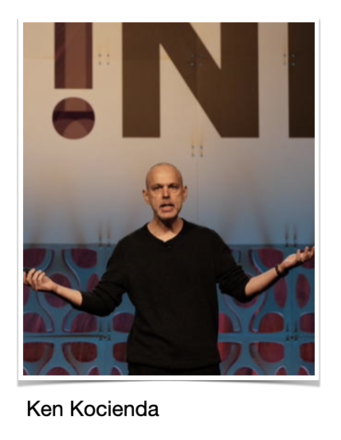
Ken Kocienda, a former Apple product and design engineer who was involved in the creation of the iPhone and who is now a product architect for Humane, told Co-op Solutions’ THINK Conference there are “elements” and “molecules” that must be considered in great product/service experiences.
Kocienda, who had a varied career background before joining Apple, played a role not just on the teams that helped create the iPhone (including its keyboard and, famously or infamously, auto-correct), but also the Safari browser, the iPad and Apple Watch.
The incredible work done to bring the revolutionary iPhone to market 15 years ago continues to be relevant today, according to Kocienda, who said the foundation of success involved four basic themes, each of which he touched on with examples and anecdotes. The four themes were Elements, Molecules, Alchemy and Future.
You can find out more here (and maybe even read it in Safari).
Letting Members Do the Talking
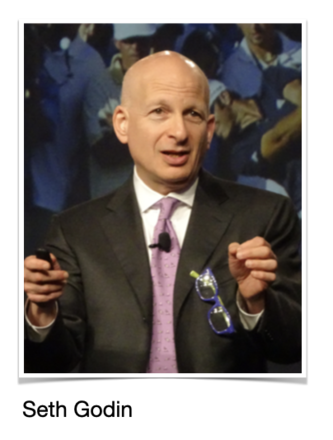
MIAMI BEACH, Fla.–During a Q&A session at CO-OP’s THINK 19 Conference here, Seth Godin, the author of 19 books, including Purple Cow, that examine the post-mass market marketplace and who had earlier delivered a keynote address, was asked about the best way for credit unions to get the word out about themselves.
“Real growth comes from when your customers evangelize for what you do,” he responded. “If you can make it safe for them to evangelize what they do, they will do it. You don’t have enough money to touch enough people who say, ‘I don’t know you but will now consider you.’ What you do have is 110 million people who can talk about you.
"Think of anything you’ve heard of, TED Talks or other brands, you learned about because other people were talking about it,” continued Godin. “It’s not because they ran Super Bowl ads.”
For what credit unions can do rather than running Super Bowl ads, go here.
Vote More Than Once? Not a Problem in This Country
MIAMI BEACH, Fla.–Change only happens if there is great pain.
That tough but frank reality was shared by one country’s first-ever chief information officer, who helped to digitize the entire country—and found a way to avoid becoming Big Brother.
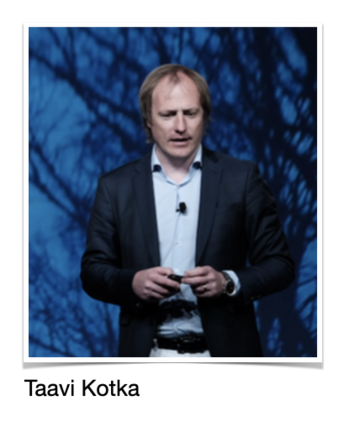
Taavi Kotka, who is now a digital transformation consultant, was the first-ever CIO for Estonia, the country of 1.3-million people in Northern Europe (and little known-fact—the same latitude as Alaska, Kotka noted).
In remarks to CO-OP’s THINK 19 Conference here, Kotka outlined how he was part of an effort to digitize an entire country (which outside of the capital of Tallinn, has a density of approximately four people per square kilometer).
“We needed a more economically wise solution. So we said let’s start pushing people to use the Internet,” he said of an initiative that began in the 1990s, prior to the availability of smartphones. “But it’s not like you push your business into the web and people use it.”
Here is what the country was doing.
Transition to Digital Isn’t All About Tech
MIAMI BEACH, Fla.–In all the discussion and analysis around the shift to a digital marketplace, it isn’t all about technology, according to one person.
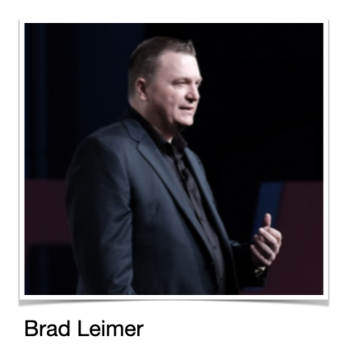
Brad Leimer, the cofounder of the consultancy Unconventional Ventures and a former credit union executive, offered some positive words about the role credit unions have played in the lives of everyday people from the moment of their founding, as well as advice on how to continue to do so in the future.
Speaking to CO-OP’s THINK Conference here, he said of credit unions, “We’re all in this together to make banking better. How is your institution doing it? We know financial services are changing, and the players are changing, as well. So what is going to happen to our credit unions and their members?”
There Will Be Blood
The THINK conference is dominated by discussion of the shift to digital platforms and delivery, but Leimer added, “Technology is only a portion of this shift. The type of empathy we show to our members every single day is as important as anything else. I firmly believe there is a social contract between credit unions and their members.”
It won’t be easy to get to that future, with Reimer saying, “There will be blood.”
For the rest of his observations, go here.
Making a Habit of Understanding Habits
MIAMI BEACH, Fla.–Why do consumers make the decisions they do? And why are some practices within the credit union so difficult to change? The answer to both questions is “habits,” according to one person, and habits can be changed if understood.
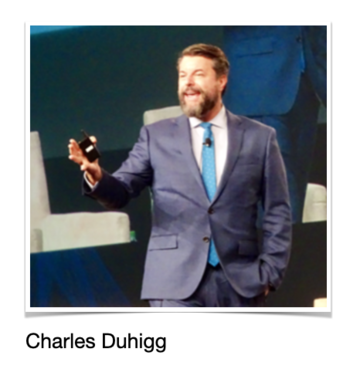
Charles Duhigg, a Pulitzer Prize winning reporter and the author of two books, “Power of Habit” and “Smarter Faster Better,” told CO-OP’s THINK Conference here the research shows nearly half of a person’s daily activities is based on habit.
“Every habit is actually three things: a cue, which is an automatic trigger for a behavior to start; a routine, which is the behavior itself, and a reward,” said Duhigg. “Every single habit in your life has a cue and a reward, and if we can figure those out we can change how you behave, almost without you knowing about it or having to think too hard about it. When people understand the habits, we empower them to change behavior.”
Duhigg said if an individual or organizational can change what’s known as a “keystone habit,” it becomes a chain reaction that changes or develops other habits, as well.
To illustrate his points, Duhigg shared three anecdotes as examples of his three themes, which were how habits work, how habits emerge, and how habits change.
If you’re looking to change some habits, go here.
Just How Well Do You Really Know Your Members?
MIAMI BEACH, Fla.–How well do you know your members? Do you know why they interact with you versus another provider?
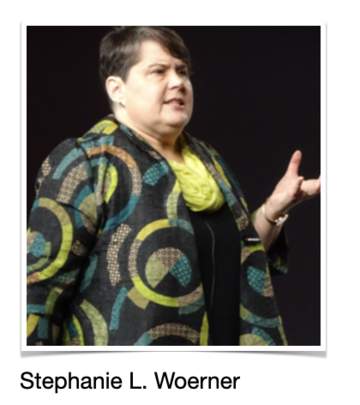
Those questions were posed to credit unions at CO-OP Financial Services’ THINK Conference here by Dr. Stephanie L. Woerner, a research scientist with the MIT School of Management, who challenged credit unions to understand some fundamental concepts before investing in technology to compete in a digital marketplace.
Among the hardest questions of all to answer, according to Woerner: What problems are members trying to solve?
“Digital transformation is not really about the technology,” she said. “You need the technology to help you engage with your customer, and as older organizations you will find you are a particular target for a lot of disruption. You have a solid customer base, you probably have good profits, and you need to be thinking about your customer experience. It’s probably patchy, with places where it is really excellent and places where it is not. So what you need to think about is, it’s not about technology, which is there to enable it; it’s how will you engage your customers as you go through this transformation.”
For more, here's the story.
What the 'New Kodak Moment' Means to CUs
PHOENIX–The whole concept of “digital transformation” is a misnomer, according to one person, because it implies that “digital” is the biggest and most important part.
Instead, Brian Solis told the THINK 18 meeting, it’s the transformation that’s the key piece, and that begins with the individuals willing to be change agents.
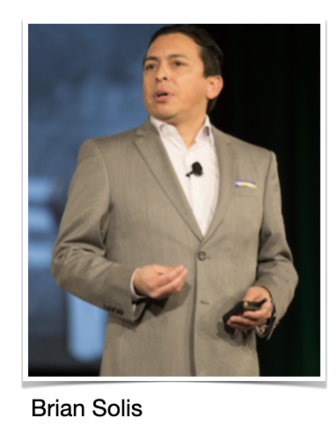
In remarks to the meeting, Solis, who is a principal analyst with Altimeter Group and who describes himself as a digital anthropologist, said he remains a “hopeless optimist, and I would like to believe disruption is a choice.”
“It’s not just about the future of credit unions, it’s about the future of humanity,” he told the meeting. “How can we work if we are stuck in an infrastructure that rewards our behaviors of the past. We are measured by yesterday’s rules, and we are asked to think about the future while in the same confines.”
Research shows that Millennials view their relationship with money and finance completely differently than do those who run credit unions.
“Without purpose and inspiration and humanizing our work and giving it a mission, what’s to say we’re on the right path?” asked Solis.
For Solis’ full commentary, go here.
Apple, Amazon and Credit Unions–What They Have in Common

PHOENIX–Credit unions may feel threatened by Apple and Amazon, but CUs are also one of the few organizations that have something uniquely in common with those behemoths–indeed, it’s a commonality like “nothing else in the country,” according to one expert on technology and computing.
That was the bright spot for CUs in an insightful presentation that was equally encouraging and frightful regarding what is taking place in the world and whether it will lead to a better future, or a dystopian one.
First, the good news from Jaron Lanier, a Silicon Valley entrepreneur who sold his virtual reality firm to Google, is that credit unions are one of the very few entities in the U.S. with a set of unique traits.
A ‘Tremendous Opportunity’
“You have a tremendous opportunity,” said Lanier in remarks to CO-OP’s THINK 18 Conference. “How many organizations have passed the 50-million mark, have relationships that have some financial component, and also have a trust component? Precious few. Apple. Amazon. Collectively, the membership here has the potential to completely change the system to the benefit of your own personal members. The value of the relationship you have to individual members is undoubtedly better than anything else you have.
“I’m not asking you to turn into the next evil thing,” Lanier continued. “Someone will probably come along and ask you to do that. Don’t do that. I think what is extraordinary is you not only have the scale, with actual relationships in place, you have a duty to these people and they have trust in you. There is nothing else like that in this country. Do you realize that?”
To realize more from Lanier’s observations, go here.
One Way CUs' History Is Working Against Them
PHOENIX–Credit unions, just like banks, grew up in an industrial age with an industrial model that is now “dead,” according to one person, who offered some ideas on how CUs can get new life.

“We are now in a digital age,” said Chris Skinner, a fintech advisor and strategist and author of the book The Digital Human. “A digital age is not rolling out an app; it’s about moving to a new model from the ground up. You are going to have to scrap your existing business. Digitalization now includes every human on earth. Every human on earth is creating digital content. It’s why the world’s most valuable companies today have all the value. These companies don’t do much except connect people who have something with people who need something.”
The market in which credit unions have competed during that industrial age has changed 180 degrees, said Skinner in remarks to CO-OP’s THINK 18 Conference here.
“What is changing now is that there are thousands of specialist companies that do one thing brilliantly well who are taking over from companies that do thousands of things in an average way,” he said.
For the full message from Skinner, go here.
Why Your CU Should Have 'Permission Slips to Fail'
PHOENIX–Seeking a low-budget but effective way to create change in your organization? Print up some “Permission Slips to Fail.”
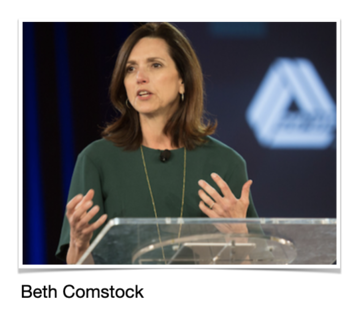
That was just one recommendation from Beth Comstock, the former chief marketing officer with GE and president at Integrated Media at NBC Universal, who also addressed the 'imagination gap' and what strategy is really all about.
Comstock’s remarks to CO-OP’s THINK 18 Conference were all about how to react to change more quickly and effectively—indeed even to lead change–and a critical part for a credit union is to understand that failure is an important component to be embraced.
“The more comfortable you are with the given, the more vulnerable you are to the challenge,” cautioned Comstock.
To learn more about that challenge, here are Comstock’s full comments.
Still Adjusting to ‘Disruption?’ Then Don’t Read This
NEW YORK–Still adjusting to “disruption?” Then you may not be pleased to hear one person is now talking about “new disruption.”
Tom Goodwin, the EVP of Innovation with Zenith Media USA and a frequent author, delivered remarks around “Where and How Should We Innovate: Unleashing the Power of New Disruption” to CO-OP’s THINK Conference here.
The question for many, said Goodwin, is to wonder “What is going on? How are these things we know to work a certain way suddenly different? To me, the essence behind it is this idea of new disruption.”
Goodwin summed it up this way: “Things have never changed so fast before, but will never change so slowly again.”
Goodwin observed that increasingly the most transformative products ever made are made by brand-new companies on their very first attempt. Companies such as Tesla, Dyson and Amazon have become market leaders, despite no experience in automobiles, vacuum cleaners, and retail, respectively.
“Have they succeeded despite this lack of experience, or because of it?” asked Goodwin.
Could you be the next Dyson? Go here to find out.
A Personal, Heartfelt Message About Work Done By CUs
NEW YORK–In a surprise but fitting turn at CO-OP’s THINK Conference here, credit unions were indeed given something to think about with a touching and heart-felt personal message about the work they do by one of the speakers.

Laszlo Bock, the well-known former Google executive vice president who wrote the book “Work Rules,” was born in Romania while it was still under the thumb of communist dictator Nicolae Ceausescu. When Bock was two his parents were able to escape Romania and the family ended up in a refugee camp in Austria.
“My dad’s dream from the time he was a kid was to come to the United States,” Bock. “We got political asylum, but we had to buy plane tickets to get to the U.S. We had no money; my dad had a job, but it was not enough We got a loan from a non-profit for $5,000 and we came to New York City, where we stayed for three days and then went to California. It was because there was a non-profit that cared enough to take a bet on refugees. We’ve repaid them over time. That’s the kind of impact money has. Money is fungible. If people come in and say they what a loan, what they are really saying is want to change their lives. I hope and I pray you keep doing it.”
Today, Bock donates all sales of his book to charity, including those that help refugees.
The full story on Block's remarks to CUs can be found here.
Four Lenses Through Which To Better See Innovation
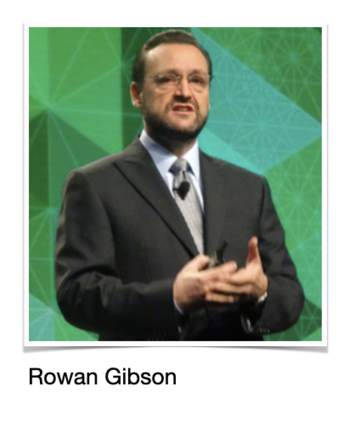
NEW YORK–Credit unions here were offered four lenses through which to look to sharpen their focus on innovation and digital transformation.
Rowan Gibson, an innovation expert and president of Innovation Bridge, as well as co-founder of InnovationExcellence.com, said credit unions aren’t alone, and that in his work he has found the one thing that keeps companies awake at night is the threat of digital disruption.
Gibson defines digital disruption as “the discontinuous change that occurs when new digital technologies and business models displace the value proposition of existing goods and services.”
With digital disruption, a threat to every company, said Gibson, the obvious question is, “What are we going to do about it?”
“The only insurance policy we have against digital disruption is digital transformation,” said Gibson. “But when I talk to companies about this the reaction is usually a knee-jerk reaction to get more technology and more data.”
To avoid your own knee-jerk reaction, you can find Gibson’s additional advice here.
Changing the Thinking When Thinking About Change
NEW YORK–In 1996, to mark its launch, Fast Company magazine hosted an event at which the discussion was all around how to overthrow established companies.

There was, recalled the magazine’s co-founder, much turmoil and turbulence in the market at the time.
Now, 21 years later, “It strikes me that everyone is wrestling with the same questions,” observed Bill Taylor, a co-founder of Fast Company, in remarks to CO-OP’s THINK 17 Conference here. “And that’s because the work of building deep-seated change really has become the defining work of our time. Regardless of the job title, that’s what you’ve signed up for.”
In the middle of all that, said Taylor, what credit unions must identify is a definition of success that allows the CU to stand for something and allow others to stand with it.
At several points in his remarks Taylor stressed his conviction that credit unions have a unique market position that is a strength they are underplaying.
Here’s why he believes that to be true.
'Embrace Evolution While Respecting Tradition’: A Lesson from the NFL
NEW YORK–How do you turn a “heritage” entity such as credit unions into something that remains relevant today? An executive with the National Football League shared some of the plays from its playbook.
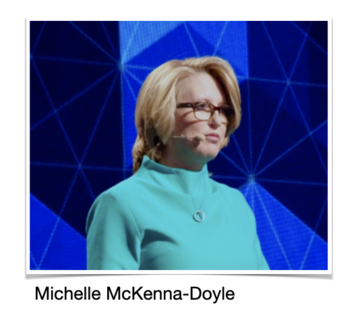
Michelle McKenna-Doyle, SVP/CIO with the NFL, told CO-OP Financial Services’ THINK 17 meeting here that “if you were born before the Internet and now you’re in a space that has been transformed, then you really do have to take a look at yourself. (The NFL refers) to ourselves often that we are a heritage event. It’s still relevant today, but we were also relevant to parents and grandparents. So how do you walk the fine line between innovation and tradition.”
McKenna-Doyle, who also previously held senior positions with Disney, was involved in the World of Harry Potter project launch at Universal, and who worked at Constellation Energy prior to joining the NFL, said she has found during her career as a CIO at multiple companies that people want to change but they are often afraid of it.
“One of our core values says to embrace evolution while respecting tradition,” McKenna-Doyle explained. “We wanted a platform where we could have evolution but stay true to what we are. What we found is “Football is Family.”
For the rest of McKenna-Doyle’s playbook, go here.
Founder of Co. With 'Completely Stupid Name' Tells CUs They Have Best 'Opportunity on the Planet'
COLORADO SPRINGS, Colo.—The creator of one company with a “completely stupid name” that has seen extraordinary success, and another company that is not just “ridiculously awesome” but also fixing a big problem in many schools, told credit unions they have “more opportunity than anyone else on the planet.”
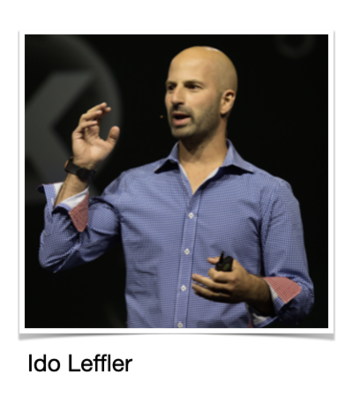
After all, he said, credit unions share some common traits with his companies, including a “kick-ass product” and an “awesome cause.”
Ido Leffler, who was born in Israel, moved to Australia as a child, then to Jakarta and Mumbai in his early 20s, before returning to Tel Aviv at 26 and, finally, to California, told credit unions, “There were lots of products there, but none of it appealed to me. None were the IBMs of the natural beauty world. None were exciting, none emotionally connected to me. None spoke to me like Virgin or Apple. So, we said, ‘Why don’t we create a natural beauty product based on one premise, the word ‘Yes.’ All the other products were about ‘no.; We are now the second-largest natural beauty product company in America.”
“We” is Yes To, Inc., a shortened version of the original name “Yes To Carrots;” among the job titles Leffler uses is Chief Carrot Lover.
“It’s a completely stupid name, but it made people smile. It encouraged them to look at this,” he said.
If you want to say yes to carrots, here’s more.
As Web 3.0 Gets Closer, Here’s the Opportunity 1 Person Sees for CUs
CHICAGO–It wasn’t all that long ago that many people swore they would never purchase anything online. Nor does one need to go very far back to find companies that said they would never use social media for anything related to sales, as it is an ineffective sales channel.
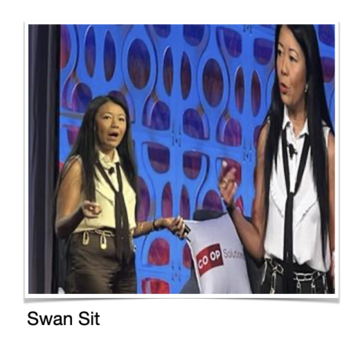
And now many people are also predicting they will never embrace the newest iteration of the Internet, the so-called Web 3.0. Just like the first two statements, they’re likely to be proven wrong again, according to one person.
Web 3.0 is the next iteration or phase of the evolution of the web/Internet and some are predicting it could potentially be as disruptive as earlier iterations. Web 3.0 is built upon the core concepts of decentralization, openness, and greater user utility and has as blockchain as its foundation.
In remarks to Co-op Solutions' THINK Conference, Swan Sit extolled the benefits of Web 3.0, which she predicted holds great promise for many organizations, including credit unions. (
For her full observations, go here.