

By Ray Birch
MADISON, Wis.—The raging California wildfires that have been growing in size and intensity in the last two years have yet to make a big impact on credit union insurance claims, reports CUNA Mutual Group.
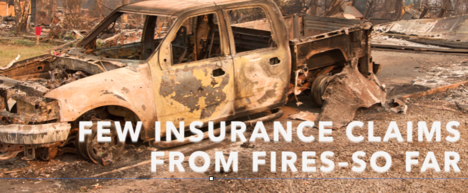
Michael McKinley, senior claims manager, commercial property, agrees with other sources who told CUToday.info that ongoing wildfires have become a “new normal” in this state, but said most credit union offices have fortunately been spared from heavy damage.
“Luckily this year we have not received any claims from credit unions in California related to the fires,” said McKinley. “And that’s a great news. We are always closely connected with credit unions in and around the areas that are in the paths of the fires.”
But while CUs have filed few claims in the last two years, McKinley added that does not reflect what has been happening to members and staff whose homes have been affected.
“Overall, we received a handful of claims last year, but under a dozen, I’d say. Most of the impact to credit unions has been power outages, smoky air that’s hard to breathe, road closures and staff who can’t make it into the office,” said McKinley. “While I can’t name the credit union’s name, last year we did receive a claim for one office that was destroyed by the fires. Today, we have boots on the ground permanently in areas where wildfires are occurring.”
Ongoing Debate
That move reflects the thinking of many in California that the wildfires have become a much greater concern, growing a bit in number but more so in the size and intensity of the blazes. As CUToday.info has reported, there are some who argue that because forests are not being “managed,” with thousands of dead trees on the ground and heavy brush, wildfires are getting bigger and lasting longer. Others, however, argue that that is the natural state of the wild areas and the increasing damage and losses are due to more people moving into these environments.
“I, too, think this is the new normal for California,” said McKinley. “The Mendocino Complex Fire, which combines the Ranch Fire and River Fire, has now become the largest fire in California history. And, unfortunately, I think we may see even more records set for the size of these fires.”

Brett Martinez, CEO Of Redwood Credit Union in Santa Rosa, Calif., recently told CUToday.info that he is very concerned for what may be heading the way of California residents and businesses, as the recent rash of fires is only leading up to “fire season” in California, which begins in the fall. The credit union’s main office last October narrowly escaped being destroyed by the Tubbs Fire.
Asked if credit unions should be budgeting more money for potential rising insurance costs related to the fires, and McKinley said no.
No Changes Made to Date
“We are always looking at rates and policies, but we have made no changes here whatsoever,” he said. “With all the fires the last few years in California, we find they are adequately written for credit unions and at this point we don’t see any issues or concerns for credit unions that are facing these difficult times. We don’t see any rate hikes today. Now I can’t foresee the future, but over the last two years there has not been any talk of changing rates.”
But McKinley said that it’s logical to think that more credit unions will be affected by the fires as the blazes grow in size.
“These fires are big, extremely hot and spread fast,” noted McKinley. “So it’s likely more credit unions will be at risk.”
Disaster Response Plans Need Testing
McKinley believes most credit unions in the Golden State are prepared for the fires, However, he stressed that disaster response plans must be tested more often, especially with the changing nature of the blazes.
“Credit unions just can’t have their plans, they must test them regularly,” he said. “Look for gaps, look for ways to improve them. These plans need to always be on the credit union’s radar and made part of their culture.”