


TAMPA, Fla.—What is so interesting about payments, says Robert Hackney, is that most of the change in the space within the last 20 years has occurred in the last five.
While that has led to “exciting times,” it also has placed technology challenges squarely in front of many credit unions, explained the president and CEO of CSCU.
Hackney, who led CSCU for more than 19 years, will retire at the end of 2017. He talked with CUToday.info about his career, the evolution of payments, and what lies ahead for credit unions.
CUToday: You were the first employee of CSCU?
Robert Hackney: Yes. My start date at CSCU is easy to remember. It was April 1 of ’98. I literally started from ground zero. I had to find the office space, get a phone number, put the employees together, all those kinds of things. It was a lot of fun.
CUToday: Compare the early days of payments to today.
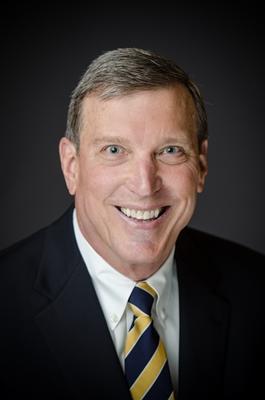
Robert Hackney
For years, the payments industry did not change a lot. Mag stripe came out in the early ’90s and things really did not change much for 20 years. Go back to the mid-2000s and that’s when fraud started popping up—crooks figured out how to replicate mag stripes. I recall CUNA Mutual Group telling the industry that we have to take this fraud thing seriously.
And, not that long ago, I recall the talk of EMV and chip cards for the first time—that the U.S. was the last to get moving here. Then we started to hear more talk about contact and contactless chips, and that is when we started to hear more about mobile payments.
Apple Pay came along and then the others. And slowly but surely, mobile payments began to take off. Cards will be around for a long while, but now there is more critical mass for contactless wearables—like rings, wristbands and a lot more. It’s an exciting time. What I am saying is that we have seen more change in the last five years than we saw in the 15 years before that.
CUToday: How are CUs faring in this accelerated payments environment?
Hackney: There are about 6,000 credit unions now, but roughly 280 over $1 billion in assets. I think a relatively small percentage of the 6,000 have the expertise in-house to address payments effectively today. This is a function of size, which is a function of resources. I think the larger ones, those above $1 billion, and possibly even those above $500 million, have the resources in-house to effectively guide the credit union in a digital strategy. So out of that 6,000, I think a large number of credit unions are challenged to have the necessary resources in-house.
CUToday: What has CSCU sought to do with its Optimize, a 12-month turnkey program to drive penetration, activation, and usage as well as stimulate portfolio profitability for credit cards?
Hackney: As I said, as the cards market has become more complex, many credit unions are challenged to have the resources needed to drive an effective strategy. Optimize has been successful quickly. The results are credit unions that use it see two to five times better results with their cards programs compared to those credit unions that are not using Optimize.
CUToday: Talk about your start in payments.
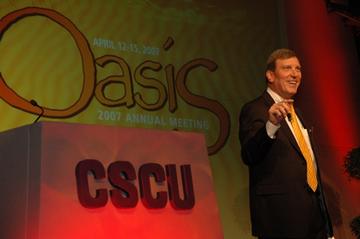
Hackney: As I said, I started here in April of ’98. I spent five years and three months prior to that with FIS; that’s when I first got into the business of cards. Back then it was Equifax Card Services, a predecessor company to FIS.
CSCU was founded in 1989. For nine years there were no employees, and a lot of people don’t know that. CSCU was managed at that time by an executive with Equifax Card Services. I was that executive back in mid ’90s. When I first started with Equifax I was VP/controller—I had an accounting and finance background.
CUToday: You said CSCU started as a separate company in 1998?
Hackney: Yes. The board decided it was time to open an office and staff it. Fortunately for me I was in the right place right time, and it has been a phenomenal 19 years. Prior to coming over to lead CSCU, I was VP of national accounts with FIS and managed the CSCU affairs for the accounts of our member credit unions at the time. I came over in ’98 as president of CSCU. CSCU was formed primarily to become a principal member of Visa and MasterCard in order to provide sponsorship on behalf of our member credit unions processing with FIS, our business partner.
Back in the late ’80s and early ’90s credit unions were still getting into the business of cards at the time, so there was a lot of growth back then. One of CSCU’s primary functions was to be an aggregator. By aggregating the accounts of our member credit unions we got better pricing for our CUs, for example, with Visa and Mastercard. That was our purpose.
CUToday: Many people don’t recall that CSCU split from PSCU.
Hackney: In 1988-1989, PSCU had approximately 840 credit unions. At that time about 458 left PSCU to become CSCU. We have 2,026 credit unions today. In 2016, we had 778-million transactions, $33.6 billion in dollar volume, $10.4 million in cardholder credit and debit accounts.
CUToday: Looking back, what stands out about credit unions?
Hackney: Mainly their philosophy. I am not being corny. But just being exposed to our board for 19-plus years, seeing how collaborative the credit union industry is. It’s the kind of collaboration you just don’t see in other industries.
CUToday: What is the biggest challenge ahead for credit unions?
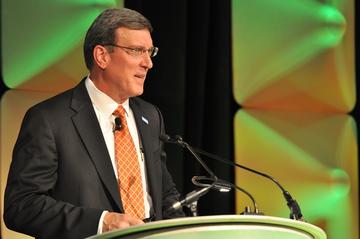
Hackney: Again, it’s becoming more challenging for the majority of credit unions to have the resources and knowledge in-house to understand all the technology that is behind the evolution of payments we are seeing now. That will be one of credit unions’ biggest challenges going forward, and one challenge that CSCU will be helping credit unions with.
CUToday: What are you most proud of in your time at CSCU?
Hackney: When I started in the cards business I was impressed by the reputation that PSCU had, how credit unions spoke so highly of them. That is the kind of reputation I always hoped CSCU would build, and I’ll let other people decide if we have achieved that. We are not as big as PSCU, as that is not our business model. But I know we have the highest integrity within our organization, within our board, and I feel CSCU has always stood for great integrity and professionalism. We have the fancy mission and vision statements, but at the end of the day it comes down to how we were all raised—to treat people like we would want to be treated and to always do the right thing. It’s just not that complicated.
CUToday: What’s ahead for you?
Hackney: I will do something, maybe back off the gas pedal a bit. But I plan do something. I have had some nice phone calls recently that I might follow up on. I feel that you have to have something to retire to. I have not completely figured that out yet. But I do know I want to do something. I want to continue my exercise regime and I want to get engaged mentally with something. Who knows, it may be something totally outside credit unions or payments, maybe it will be volunteer work. I tell you it will be a long time before I get into that rocking chair—when you stop moving bad things happen.