


BOULDER, Colo.—A small credit union here that serves the Buddhist community has such a tight-knit, loyal membership that only two borrowers have defaulted on loans in 40-plus years.
The CU with the devoted following is the 400-member, $2.5-million Shambhala Credit Union, which recently changed its name from Ashoka Credit Union to even more closely connect with Boulder’s Buddhist community.
“We came out of the same community as the Shambhala Center. The founder, Chogyam Trungpa, came to Boulder in 1976 and people began to come see him. He was committed to establishing a community here and not moving through,” explained CU Board President Alexander Halpern. “He was a Tibetan Lama who left Tibet in 1957 because the Communist Chinese overran it.”
The Boulder Shambhala Center describes itself on its website as a “cultural institution dedicated to creating enlightened society: humanity’s expansive embodiment of bravery, compassion, and profound confidence in basic goodness.”
Sharing Resources
Halpern said that when the Buddhist community was founded here its members were very young.
“Just like the community itself, the credit union was a way to come together and make shared use of resources,” said Halpern, who is a Buddhist. “That is what the credit union is about, essentially. We did not want to form a bank.”
The specific community the CU serves are members of the Shambhala Buddhist church.
Halpern said the credit union does not require members to be formal members of the church.
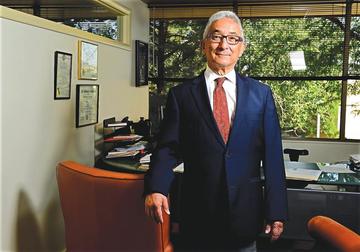
Alexander Halpern
“Basically, if you identify yourself as being part of this community, or your family members do so, you can be a member of the credit union,” said Halpern. “We do not require proof, so to speak.”
The fact that the membership sees itself as a community and that resources are being shared is a large reason why the credit union has had to write off two loans since it was established, explained Halpern.
“When we tell people that only two loans have gone bad, most find it hard to believe,” said Halpern. “But we have always had great loyalty from our members, and in this case, our borrowers. I believe our members feel obligated to make sure they meet their credit union obligations.”
Traditional CU Values
Halpern said that in some ways the loyalty the CU’s members show the credit union and the rest of the member-owners harkens back to the days when U.S. credit unions were first formed, and he believes that many credit unions have drifted from their roots.
What has also changed, acknowledged Halpern, and it’s not unique to Shambhala Credit Union, is the difficulties credit unions of its limited asset size have in competing today and addressing rising operating costs, thanks to a familiar bugaboo.
“Trying to operate as a small credit union as the regulatory world has gotten more complicated is difficult, as we all know,” said Halpern. “We are small but we have to meet much of the same regulatory obligations as larger credit unions. But for us, so far so good. I know it’s taken a lot of dedication on the part of our employees. We have three employees now, and they don’t get paid a lot.”
The manager has always been a Buddhist, said Halpern. But it is not a requirement to be part of the Buddhist community to work at the credit union. The new manager, now carrying the CEO title, is Bob Sutherland. Of the three employees, two are Buddhists, as is the entire six-person board.
In addition to unsecured loans, auto loans and second mortgages, the credit union recently added credit cards. “That has really given us a boost to serve our members,” said Halpern.
Halpern said that serving the local community’s financial needs is not unlike serving the needs of other communities. He pointed out, though, that one of the reasons the credit union was formed was to provide loans to individuals seeking to complete longer terms of Buddhist studies.
“We still make those loans, and they run about $3,000 to $5,000 and are an important service to our membership,” explained Halpern.
In For The Long Run
Halpern said in an era when many tiny credit unions are throwing in the towel and merging out, that Shambhala CU feels good about its future.
“We are committed to expanding our services and meeting the growing needs of our members,” he said. “One thing the last 40 years has taught us is that with any project you must be committed to it for the long run. When I started on the board I was in my 20s and now I am in my 60s. I don’t plan to be at the credit union in my 90s, but I plan on the CU being here when I am gone. I think it will be as the credit union is an important part of this community.”