

WASHINGTON–With voting now officially underway on the proposed merger between CUNA and NAFCU, the respective chairs of the two trade groups have shared with CUToday.info what they have been hearing, where there are tough issues that have yet to be decided, and why they believe the combination is in credit unions’ best interests.
CUNA Chair Lisa Ginter, president and CEO of CommunityAmerica Credit Union in Lenexa, Kan., and NAFCU Chair Gary Grinnell, president and CEO of Corning Credit Union in New York, responded to questions on a number of related issues, including why the merger is being proposed now and what the future might hold if credit unions ultimately oppose the deal.
As CUToday.info reported here, voting has opened and will run for the next 60 days, with results to be announced in early November. Just ahead of the voting period, CUNA and NAFCU released the proposed dues structure should the groups merge and form a new association to be called America’s Credit Unions.
Here is a look at questions posed by CUToday.info and how each of the association leaders responded.
CUToday.info: What kind of feedback have you gotten since this merger was proposed?
Ginter: From CUNA’s end, so far the feedback has been extremely positive. Just today I received quite a bit of email and text messages from my colleagues saying they voted and they're excited about the future of our movement.
Grinnell: We’re excited for this transformation and the feedback has been generally supportive. Certainly, we understand that there are people who have questions and things they want answered and we encourage them to ask (those questions) now and to have all the information they need to make an informed vote.
(Ginter noted CUNA CEO Jim Nussle, who is set to become CEO of the combined organization is the merger is approved, has announced a series of “listening sessions” related to the merger.)
CUToday.info: What kinds of questions have you gotten?
Grinnell: Certainly, the dues have been a big one; understanding how the dues are going to work over the next few years as part of the transition. There are questions over dues for CUNA-only members, NAFCU-only members and joint members.
Ginter: I would agree. The selection of the CEO has been the other question; it’s people just more curious than anything. (NAFCU CEO Dan Berger plans to exit at year-end.)
CUToday.info: What pushback have you gotten, or what misconceptions have you encountered?
Grinnell. There has been some concern about the smaller credit unions and whether will they be represented, and we believe they will be represented. In terms of the transition board there are going to be two (representatives from) credit unions under $100 million and another one for credit unions under $300 million. From the continuing board perspective there are three spots for credit unions under $500 million, and four at-large seats, so technically going forward there could be up to seven seats that could be available to smaller credit unions.
I think the smaller credit unions are going to continue to be heard and continue to be represented.
CUToday.info: How much debate was there around the structure of the new board?
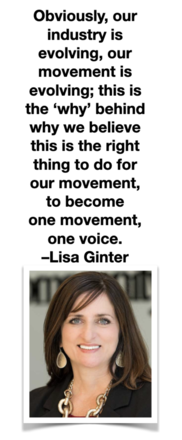
Ginter: (There was a) team representing the executive committees of both CUNA and NAFCU. We wanted consistency in the transition board. Obviously, our industry is evolving, our movement is evolving; this is the ‘why’ behind why we believe this is the right thing to do for our movement, to become one movement, one voice….It wasn’t very difficult at all, to be honest. We met with every single board member and every single board member voted for the transition board.
CUToday.info: The vast majority of credit unions that have offered feedback to CUToday.info on the merger proposal have been NAFCU members, and they are concerned NAFCU is just going to disappear into CUNA after this merger.
Grinnell: First of all, yes, I understand that question. We are a NAFCU-only credit union. Throughout this entire process, with the steering committee and working with the folks at CUNA, everyone has been on the same page that we do not want this to be CUNA 2.0 or NAFCU 2.0. Certainly, that was one of my concerns early on.
But in terms of the discussions and negotiations and where we are headed from here, I feel as a NAFCU-only member very confident that the interests and the philosophy of NAFCU are going to continue to be heard as we build a new organization, America’s Credit Unions. I really think it’s an important point that we have really spent a lot of time working through. Certainly, the proof is going to be in the pudding when it comes right down to it and the board is going to hold Jim accountable in building the new trade association.
Ginter: From the CUNA side of the house, we absolutely do not want this to be a CUNA 2.0 or a NAFCU 2.0. I think NAFCU brings a lot of strengths to the table. I think CUNA recognizes that. There are a lot of things going forward with the industry evolving where we are going to have to change and evolve, too. I think it’s an opportunity for us as the two trades to learn from each other, to take the best of each other and build on something that is going to be so powerful.
This transition board will hold Jim Nussle accountable to build something new. We are all in this and doing this for the same reason; it’s about members and putting our members on a path to thrive. We want our industry to be strong and growing.
CUToday.info: What becomes of NAFCU’s assets should the merger be approved?
Grinnell: One of the specific questions is around NAFCU’s building, and there has not been a decision made in regards to the building. Certainly, that is a decision that will have to be made at some point in the future. But it’s not a reason not to do the merger.
CUToday.info: A merged trade association is going to have overlap: What about personnel?
Ginter: I think it’s going to take a little while to assess the organization and to work with the new board on what we want this new organization to be--and then putting the people in the right positions. Jim Nussle will have to make some difficult decisions. But to be able to determine that at this point is going to take some time.
CUToday.info: How will the voting work?

Grinnell: First of all, we want all CEOs to vote from both organizations whether they are single member credit unions or joint members. We want them to be able to vote with confidence, so if there is something where they feel they don’t have the information, we want to get them that information. That’s what we’re going to be trying to do over the next several weeks during the voting period.
From NAFCU’s perspective, we do have to have at least 25% of members vote as part of the bylaws. And two-thirds of those need to vote in the affirmative. We want everyone to vote.
Ginter: This is why Jim Nussle (is doing the) listening sessions. He wants to hear from people who have questions. He may not have the answers in that moment, but he wants to hear from everyone. We want everyone to vote. We want CEOs to put their questions out there. Gary and I and all of the other board members have spent time traveling around, talking to people, trying to understand what their concerns are, and so far it’s been positive.
Grinnell: Certainly, we want credit unions to vote yes, but even if a credit union does decide to vote no, we’d like to know why. We still want them to be a part of this new trade organization.
(Both Ginter and Grinnell urged credit unions to visit the trade associations’ respective websites for additional information.)
CUToday.info: Talk about a merger between CUNA and NAFCU goes back decades. What finally pushed the proposal over the line?
Ginter: I think, first of all, our movement, the industry, the financial services sector is evolving and we have to evolve as well. It started as a networking conversation between the two executive boards and it quickly turned into ‘We want to collaborate,’ and that collaboration quickly turned into ‘What could be for our movement if we became one?' That’s really where it got started. We all said we would walk away from this and be friends, but it really began to build momentum in talking about what we could do for all credit unions in building this notion of having a stronger advocacy voice on the Hill and being united in telling our story. Credit unions have a great story.
I think there is a time now to unite and share what it is that makes credit unions so powerful for the consumer. It felt right on both sides.
CUToday.info: How will you ensure minority voices are heard during this process?
Ginter: (Chartway FCU President/CEO) Brian Schools is going to head up (the transition board) and Gary and I believe he is the absolutely right individual to lead this. We had an informal meeting last week to talk about rules of engagement, how we want to take the new organization into the future. It’s very evident that we’re not saying this is how CUNA did it, this is how NAFCU did it. It’s ‘This is what we believe is the best process or service offering, this is what is going to provide the most value to credit unions.’ This is not going to be NAFCU vs. CUNA. We are one board for America’s Credit Unions.
CUToday.info: How much of a factor was the shrinking number of credit unions and their ability to support two trade associations?
Grinnell: Certainly, our industry is evolving. It’s growing but the number of credit unions is shrinking; we all know that fact and that certainly is one of the reasons. You have to look at what is the best future for the trades to serve the industry and how it is evolving. That is a factor but, overall, we want to create something better for the industry and the trades need to evolve like the industry is evolving.
CUToday.info: What happens if the merger is not approved?
Grinnell. I think we continue to move forward. We have both been successful organizations and both have been successful in serving credit unions. I do think that we’re here today because credit unions have asked for this. We have heard from our peers for years that the trades need to get serious and have this conversation. There is certainly a large number of credit unions that have supported this for a long time and we’re giving them the opportunity to weigh in on that decision.
If it doesn’t go forward then we will go back to working together and collaborating and see when the next time will be to bring this forward.