

By Ray Birch
LAKE FOREST, Ill.—A new battle is being waged between financial institutions and payday lenders, and consumers who frequently overdraft are the market both sides are fighting for.
It’s a fight banks and credit unions could lose if they don’t find ways to make checking more profitable, find better ways to serve low-FICO score consumers, and adjust overdraft pricing, according to Michael Moebs, economist and CEO at Moebs $ervices.
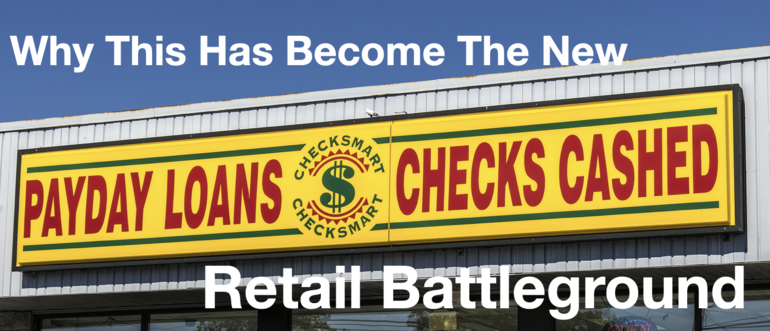
Moebs told CUToday.info payday lenders’ market strength has been growing, and that as the industry consolidates the number of individual companies into fewer, it is putting strength into more powerful and market-savvy hands.
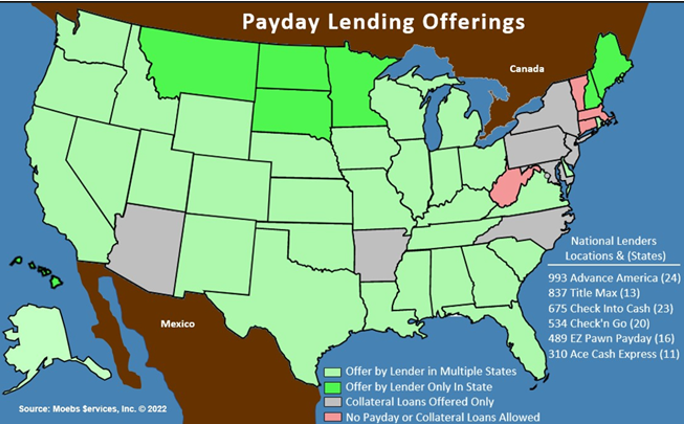
“There has been massive consolidation in payday lenders from over 2,000 10 years ago to less than 300 today,” explained Moebs. “Payday lending is in the hands of just a few. The top six payday lenders have 75% of the locations and are in 39 of the 46 states that allow payday loans, offering secured or unsecured payday loans.”
In addition, the payday loan companies are becoming more formidable competitors as they have been streamlining operations and like every other provider, relying more on digital.
“Payday lenders have moved away from paper check payments to ACH,” said Moebs. “So, the nature of the business has shifted substantially.”
The Front Lines
Moebs said overdrafts are the front line of the fight in financial services because people who overdraw their accounts have unique financial characteristics compared to those who do not typically fall short on check and debit purchases.'
“These are people who make a lot of errors with their checking accounts,” noted Moebs. “This is a fight over the small-dollar loans. The fight is small-dollar loans generally under $500 and seldom exceeding $2,500, yet both sides would like to go to $10,000.”
A Simple Question
What is making payday lenders more attractive to those consumers who overdraft is their pricing on the low end of small-dollar loans.
Moebs summed up the simple equation in front of many consumers this way: “Eighteen dollars for a $100 payday advance versus $30 for an OD with your bank or credit union.”
“And, the payday lender can make a few dollars on this while depositories lose volume,” he continued. “So, even at $30, costs are higher for depositories because they lack the volume to make money… Consumers who go to payday lenders do not care about APR. They know their FICOs are bad. Yet they want low price—$18 gets the business when depositories charge $30, and the consumer’s overdrawn end of day balance is less than $200.”
Moebs said the research shows payday lenders’ customers almost always have FICO scores below 600, while banks, credit unions, thrifts, and fintech customers/members often have FICO scores above that threshold. For that reason, he suggests banks and credit unions consider expanding their reach with lower FICO consumers.

Michael Moebs
Adding Locations
Meanwhile, for now at least, consumers are also seeing a greater physical presence from payday lender, which have been adding locations in markets across the country.
“The number of payday lenders in the U.S. could be half of what they are today by the end of this decade,” said Moebs. “There will be fewer payday lenders by 2030 with fewer locations but more customers will be using their services via the Internet.”
Moebs $ervices data show the greatest number of payday lender locations can be found in Texas, with Florida, California, Tennessee and Alabama rounding out the top five states. Nevada, Michigan, Missouri, Louisiana and South Carolina, respectively, round out the top ten.
“These states have 3,700 locations, or 72.6% of all payday lender locations or branches,” Moebs said.
What’s Ahead?
What’s ahead? Moebs is predicting payday lenders will grow in the number of overdraft users and, as a result will see increased profitability, while banks, credit unions, thrifts and fintechs will lose OD users and be less profitable.
“If FIs want to stay in the overdraft business they must have limits to $10,000, prices less than $20 per transaction, and substantially reduce the number of employees who process transaction accounts,” Moebs said, adding that checking account pricing and structure will be critical, as well.
“There are several key strategic decisions depositories need to consider for checking accounts,” continued Moebs. “Can checking costs be cut to achieve profitability? This makes profitable checking less reliable solely on fees. They can make revenue from more transaction volume on checking with no change in prices for interchange or swipe fees. And, can checking users be cross sold more services to develop a profitable relationship even with unprofitable checking? It is not overdrafts that count, but how checking can be profitable. Payday lenders know how to have profitable customers.”