


SAN DIEGO—As Earth Day arrives, credit unions have many initiatives underway that not only give back to the environment but also to the CU as well—including one solar loan program generating $4 million-$5 million a month in new balances that to date has seen zero delinquencies.
Here’s a look at what three credit unions are doing:
SAN DIEGO–San Diego Metropolitan CU’s solar loan program started slow when the $261-million CU introduced it in 2011, making it one of the first solar lenders in California. But activity began picking up once SDMCU began establishing strong relationships with a large number of solar contractors and conducting workshops with the installers early in the process.
Now San Diego Metro is averaging nearly $5 million a month is new solar deals and has underwritten more than 4,300 loans since the program started.
“The program works mainly because we have the direct relationship with our contractors—about 250 are in our system and about 95% of our solar business comes through them,” said Marshall Tanneberger, VP of lending, who explained he realized the regional need for solar loans several years ago when he wanted to install a solar system at his own home but could not find financing.
But SDMCU points to other reasons its solar loan program is doing well, including its environmentally conscious West Coast market, deals that are not complicated, and rates are low. “It’s simple interest financing,” said Tanneberger. “So it’s just like buying a car, except there are many more term options available and buydowns to get the rate so it is affordable.”
Tanneberger said that contractors will often assist in the rate buydown.
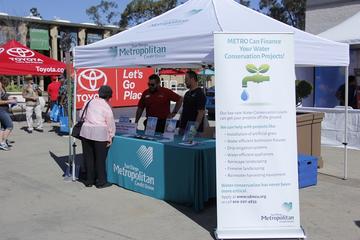
SD Metro at Earth Day celebration
“There is a lot of flexibility in these loans, which is important. The member has to be able to get the payment to be lower than the existing utility bill or there is not really a good purpose for them,” said Tanneberger.
The average monthly payment is often below $200, Tanneberger explained. The typical solar system runs about $30,000 and can go as high as $50,000. The credit union offers risk-based pricing starting from 4.99% APR for 12 years and up to 9.99% for up to 20 years. Buydowns often take the rate to 1.89%, he said.
One issue with solar systems is they do not hold their values, as installations can become outdated in just a few years. But Tanneberger said San Diego Metro is not concerned about delinquencies—which currently stand at zero—for two main reasons: it does not finance commercial installations, and the systems are considered part of the property allowing SDMCU to attach a lien on the equipment, placing it in first position among all creditors who could make a claim on money from the home’s sale.
Tanneberger said that members who install the system see the addition as an important part of their home and pay their solar loans diligently as they do their home loans. The credit union has had to enforce one lien to date, when a member’s home went into foreclosure and was sold in a short sale. The CU got its money back, he said.
Tanneberger terms solar loans great for both the credit union and member.
“Not only do members get a much lower payment than if they went to bank, the credit union gets a very good yield with very little risk,” said Tanneberger. “Where else can a credit union turn to get interest rates from 5% to 10% with about a zero default rate?”
San Diego Metro has become every active in local environmental efforts, including being an annual sponsor of the world’s largest environmental fair at Balboa Park in San Diego to celebrate Earth Day. The event this year took place on April 17.
Green Leadership Starts At Home
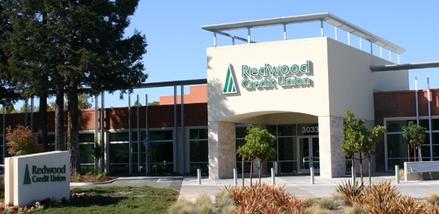
SANTA ROSA, Calif.–For Redwood Credit Union, which has long been recognized as a leader when it comes to being green, that leadership starts at home—with its own offices.
One of the most important eco-friendly decisions the $2.8-billion CU has made, according to SVP Robin McKenzie, was to rework and remodel its administrative office in Santa Rosa to become an environmentally friendly LEED (Leadership in Energy and Environmental Design) certified building. Built in the 1960s, the office was not efficient, she said.
“We went through the arduous process of becoming one of the first LEED certified buildings in the area. We used sustainable, renewable materials, energy efficient and climate controlled lighting, added a water conservation system and solar panels. . . We did quite a lot to make the building environmentally sound,” said McKenzie about the CU’s move into the new office in in 2005.
The building’s 2,036 rooftop solar panels produce 662 kilowatts of power, which provides an estimated 61% of the location’s annual energy requirements. It’s expected to pay for itself in less than seven years.
Water-saving efforts in restrooms and landscaping produce an estimated savings of nearly two-million gallons of water per year.
McKenzie stated that the green building is only a part of Redwood Credit Union’s efforts to give back to the environment, saying it has been recognized for its eco-efforts for well over 25 years.
“We partner with many local green organizations that share our commitment to the environment, including the US Green Building Council, Sonoma County GoLocal, Center for Climate Protection and many more,” said McKenzie. “We also provide free meeting space at our administrative offices for their educational programs and conferences.”
In addition, Redwood CU has a “Green Center” on its website that shares tips and ideas for how people can reduce their carbon footprint.
“It explains how working with Redwood Credit Union can help the environment, through going paperless via our electronic banking or by taking a solar loan,” said McKenzie. “Our solar loans are very popular, and range from five to 20 years for as low as 6.99%.”
McKenzie said that green initiatives strengthen ties with the membership.
“Our surveys tell us that we have a very strong and loyal membership,” said McKenzie. “Membership is growing at 7% this year and we believe our green efforts make a difference. Members tell us that they want to do business with a financial institution that does the right things for the environment.”
Partnership Makes 0% EV Loans Available
ATHENS, Ohio–Ohio University Credit Union is partnering with Upgrade Athens County to offer 0% electric vehicle loans.

Eva Bloom
Upgrade Athens County, an environmentally focused community organization, is using donations to buydown the rate on the $311-milion CU’s loans for electric vehicles to 0%.
Eva Bloom, membership development specialist at the credit union, explained that the community group approached OUCU about the partnership, hoping to get more electric cars on the road locally.
But “range anxiety” may be in the way of more of these loans getting booked, said Bloom, who noted that just two loans have been funded since the offer began in December.
“I think more interest will show in this loan when the network of charging stations builds in our area,” said Bloom.
The Saturday following Earth Day the credit union will be part of an energy expo during which the city will unveil a free, quick charge station for electric cars.
“This is a rural area and people have to drive a long way sometimes to get to town,” said Bloom. “I think they have been concerned that there were no publicly available charging stations. When the station is opened I think we will see confidence build among consumers here that they can buy an electric car and it will serve their needs.”
The loans cannot be used for hybrids, and the two deals that were closed were for Nissan Leafs, which cost about $14,000.