

VANCOUVER, B.C.–Challenged to attract younger members and workers? One person said to be more successful credit unions need to pay attention to six trends that are underway, as within them there are some credit union advantages.
The issue of attracting both younger members and workers is clearly a global concern, judging from the reaction of credit unions gathered here for the World Credit Union Conference.
Kim Lear, a researcher focused on generational change and the founder of Inlay Insights, said these are the six trends shaping the next era of work and markets:
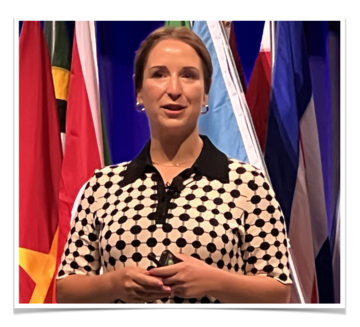
Kim Lear speaking to World CU Conference.
Trend 1: Parent-Child Friendships
Lear said research on shifting family structures has revealed a global trend toward a “friendship-like dynamic between” Gen X parents and Gen Z kids. It’s a trend that only accelerated during the pandemic as young adults moved back in with their parents, she said.
She noted about 58% of teens said their parents were among their best friends before the pandemic.
“We have these parent/child relationships where they have the same cultural touchpoints,” said Lear. “Fewer teens are working, having sex, drinking, and getting driver’s licenses, and they are spending substantially more time with their parents than they did 20 years ago.”
In many cases, children and parents are now creating content for Tik Tok together. That’s a big change from a generation earlier, when younger people exited Facebook as soon as their parents began using it, Lear said.
What It Means for Credit Unions
Lear said one thing seen in consumer behavior affecting the workplace is parents/children are highly influential in each other’s employment opportunities and purchases.
Research has found that when Gen Z receives a job offer they turn to their “number-one influencer, mom and dad.”
“At this point it really is an intergenerational sale,” Lear said of making a job offer, noting some employers have proactively addressed what those number-one influencers would be asking (such as about dental plans and retirement).
Young adult children are also having a big impact on the marketplace of their parents, including on brand loyalty. “When they are making decisions about banking, technology, with a lot of these things they are influenced by their children,” Lear said.
Trend Two: The Well-Being Revolution
Lear noted research in the last decade has uncovered many new insights into the connection between physical and mental health, with the idea “if you don’t make time for wellness you’ll make time for illness” becoming a mantra.
For example, between 2010 and 2020 numerous documentaries were released around physical and mental health, Lear said, which has influenced the generation.
She further noted the definition of wellness has expanded to interpersonal relationships, feelings of inclusiveness and more, and that in turn is being felt in the workplace.
“A new generation is asking the question, ‘What am I willing to sacrifice for my job?’” said Lear.
That is happening even as older employees continue to ask, “’How come they’re not willing to sacrifice the things I sacrificed?” or “Why are you not willing to put in the kind of work I put in?” Lear shared.
Overcoming Preconceived Notions
When credit unions are thinking about bringing in a new generation, Lear said it requires overcoming some of the preconceptions of organizational hazing and what people want out of work.
Working to the advantage of credit unions, said Lear, is a question many younger workers have: “How do my values align with the organization’s behaviors.”
“This is a huge differentiator for all of you,” she advised
Trend Three: Overview Effect
Lear noted that younger people have now grown up with social media and been exposed to many other people’s lives, to “different norms,” and more. In short, they have different perspectives than earlier generations, with Lear noting technology has made everyone a “global citizen.”
She further noted that previous generations grew up with regional events; today’s generations have grown up with global issues such as disinformation, the pandemic, climate change and more, all of which creates a “connectedness.”
“In the midst of the world feeling so big there is this craving for a real connection to local community, with an expectation impacted by the entire world,” said Lear. “I think the fact that local community angle is so strong in credit unions is a selling point.”
Credit union leaders need to be paying attention to global financial influencers, Lear advised.
What It Means to Credit Unions
Having younger members provides more intimate access to what is influencing those members, said Lear.
“Now is the time to invest in anything that solidly puts you in a place of credible expertise,” said Lear. “As social media has become flooded with messages, a lot of that advice is not good. With more content comes more confusion.”
As an example, Lear shared how the predictions were that WebMD would lead to a need for fewer general practitioners and more specialists. Instead, all of that access to information has created demand for more GPs.
“People are hungry for experts, for curators, for help in sifting through information to come to reasonable recommendations,” said Lear.
Trend Four: COVID-19 Pandemic
The pandemic created delayed development of adult style communication skills for a group that was catapulted into adulthood, according to Lear.
“One thing we saw with Millennials is when they started dating seriously their skills got better in the workplace,” said Lear, noting being a really good texter lost its importance.
In the workplace, Lear said many employers have put more intentionality and training behind communications and other soft skills.
“There used to be training of older workers on the new technology, but now with the new generation they are tech literate but it’s the communication skills that need finessing,” she said.
Lear said credit union leaders need to ask themselves what types of communication they are most receptive to so that the organization can more productively train on that. The good ideas of many younger workers often fall through the cracks because of how they were communicated, according to Lear.
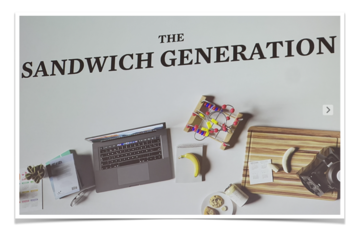
Sandwich Generation
Lear urged CUs to pay attention to the so-called “Sandwich Generation,” those who are now in their prime earning years and who are sandwiched between aging parents on one side and children on the other.
“Gen X is in a particularly precarious position here,” said Lear. “(Adult care) is long lasting and incredibly expensive. On the other side they are the first to navigate parenting with social media. “If there is one takeaway the best gift you can give people in this life stage is the gift of their time back,” she continued. “It’s an impossible balancing act and everything you can do to make this more seamless is most valuable.”
Mortality Salience
Mortality Salience is the psychological study of how large groups in society respond when faced with death or a long-term illness. As an example, in the U.S. heightened awareness of mortality salience was seen in studies conducted after 9/11, Lear said.
“I bring this up for credit unions because this is the moment we are very much in and you should leverage the work you do and the mission you have, so when people revisit who they really are and what they really want, they can receive an answer in the credit union community,” said Lear.
Trend Five: The Age of Authenticity
“This is the idea of bringing your whole self to work. Social media came along and lowered the barrier between professional and personal lives,” Lear noted.
She shared that most organizational psychologists now agree that allowing people to be who they really are is a positive thing. But it is also proof of the Law of Unintended Consequences, Lear added.
“Authenticity is about bringing your whole self to work, and leadership is about bringing your best self to work,” Lear told the meeting. “What we have been seeing in the workplace is, however you are feeling, whatever happened to you that morning, it’s OK to discuss and to let it influence your work that day. Now, there has been a real shift in leaders setting boundaries so we can guide the shift more effectively and bring a sense of stability.”
An Opportunity, Albeit A Tough One
There is an opportunity for credit unions, but it’s difficult, Lear acknowledged.
“The marketplace holds you to an incredibly higher standard when it comes to ethical and moral behavior, much more than a bank,” said Lear. “If what you are doing in your communities is not matching, it can create a real disconnect and belief the organization is not authentic. This is incredibly important to a new generation that can tell when something is not being authentic.”
Trend Six: Always Be Optimizing
Lear said convenience is about eliminating little aggravations and ease of use, while optimization is about making something more useful and more effective.
What does this mean to credit unions?
“It’s important to understand where this desire for customization is coming from,” said Lear. “It’s not about a snowflake generation that thinks it’s so unique. Instead, people have become accustomed to a certain level of seamless optimized interactions that allow them to make customized, personalized purchases.”
Lear urged credit unions to think about the “sacred cows” within their organizations that represent “institutional knowledge,” and then to look at those through another lens to ask how the CU can change ways of working to be more effective, to provide people with more experiential communications and more.
“The things you have always stood for the rest of the world is coming to now. It’s such a powerful thing,” Lear said.