WASHINGTON–After spending more than $8 million this election cycle, credit unions and their trade associations will be joining the rest of the nation in paying close attention to the results of today’s mid-term elections, watching not just how CU-supported candidates have fared but how the focus of Congress might change.
This election cycle has set a new record for donations by credit unions and their associations—and in at least one case also involved asking a candidate to return funds—with CUNA’s PAC, the Credit Union Legislative Action Committee (CULAC), pouring more than $500,000 into just one Senate race.

Pollsters and election forecasters are predicting the Democrats will flip the House away from Republicans and win a majority. Democrats would need to win 23 additional seats in the mid-terms to take majority control of the House, and some forecasters have said they could win as many as 43.
If that is the case, it will mean a change in the leadership of all the committees and subcommittees in the House, and a resulting change in the agendas of those committees, which, for the past two years have been especially focused on deregulation.
Nearly $7 Million Spent
CUNA said it and its state leagues have spent nearly $7 million in this election cycle supporting 388 candidates for the House and Senate, including donations made to candidates in 47 House races in which a seat is open but a candidate who is a credit union supporter has been identified.
Of that $7 million, $3.6 million has been donated in direct candidate contributions by CULAC of up to $5,000 per election (meaning $10,000 if donations were made during both primary and general races), according to VP Political Affairs Trey Hawkins.
Hawkins noted CULAC is rated among the top 10 PACs overall and in the top five among trade association PACS. CULAC is “by far the largest bipartisan PAC,” said Hawkins, and has made contributions on an almost 50/50 split among Republicans and Democrats.
per election and $10,000 if primary to the general.
Races Getting Close Attention
According to Hawkins, the candidates CUNA will be paying particular attention to today include Sen. Jon Tester (D-MT); Sen. Joe Donnelly (D-IN), to whom CULAC has donated more than a half-million dollars; Sen. Joe Manchin (D-WV); Sen. Claire McCaskell (D-MO); and Sen. Cindy Hyde-Smith (R-MS), whose race is expected to go to a run-off due to a unique situation in Mississippi.

Trey Hawkins
In the House, CUNA is focused on races involving Rep. Tom O’Halleran (D-AZ), Rep. Pete Sessions (R-TX), Rep. Steve Chabot (R-OH), Rep. Steve Culberson (R-TX), Rep. Bruce Poliquin (R-ME), Rep. Ted Budd (R-NC), and four Illinois incumbents: Rep. Peter Roskam (6th district), Rep. Mike Post (12th district), Rep. Rodney Davis (13th district), and Rep. Randy Hultgren (14th district).
“It’s certainly possible we will lose some of these, but we feel it’s imperative for credit unions to ultimately stand up for candidates and lawmakers who have stood up for credit unions and been advocates for our members,” said Hawkins.
Such advocates are those who have worked to protect the credit union tax status, worked to reduce regulations and who have supported efforts to reduce data breaches or hold accountable companies involved in data breaches, among other issues, Hawkins added.
Recent Independent Expenditures
In recent weeks CUNA/CULAC have been especially active in 15 specific races, providing support in the form of independent expenditures, which do not involve the candidates or the candidates’ campaigns. Those independent expenditures have been made in the form of ads on television and radio, digital ads, direct mail, websites and social media.
AsCUToday.inforeported earlier, the independent expenditures have included:
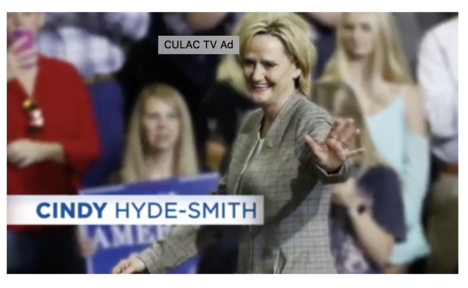
- Television ads for Sen. Cindy Hyde-Smith (R-MS), who was appointed to fill the seat vacated by Sen. Thad Cochran, who resigned for health reasons, until the next scheduled election. She is now seeking to win the special election to complete the term, which expires in 2021. Under Mississippi law, she is appearing on the ballot with three other candidates, with no party affiliation listed, CUNA noted.
- In the Indiana Senate, CULAC is spending $525,000 on digital advertising and direct mail supporting Sen. Joe Donnelly.
- In the Montana Senate, CULAC is spending $250,000 on an IE in support of Sen. Jon Tester (D) comprised of direct mail, digital ads on Pandora, and radio ads.
- In Arizona’s 1st Congressional District, CULAC is spending just over $76,000 on direct mail IEs in support of Rep. Tom O’Halleran (D).
- In Ohio’s 1st Congressional District, CULAC is spending $200,000 on an IE in support of Rep. Steve Chabot (R), comprised of television, radio and digital ads.
- In Texas 32nd Congressional District, CULAC is spending $200,000 on an IE in support of Rep. Pete Sessions (R), including ads on television, radio, digital, and a website, www.CreditUnionsforSessions.com.
- CUNA released partisan communications in the West Virginia Senate race supporting Sen. Joe Manchin, in partnership with the West Virginia Credit Union League, and in North Carolina’s 13th District supporting Rep. Ted Budd, in partnership with the Carolinas Credit Union League.
Getting Out the Vote
Earlier this fall, CUNA also launched Credit Unions Vote, a campaign focused on getting credit union members to vote in the November elections. According to CUNA’s chief political officer, Richard Gose, the website has seen more than 10,000 visitors to date, with 2,700 people registering to vote through the site.
Gose said the most active states with visitors to CreditUnionsVote.com have been Texas, Illinois, Ohio, Indiana, Kansas and Minnesota.
“There are a lot of good things going on for credit unions in the election,” said Gose. “We just want folks who are amenable to credit unions and the credit union message. We also able to inform people about some key issues, such as data breaches.
NWCUA Asks For Money Back
The Northwest Credit Union Association has asked one candidate to return a donation it made. Following comments and Facebook posts made by Washington State Rep. Matt Shea of Spokane Valley in which he indicated support for a “Holy Army" that should kill people who flout biblical law, the NWCUA is seeking he return $1,000 from the association’s PAC. Shea has acknowledged distributing a four-page document titled, "Biblical Basis for War.” According to local media, the document condemns abortion and same-sex marriage and describes how those who don't follow biblical law should be punished. At one point, the document says, "If they do not yield, kill all males." Several other organizations have also asked for their donations to be returned.
What One ‘Index’ Is Forecasting
Today’s mid-term elections are taking place during the highest financial confidence in the past 50 years, according to the November Money Anxiety Index decreased to 42.0, which hit its lowest level since November 1968.
“Lower level of money anxiety is a sign of high financial confidence,” said Dr. Dan Geller, who publishes the Index. “During presidential elections, lower money anxiety, of high financial confidence, translates into votes for the incumbent president, who is running for reelection, because voters associate the overall economy with the presidency. However, mid-term elections are slightly different because voters are also concern about local and state issues.”
According to Geller, the Index has a perfect track record in predicting presidential reelections. In all nine presidential reelections in the past 50 years, the incumbent president won only when the Money Anxiety Index declined during the reelection year. “The most recent example is President Obama's reelection. In January of 2012, the Money Anxiety Index stood at 90.9, and declined to 87.1 by November 2012 - a reliable indication that President Obama would be reelected,” Geller said.
CUNA to Host Post-Election Webinar

CUNA will hold a post-election landscape webinar on Thursday, with CUNA President/CEO Jim Nussle, Chief Advocacy Officer Ryan Donovan, Chief Political Officer Richard Gose, and Deputy Chief Advocacy Officer for Political Action Trey Hawkins offering a “comprehensive breakdown on how the election results will shape CUNA advocacy efforts going forward,” the association said. Registration is now open for the webinar, which is scheduled for 3:30 p.m. to 4:30 p.m. (ET) Nov. 8 and is free for CUNA members.
Big Banks Hedge Their Bets
It appears the big banks and companies in the securities and investment industries are hedging their bets today, and have been giving more money to Democratic candidates, especially those considered moderates.
Democrats would need to win 23 additional seats in tomorrow’s faces to take majority control of the House, and some forecasters have said they could win as many as 43.
Citing data from the Center for Responsive Politics, an analysis by Bloomberg shows the securities and investment industries have given $56.8 million to Democratic congressional candidates and $33.4 million to Republicans this election cycle. The same data show bankers – who most often prefer Republicans – are also giving a helping hand to Democrats, donating $8.5 million to Democratic candidates, but less than the $13.5 million donated to Republicans.
“More moderate Democrats, such as those that helped create and pass S. 2155, are garnering more support as the financial services industry hopes regulatory relief efforts will continue in 2019,” noted NAFCU in its analysis.
Unlike the House, polling projections have the Senate remaining in the Republican majority. Senate Democrats have 26 seats up for reelection, while just nine Republican seats are being contested.