MADISON, Wis.–Three case studies around a trio of small credit unions that have been identified as “thriving” are being shared, offering insights into their unique operations and why they have prospered, including generating the kinds of ROAs that would be the envy of much larger credit unions in some cases.
The stories of the three CUs were highlighted during a webinar hosted by Filene titled, “Industry Collaboration and Secrets to Thriving.”
Those stories are being shared here in CUToday.info in part II of a two-part series. Part I can be found here.

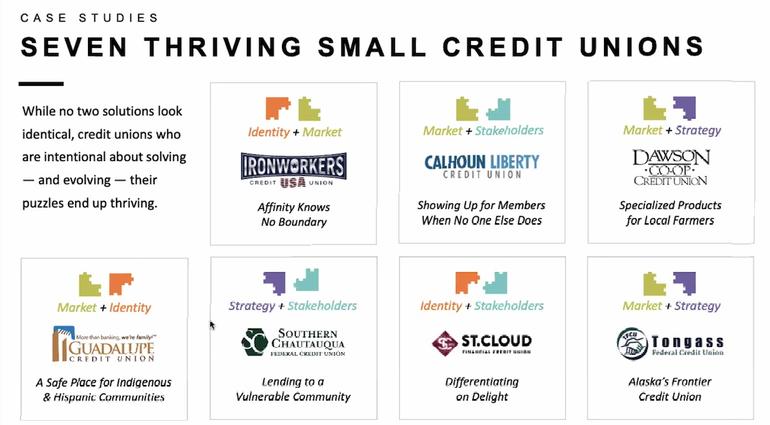
The webinar highlighted research Filene has joined with CUNA Mutual to conduct on unlocking the puzzle of why some small CUs have performed well even as others have floundered. In all, some seven thriving small CUs were highlighted and profiled at greater depth by Filene and CUNA Mutual, although time constraints limited discussion to just three during the webinar.
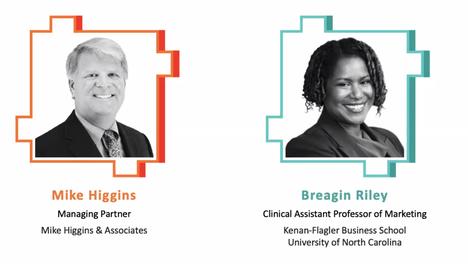
Participating in the webinar were Breagin Riley, clinical assistant professor of marketing with the Kenan-Flagler Business School at the University of North Carolina, and Mike Higgins, managing partner, Mike Higgins & Associates.
The discussion was moderated and led by Taylor Nelms, senior director, market insights and advisory services, with Filene.
“I think one of the most exciting parts of the research that we did was the ability to get inside of the stories of some of these thriving small credit unions,” said Nelms. “We have seven examples of thriving small credit unions that we talk about in the report.”
Nelms urged CUs to visit Filene.org to get the full stories on the seven credit unions.
Here is a look at the three case studies.
An Iron Will to Serve Unique Needs
Case Study #1: Ironworkers USA FCU. Portland, Ore.
Assets: $90.5 million
Members: 12,307
Year-End 2022 Income: $2.037 million
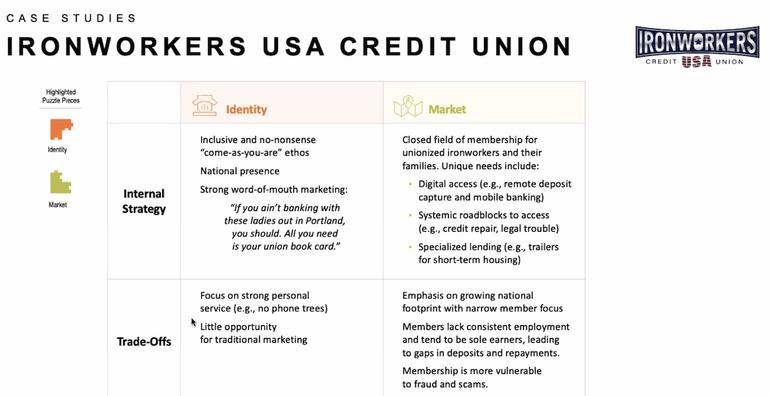
“Ironworkers is a really interesting organization,” said Riley. “Because their charter is for iron workers, there are a lot of people in (what is) a cyclical industry; people who kind of don't fit the mold of your typical bank and with what other people expect. They don't always have employment, they work from contract to contract, and these employees needed a financial institution that really understands the cyclical nature of their income; that at some points they would have more financial need and other points they would have less financial need.”

Taylor Nelms
Riley said Ironworkers USA has developed a reputation for doing as much as it can to help members during those lean times.
“One of the things that really made them stand out against all of the other banking options for these ironworkers is that whenever you call the credit union you get a human on the phone, and that idea of never having to speak to a machine really resonated with these iron workers,” said Riley. “These are blue collar laborers who in many societies might be completely overlooked, but you know it's because they get dirty at work. (The credit union) really believes you are valuable. Come as you are, there's no sort of expectation.”
A Friend (in Need) Request
Ironworkers USA FCU has expanded its FOM from the west coast across the country to other groups of ironworkers, especially in times of need and on short notice. That included a Facebook posting that alerted ironworkers in a different part of the U.S. who were in need of financial services that a credit union existed that could meet their needs.
“They really built this very strong identity as a financial institution that has a strong presence, that really stands behind their members and that believes they are valuable people,” Riley said.
With a membership spread across the country and often traveling from job to job, not surprisingly the credit union has rolled out a mobile app to meet their mobile needs.
The credit union has also built services that include the ability to repair credit “after maybe not paying a particular bill for a few months because (they) weren't employed during that time,” said Riley.
Other products/services specific to the needs of ironworkers have included short-term loans for housing, such as renting a trailer to live close to a worksite.
Speaking to the Members
“Ironworkers was able to develop a product portfolio that really spoke to who their members are and what they wanted and, of course, along the way they made some trade-offs,” Riley explained. “They invested a lot of money in making sure they have employees to answer the phone when it rings and they don't spend a lot of money on traditional marketing. They're not going to run a commercial campaign on television or anything like that, because that's just not the best bang for their buck. They're getting a lot of promotional value out of word of mouth, not only from their members but also from the people who hire their members, the site managers. They're leveraging that.”
Riley said Ironworkers USA also recognizes its membership is vulnerable to frauds and scams and as a result the CU carefully monitors transactions, especially for loans the member may take out with a predatory lender.
“They call up that member and say we can give you a better deal than what you got at the motorcycle dealership. It's got a lower interest rate. Would you switch over to this product?” Riley related. “It makes a huge difference.”
Two Items of Note
Higgins said two things struck him about Ironworkers USA FCU: the power of word of mouth, especially for smaller CUs, and how it has carefully deployed its limited resources.
It pays off on the bottom line, he said.
“The biggest thing they have is their loan-to-asset ratio is over 80%, so that allows them to have a big fat net interest margin, not because they're gouging their members on rate, but because most of their assets are earning that high yield,” Higgins said. “They produced over 2% return on assets at the end of 2020 and for the calendar year ended in 2021 and that's allowing them to make some of those investments.”
A ‘Gem of a Credit Union’
Case Study #2: Calhoun-Liberty Employees CU, Blountstown, Fla.
Assets: $108.7 million
Members: 6,040
2022 Year-End Net Income: $1.222 million
Riley called Calhoun-Liberty ECU a “gem of a credit union” in a primarily rural area (Blountstown is in the Florida panhandle, 48 miles west of Tallahassee).
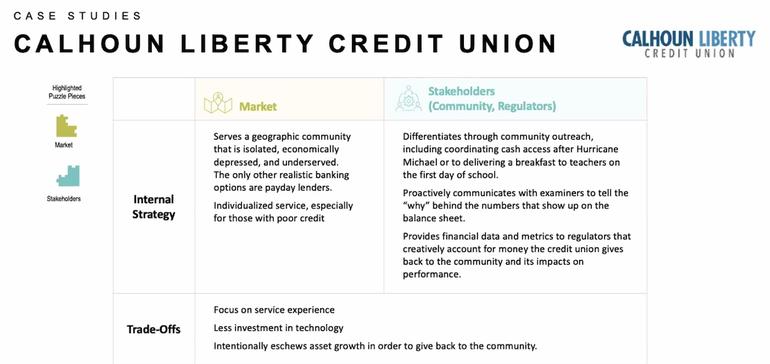
“Their market it is geographically isolated it's economically depressed and it is underserved. There just aren't a lot of opportunities in that market to interact with financial institutions and it is dominated by payday lenders in general,” said Riley. “Calhoun Liberty as an institution sees that and says, ‘We are the buffer for this community. We are the institution that needs to really think about what it is like to live here and we need to tailor our offerings and our existence in this community. We are viewed as a member of the community and not just another transactional institution’.”
‘Powerful Demonstration’
To that end, Riley said CLECU has strong relationships with the community, as it does considerable outreach. In the wake of Hurricane Michael, for instance, Riley said it partnered with other credit unions and financial institutions to bring physical cash and other relief into its communities.
“It was such a powerful demonstration of belongingness and concern and care or the community that it built a lot of goodwill and people then wanted to work with Calhoun Liberty because Calhoun Liberty was there in their most vulnerable moments,” said Riley.
She shared how the credit union’s staff has driven two hours away to the closest Chick-Fil-A to deliver breakfast to teachers in the Calhoun County and Liberty County school districts on the first day of school.
‘Really Powerful’
“It's just a sign of their appreciation for what those teachers do in the community, whether the teachers are members or not,” Riley said. “They build into the community in these ways that are really powerful and transformative in shaping the ways that people develop relationships with financial institutions, and in a community that is economically depressed. They're saying just because we're economically depressed doesn't mean that we have to lack goodwill and warmth in our financial institution; let's be that community partner.”
Riley said the credit union has also been proactive in managing relationships with its regulators, making sure examiners understand community outreach is a cost that affects their balance sheet, but it also has a payoff.
“They're able to show in their performance metrics (that) if we didn't give back to the community we would look like this on paper and we would be these shiny rock stars, but we do this outreach and it doesn't make us look worse,” Riley said. “We're doing this outreach because it is important to our community that we exist in this way.”
What Examiners Want
Higgins stated that what examiners want to see is that a plan is in place and that scenarios have been thought through.
“You tell them when you execute, ‘Hey, we said we're going to do this, we did this.’ I think that buys you a lot of leeway with them for the right reasons,” he said.
He noted Calhoun Liberty ECU also has a high loan-to-share ratio and a diverse loan portfolio, which he said is indicative of full relationships with members.
“They have a high dollar amount of net revenue per member. The other thing that was interesting is they have very, very low net charge-offs, 13 basis points,” Higgins said. “That shows loyalty, that these people are looking out for me.
Unique Location, Unique Branch Approach
Case Study #3: Tongass FCU, Ketchikan, Alaska
Assets: $154.7 million
Members: 9,077
Year-End 2022 Net Income: $1.034 million
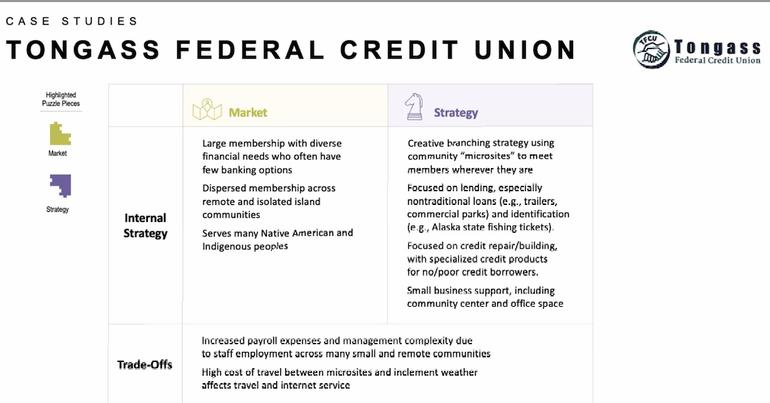
The first thing to know about Tongass FCU, said Riley, is just how “geographically interesting” it is, serving a series of islands along Alaska’s arm west of British Columbia.
“The way their members commute to the different credit union sites often involves a seaplane, which is something that you don’t see in the lower 48,” said Riley. “They are really serving a community of people who have geographic concerns and constraints. They have to sort of navigate that geography. There are a lot of remote communities, a lot of tribal communities as well, they serve a lot of Native American and indigenous people and they have tribes as their member base. They have a very large membership, but the needs of that membership are incredibly diverse and because they're so geographically isolated there aren't a lot of banking options.”
Riley described the way Tongass FCU has responded to its market as “really innovative,” referring to the micro-site branches the credit union has developed.
“They basically say, ‘We don't need a lot to set up a branch in your community, we just need a location that is secure for the money. We need a safe and we need to make sure that people in the community can have access’,” Riley explained. “They will set up one of these microsites in lots of different small communities throughout the archipelago and they focus a lot on lending, so they have a slew of nontraditional loans. People are looking for loans for their trailer, they're looking for loans within a commercial park. The idea there is that they are moving to where the work is and sometimes they need the loans to set that up.”
Not Really Fishy
Another unique practice at Tongass FCU, according to Riley, is that it allows the use of fishing licenses as proof of identification.
“They focus a lot on products that help their members build and repair credit,” Riley continued. “They have the introductory loans that are fairly small, $500 (which is deposited into a savings account). They have new members pay back this loan over time and in doing that helps establish the credit. Then the credit union will also reward them for that by paying a bit of interest on that that $500, as well. It's pretty powerful.”
Riley said Tongass FCU also provides considerable support to small businesses, including partnering with local community centers to hold classes on business development, and providing loans to small business owners, Etsy sellers and small cafes.
Really Giving Back
“They really, really give back,” said Riley. “They have a community garden they support. They really do things in the community that people value and they show the folks up in Alaska that, ‘Hey, you matter and we understand your lifestyle doesn't look like what the typical American lifestyle is like; here's some support for you, we're members of your community’.”
All of that comes with some trade-offs, acknowledged Riley, including high payroll expenses.
“Each of these microsites needs an employee to work there. They hire from within the community, which is really wonderful, so when they open up a branch they're actually giving some economic empowerment into the community,” Riley explained. “There's also a high cost of travel between those sites, there's a lot of inclement weather, blizzards, things like that, so they have to really be concerned about various hazards within the environment and managing the cost of travel between sites. But they do it and they thrive.”
High Loyalty Apparent
Like the other credit unions identified by Filene and CUNA Mutual as thriving small CUs, Higgins said the loyalty of members of Tongass FCU can be seen in just two basis points of charge-offs during 2021. He also credited the CU for the diversity of its loan portfolio.
“Here's another interesting thing and this might kind of go back to managing proactively, managing that relationship,” said Higgins. “I know a lot of credit unions saw stress on their net worth because of the stimulus dollars that increased the size of the balance sheet when you look at a simplistic net worth ratio. When you look at net worth in relation to assets, (Tongass FCU) actually falls under 7% at 6.8%, but that's still adequately capitalized.
“But if you look at them, they don't have to classify (on a) risk basis, but if you had to…they're well above where they would need to be from a risk-based perspective.
“So, it's kind of one of those things of there's more than one way to get there and more than one way to tell your story to the examiner so that the examiner understands, ‘Hey, I see this and this looks like an outlier, but there are very low losses…” Higgins continued.
Higgins predicted Tongass FCU is going to benefit as rates rise because the CU has stable deposits and it’s going to create “a nice fat spread.”
The Real Narrative
In summing up what the thriving small CUs represent, Filene’s Nelms said, “The narrative around small credit unions too often emphasizes their weaknesses. Thriving small credit unions start with their strengths and I think that we can learn something from them about how they approach building a strategy that is strengths-based and focused on what they can do and are doing for their members and for their communities to build that financial sustainability over the long term.”
In the graphic below are identified all seven of the CUs Filene and CUNA Mutual identified as thriving.