

LAS VEGAS–Has your workplace become something of a circus? Then why not learn from one on how to improve.
Members of the management team at Cirque du Soleil shared with credit unions here what they have learned in running what on the public side is a circus, but behind the scenes in Las Vegas alone is seven different shows with more than 2,000 employees and $2 billion in annual ticket sales.
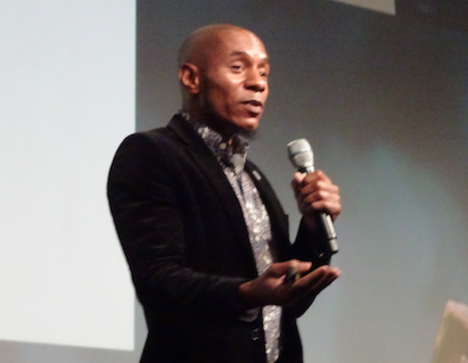
Jay Guilford speaking to REACH.
They key lesson Cirque du Soleil has learned, according to Jay Guilford, creator and content specialist with Cirque’s SPARK Sessions, is the ROI from human capital investment and, more specifically, of not just throwing money at the issue.
Instead, Guilford told the California and Nevada leagues’ REACH Conference here, it is about making investments based on what the company has defined as the “three C’s.”
In the case of Cirque du Soleil, those investments have included massages for employees as often as twice a week and catered meals, but also deeper corporate cultural practices that include cross-department pollination and meetings.
“When we talk about human capital investment, people get that confused with perks,” said Guilford. “Those are two different things. You hear about these start-ups and 12-year-olds with offices out of the Matrix where they ride their bikes through the hallways, and I don’t know if those are perks or investments, but at Cirque the fringe benefits we provide are organic to our employees’ needs. Human capital investment has to be organic to your employees’ needs. This is not a perk; it’s something the employees can really benefit from, something that gives you ROI.”
Guilford said its approach to employees is the result of some “hard lessons learned early on.” In 1984 employees were complaining about backstage accommodations and other issues, and announced they were going on strike. In response, management of the company that originated in Quebec chose to invest in its human capital.
The Three C's
According to Guilford, the three C’s of human capital investment are Conscious, Considerate and Compatible.
- Conscious. “Policies and practices need to be conscious of what employees really need.”
- Considerate. “It needs to be considerate of everyone, not just for the heavy hitters or the salesmen. We could say the perks are just for the artists, but this is for everyone.”
- Compatible. “It has to be compatible with your brand. Do not go back and start to bring in clowns or do catered meals if that’s not compatible with what you are trying to do for your employees. We have events where artists can interact with the public, which they don’t usually get to do.”
The Q&A With Cirque Management
As part of the presentation, Guilford brought to the stage three members of Cirque du Soleil’s management team: Emmanuel Durand, “Coach” of Cirque’s “O” show; Brooke Wahlquis, community projects manager, and Alma Derricks, VP of sales and marketing. Here’s what each had to say in response to questions posed by Guilford about lessons learned in managing human capital at Cirque du Soleil:
Guilford: Where do you find talent?
Durand: We have an excellent casting department. Much of it is done 24/7 online. We also have talent scouts who are literally traveling the world all year long, mostly to sports championships and circus festivals. As romantic as it sounds, the Olympics is for the athletes. That’s not the best moment for us. We try to have a longer-term strategy and build connections with international federations so they aware that at the end of an athlete’s career there is another career path for them.
Guilford: What do you do with talent once you have it?
Wahlquis: Then it is about nurturing and retaining the talent, both on and off stage. One project that we started nine years ago is a choreographer’s showcase, which is an opportunity for company members of the Las Vegas ballet and the performers of Cirque to create their own show, which is performed once or twice and then not seen again. It’s a tremendous professional development program. It helps technicians, marketing teams, sales teams; all are welcome to participate, and in different roles—there are ticket agents who are performers, for example. It gives everyone a chance to evolve from what they do from day to day and to show off their skill sets to senior management.
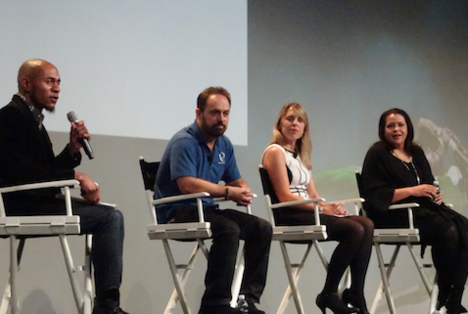
From left, Jay Guilford, Emmanuel Durand, Brooke Wahlquis, and Alma Derricks.
Guilford: Alma, you have a different need for talent?
Derricks: I have sales, ticketing, PR and marketing, and one of the things that is important to me and one of the ways we’ve changed how the department operates is that I try to get all those different disciplines around the table. We even have performers at the table. We cross-pollinate as often as we can. It’s one of the places where our best ideas come from. You never want to let the opportunity pass to have discussions.
Guilford: Describe one of the unique investments Cirque has made in human capital?
Wahlquis: I think it would have to be the fact we really look for the employees’ engagement first and foremost by asking the employees what they are interested in, and we use that human-centered design model from the start. When you try to create things for your employees and you haven’t taken the time to find out what interests them, odds are it will backfire on you or won’t be as popular as you thought it was going to be. One idea is our social grants. it used to be that we decided independently who would be the recipients of philanthropy. Then we began bringing in our stakeholders internally, and it’s turned out to be a really successful effort.
Derricks: You’re hitting on something important in talking about breaking down barriers. What having different disciplines around the table does is afford a tremendous amount of learning. Everyone learns a little bit about the thought process that others go through. You have to walk the talk. If a great idea comes to the table, you have to act on it. Once we get something going we make sure it has opportunity to grow or fail or hit some bumps. It’s a culture I’m proud of.
Guilford: There are some unique things that happen backstage? What are some of them?
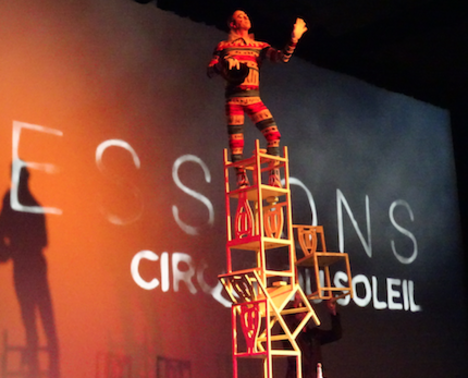
Durand: At O, it is still considered a classic show in that it’s really acrobatically heavy, with about 12 different acrobatic acts at a world class level. When we hire an artist for one role, they learn it very well, but after a few years when they think about leaving we look to transfer them into a different act, and sometimes into a different show. We have some cast members who have been there for 18 years and done more than 8,500 shows. They end up being able to help us and contribute highly. We try to retain people for as long as possible.
Guilford: We often have some big companies come and say let us learn from you. Part of what we have learned is from our mistakes. What is the one challenge you are facing in human capital investment?
Durand: The biggest challenge is we need replacement people from time to time, but we need them now. But we have to have a period of time, four to six weeks, before we are able to provide that relief. And that’s where we have to be creative and pull out of our own cast and fill in the blanks.
Guilford: Have you made a mistake in process and what have you learned from it?
Durand: The biggest mistake has been trying to go fast instead of focusing on doing it well, and that creates a bigger issue. We have learned to take more time.
Wahlquis: Our challenge is communication with 2,000 employees. We don’t ever want to just say no to an idea from an employee, because that just makes the communication more difficult going forward. This year we created a committee from across departments and they have been enthusiastic in every meeting, because we’ve made each of those employees an agent of change. They are able to take the information we share with the committee about strategy back and share with their departments and their shows.