

By Ray Birch
WASHINGTON—Is mobile banking challenging the future of some credit union branches on military bases?
With Veterans Day this weekend, that question is among the issues being faced by some military CUs, according to Anthony Hernandez, CEO of the Defense Credit Union Council. Hernandez said what’s occurring is new influences in how some Department of Defense (DoD) leaders view a credit union’s presence on a military installation.
Hernandez, who spoke to CUToday.info about the challenges in front of credit unions serving military memberships, said that perhaps the biggest hurdle facing credit unions that have branches on military bases comes from DoD leaders who have spent most of their careers in Washington and not on a base that has a credit union on-site.
“I hear people say, ‘I have my mobile app, why do I need bricks and mortar banking on the base?’” shared Hernandez. “But there are so many examples of how a credit union located on a military installation makes a difference in the lives of servicemembers, their families and their communities.”
Cash On Hand for Deployments
One big benefit of having a financial institution on a base is to supply money for overseas missions, emphasized Hernandez.
“When someone questions why a credit union is needed on a base, I remind them that when a military execution order drops, a lot of cash is required immediately,” explained Hernandez. “Our military has to pay the landing fee and there are all kinds of different fees a mission faces, as well to cover the ongoing needs of our servicemembers overseas. And those folks over there don’t take a mobile app for payment. They want cold, hard cash.
“I say to the senior DOD officials, ‘Show me at what bank you can get a quarter of a million dollars in less than four hours, and have it counted and put on a plane?’” he said. “I ask them if they truly understand how deployment orders work. And if you did not have a credit union on the base, you’d have to have a contract with some financial institution that would have to keep that kind of cash in their vault and then pay for an armored car to transport the money. I don’t think you could execute that in time for deployment. With your on-base credit union, you have a standing agreement to do that.”
A Reminder
Hernandez believes people sometimes forget why the credit union is on the military installation in the first place.
“It’s very important that we get in front of the right audiences to tell our story, over and over again,” he said. “This is kind of a renewal for us. The changing leadership at the DOD gives us the opportunity to put our brand out there again, talk about what a defense credit union does on an installation and the value it brings—not just for military missions but for the affordable financial services that get young consumers off on the right foot and away from predatory lenders, the financial education that improves lives, and all the good we do serving those who serve our country.”
Tailored Products
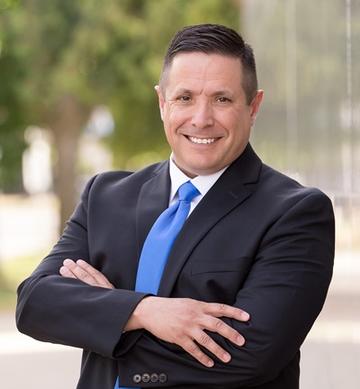
Anthony Hernandez
Hernandez related how many credit unions located on a base will tailor new products and services to meet the unique needs of the military, including Service CU, which has an office inside Grand Forks Air Force Base in North Dakota, and which offers a Warrior Savings Deposit Program.
“When you deploy you have the opportunity to use the Warrior Savings Program to get a 10% return on your money while you are deployed,” explained Hernandez. “When you deploy you get a combat zone tax exclusion, you get hardship duty pay, you receive a family separation allowance…The DoD pays you a lot of money when you are deployed and when you are in a war zone you don’t really spend it. Service Credit Union helps our servicemembers put that money to very good use in an account paying 10%.”
Focus on Blended Retirement System
In addition, the DCUC and military credit unions are also focused today on assisting servicemembers with the DOD’s new Blended Retirement System (BRS), Hernandez said.
The National Defense Authorization Act for Fiscal Year 2016 created the BRS, a new retirement system for military members. The BRS blends the traditional legacy retirement pension with a defined contribution benefit into a thrift savings plan. The BRS goes into effect on Jan. 1, 2018.
Hernandez pointed out that with the legacy retirement pension, a servicemember needs 20 years in the military to receive the benefit. But just 17% of servicemembers make it to 20 years, and those who leave sooner don’t receive any retirement benefit. The BRS would allow for those who leave the military before 20 years of service to receive a retirement benefit.
“That means (under the legacy program) there are probably hundreds of thousands of servicemembers separated from the military that receive nothing from the DoD for retirement,” said Hernandez.
What concerns Hernandez, the DCUC and military credit unions is servicemembers may not have the time or the ability to prioritize understanding the retirement options they now have, as the deadline to enroll in the BRS arrives at the close of this year.
Deadline Approaches
“If they don’t enroll in the BRS by the deadline, those with 0-12 years of service are automatically placed in the legacy program and they can’t change,” Hernandez explained.
Hernandez said the DCUC and defense credit unions are working to communicate the benefits of the BRS, and the approaching deadline, to servicemembers. He added that communications from the DoD on the program have targeted servicemembers, and the DCUC believes possibly the best person to communicate with is the military member’s spouse.
“They are the ones who have more time and can make this a priority, and are often the ones managing the money in the home,” said Hernandez. “They are not the ones who are training, preparing themselves to have the skills to go to war, and often can’t place money matters first.”