

HOLLYWOOD, Calif.–As massive wildfires continue to roar across California, the CEOs of two credit unions who have become reluctant experts in dealing with disasters shared some of the lessons they have learned—such as critical need to make hotel reservations–and continue to learn today.
In a sad coincidence, as CUToday.info reported here, Brett Martinez, the CEO of Redwood Credit Union in Santa Rose, Calif., and John Cassidy, CEO of Sierra Central CU in Yuba City, Calif. were on hand for the California/Nevada league’s REACH Conference for a session on lessons in disaster recovery at the same time new fires were breaking out in areas served by their CUs.
Martinez and the efforts by his credit union to recover from devastating fires were profiled earlier this year in CUToday.info here.
“Unfortunately, John and I have become experts in this area,” observed Martinez in remarks before the REACH Conference.
The 2017 fire in Northern California that hit Redwood CU, its members and communities destroyed 7,000 homes across four counties in just one day, including 5,600 homes within a two-mile radius of its corporate office. It wasn’t the first time tragedy had struck. In 2015, a fire just north of its offices was at the time the third largest fire in California history. In 2016, another fire burned 300 homes. And in July of this year, another fire burned another 200 homes and was largest fire in total acreage.
The New Norm
“Part of this is the new norm,” lamented Martinez.
In the 2017 fires, Martinez said the credit union was in “full disaster mode.”
“We had buildings two blocks to the north of us and one block behind us that were gone. We didn’t have power and phone lines for three to four weeks. The good news is our members didn’t know we were in full disaster mode, which was the goal,” Martinez said. “This fire moved so fast people didn’t get out with their purses, wallets or cars. The important thing you need in that situation is your financial institution. You need access to credit, emergency cash, and your financial institution needs to be there.”
Due to its prior experience, Redwood CU already had power generators and backup call centers in place. It had prepurchased diesel, giving it second priority on fuel after first responders. It would run on those generators for several weeks.
Nothing Else Matters, If…
But none of that has anything to do with what Martinez said is the most critical lesson learned and component of its disaster recovery plan.
“None of your disaster plan matters if your employees aren’t there,” said Martinez. In the 2017 fire, 150 Redwood CU employees had to evacuate. “So, we got as many hotel rooms as we could at 8:00 the next morning. Between the hotel rooms and other employees, it kept our employees in that area. I think that’s where credit union culture really stands out. A lot of financial institutions were not impacted like we were, yet they were closed. It was amazing to see.”
Noting “every day was a completely different problem,” Martinez said schools had obviously closed, so he told employees to bring the kids to work.
“That worked for two days and then they said ‘I can’t do that anymore.’ So we opened the community room and my wife and board members and others ran a daycare for about three weeks. On another day everything was going fine and then the building filled with smoke due to a wind shift. If employees can’t breathe, you have a problem. We brought in $70,000 worth of air purifiers and it actually worked.”
Martinez said thousands of its members were impacted by the fires as they lost their homes.
“But everyone is impacted whether they lost their home or not,” he said. “ Thousands were evacuated. A lot of people lost jobs. There is the psychological impact.”
0% Loans & More
Among other steps, the credit union offered 0% loans out to $500 with no credit check, offered skip-a-payment, waived ATM fees no matter where the transaction took place, and did all that without members asking. Making all that possible, he said, was it had already gotten board approval in the event a disaster struck.
“We had never done construction loans and I never wanted to do them, but we have the capital and we are doing them now,” he added.
Another change Redwood has made: On the day after the fire Redwood CU was preparing to host 623 employees as part of an all-staff meeting. But the venue for the meeting burned. In the early morning hours it was able to contact all 623 using a phone tree, but Martinez said that system is simply not effective. It has since implemented new technology that is automated and also allows employees to provide feedback.
Martinez urged CUs to have relationships with different phone services, and to even use lines both above and below ground.
He said Redwood CU has also had to recalculate new models for ALL, but said it hasn’t seen the losses it thought it might.
More Than $30 Million Raised
Redwood Credit Union’s disaster assistance went beyond its own products and services. In 2015 it created a 501(c)3 and raised $3 million for disaster relief.
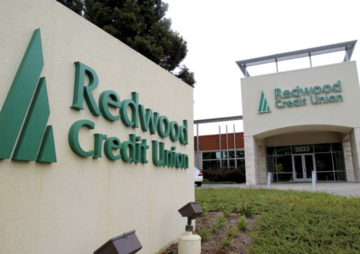
After the 2017 fire, with people calling to ask if the fund was open again, Redwood CU joined with a local newspaper and elected officials to ultimately raise $32 million over four months from all 50 states and 23 countries.
“It sounds like a lot and it is insane, but collecting the money was the easy part. It was distributing the funds that was the challenge,” he said. “We paid for all the hard costs. We were able to distribute pretty quickly, and it feels good to be able to do what we did for our community.”
A Dam Mess
John Cassidy, CEO of Sierra Central, has had to deal with fires as well in California, but also with the threat of a huge earthen dam breaking in his community. In 2017, the Oroville Dam on the Feather River in Northern California experienced damage to both its main and emergency spillways due to heavy rains. Authorities eventually ordered everyone downstream to evacuate, with the California Department of Water Resources releasing 100,000 cubic feet of water per second (the equivalent of 100,000 basketballs, Cassidy said). The DWR said it could release between 400,000 and 700,000 cubic feet per second if it wasn’t able to resolve the emergency.
In all, some 180,000 people were forced to evacuate, leading to traffic jams and panic that a flood could potentially strike. For Sierra Central, some 30,000 members and five branches were all affected.
Eventually, the situation was brought under control, and Cassidy helped lead an effort to get legislation passed that requires annual inspections of California’s 1,249 dams (previously there was no rule). As part of the effort, supporters of the bill wore t-shirts reading “We Give a Dam,” and Cassidy sported the shirt during his remarks to the REACH Conference.
Today, some $1.3 billion is being spent to repair the dam and authorities say that may not be sufficient.
But potential floods aren’t the only disaster Sierra Central has had to face. Like Redwood Credit Union, it too has been affected by wildfires in California.
Make Hotel Reservations
Sierra Central had 30 employees and three branches in the area. It was able to find four hotel rooms for its employees 25 miles away in Yuba City.
“My best advice: prepay hotel rooms ASAP and lock them up,” said Cassidy.
That fire would eventually burn 1,604 buildings, including the homes of 103 members.
“Your employees become social workers for a while,” said Cassidy. “You have to take care of your employees and their kids and make their lives easier, everything you can do to remove pressure. They have members coming in all day with horror stories. It’s important. We were first ones on the ground in Redding and spent $20,000 feeding people. During the first 24 to 48 hours don’t expect a lot of your government folks, as they are scrambling.”
Other Advice
Other advice shared by Cassidy:
- Like Martinez, he urged CUs to invest in new technology to make it easier to communicate with employees.
- Make sure you get spouses cell phone numbers, too, as batteries die.
- Realize power may be shut off in one area even if it isn’t being affected by a fire or other disaster.
- Schedule regular conference calls, as often as every four hours, and keep the board informed. “The last thing you want is those folks getting calls and they don’t know what’s going on. Overcommunicating there is a good idea,” he said.