

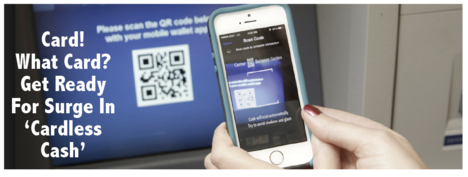
ORLANDO—One expert projects “cardless cash,” the new wave of ATMs that work with smartphones and deliver money without swiping plastic, will take the same aggressive growth trajectory the U.S. has seen with remote deposit capture.
Doug Brown, SVP and GM at FIS Mobile, said that 30 financial institutions across the U.S.—a large number being community banks—have deployed the technology, and that the “ecosystem” is growing rapidly.
Cardless ATMS began reaching the market about a year ago. Consumers log into a mobile-banking app on their smartphones, enter the amount to be withdrawn, walk up to an enabled ATM, and press the mobile cash button. After consumers hover their phone over the QR code displayed on the ATM, the machine dispenses the requested cash.
“We have been in commercial use for 13 months,” said Brown about the FIS solution. “There is tremendous upside to it—much like what we saw with remote deposit capture.”
Aggressive Adoption
There has been debate over whether the new ATMs will catch on. What is working for the new ATMs—mobility—is also working against them, say analysts. With smartphones being used more for banking and payments, and consumers getting comfortable with the approach, the result has been the removal of usage barriers. However, as more Americans lean on smartphones for transferring money, depositing checks, P2P and mobile payments, the need for cardless ATMs, even just as a cash dispenser, declines, they say.
“For the machines that we already have in use, we see consumers adopting this technology aggressively,” said Brown, speaking at CSCU’s 2016 Solutions annual conference here. “This technology resonates with people, how quick it is and no PIN.”
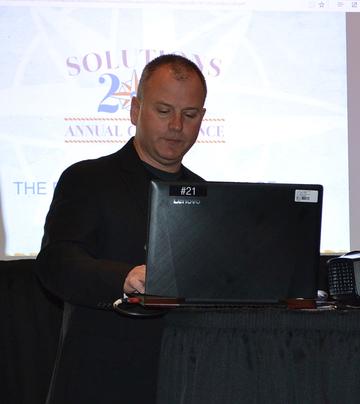
Doug Brown
Consumers’ growing interest in the technology is due to several reasons, said Brown.
“They like the convenience and the speed,” said Brown, as the transactions take between 10 to 15 seconds at the ATM after they are staged via phone. That speed also makes consumers feel more secure, added Brown, something FIS originally did not predict would be one of the ATM’s selling points.
“Consumer feedback let us know that they like getting in and out quickly of an ATM vestibule, which are not always located in the safest places,” said Brown. “They also like that someone can’t look over their shoulder to steal their PIN.”
That same feedback told FIS that consumers are hearing about all the ATM skimming attacks that have been growing as crooks turn to old-school hacking as EMV takes hold in the U.S. “A significant number of consumers said they understand how cardless ATMs prevent skimming,” Brown said.
What should further ramp up usage of the new ATMs, said Brown, is more applications for the machines—a number of which are in development now, he explained. Many of the new applications are expected to appear within the next year, such as cash deposits for small business and P2P cash pickup in real time. Brown added that through agreements with a growing number of financial institution, FIS will soon deploy a significantly larger number of the cardless ATMs into the market.
No Hardware Change
Turning an existing ATM into a cardless machine requires only a software change, Brown noted.
Further down the road, Brown said to look for the machines to provide international cash withdrawals and non-bank account cash withdrawals, including brokerage accounts.
“PayPal is very interested in how to get cash out of this ecosystem,” said Brown. “Many of the banks, too, are interested in merchant offers made right there at the ATM. Someone gets cash and has money in hand, that’s a great time to make an offer. You know the user, you know right where they are, how much cash they have . . . “