

WASHINGTON–The World Council of Credit Unions’ new president, Elissa McCarter LaBorde, who is the first woman to lead the half-century-old organization, believes the global reach of CUs offers huge opportunities around financial inclusion and better service to underserved communities, especially through digital channels.
And that’s just some of what she envisions.
LaBorde joined WOCCU in August after previously leading Vitas Group, a for-profit holding company she established under Global Communities, an international development and humanitarian aid organization that operates in 27 countries.
Vitas Group, which LaBorde had led since 2009, has become the largest commercial retail microfinance operation in the Middle East, WOCCU said at the time it announced the hiring. Over the last decade its subsidiaries have disbursed more than $3-billion at a less than 1% annual default rate to small business owners.

In addition to the U.S., LaBorde has lived and worked in five countries (France, Benin, Armenia, Turkey and Zimbabwe) and has traveled to more than 70 countries around the world. She is a published author of two books, as well as academic journals and essays that span a number of topics related to financial inclusion and economic development.
LaBorde will reside in Washington.
‘A New Mandate’
In making the move, LaBorde told CUToday.info numerous aspects of the CEO position and World Council itself appealed to her, including expanding opportunities to reach underserved populations with financial services as well as the opportunity to take a fresh look at how cooperative finance can play a role in the future.
It’s an issue that’s especially critical, said LaBorde, as the pandemic has further exposed the gulf between the rich and poor, the haves and have-nots, and all those who have not been included in the financial sector.
“I think we all have a new mandate to really try to extend services beyond what I would call the last mile,” she said.
As for the position itself, LaBorde said the “job found me,” stating the vacancy represented “good timing” and an opportunity to bring new leadership and a “refresh on all the amazing principles that credit unions stand for. I really think it's a unique moment to grow that and deepen it.”
While acknowledging she is an “outsider” to the “industry” of credit unions, LaBorde said she is not new to “membership” in credit unions, having been a member since her father opened an account for her with Atlanta-based Delta Community Credit Union.
But joining World Council, she said, has allowed for an opportunity to reflect more on financial relationships. While she has been a credit union member, “I kind of didn't think about it and even until recently, honestly, wasn't thinking that thoroughly about who I bank with. But the more I see what's happening in the world and have personally experienced some not-so-great service at some of the big banks, I've come to appreciate my credit union experience. So, you could say that I'm a member and a believer, but professionally I haven't been an insider to the movement.”
Laborde added she has received a “warm welcome” from credit unions, observing, “It was like ‘You are coming over to our side.’ I like to think I've always been on the side of financial inclusion, but it is a unique community and has been very welcoming to those of us who maybe are considered outsiders.”
A Shared Experience
One area in which LaBorde brings experience that overlaps many of the projects with which WOCCU has traditionally been involved are those related to partnering with the United States Agency for International Development (USAID).
“I've worked in a lot of different countries around the world over the years and I've come across different forms of savings and loan cooperatives, cooperative financial institutions and credit unions, and they play a unique role in the fabric of the financial sector depending on the country,” LaBorde said. “Some are stronger than others, but I think the focus on savings, the focus on member-ownership and voice, and having a say in products and services and how they want their credit union to respond to their needs–I think that's really powerful.”
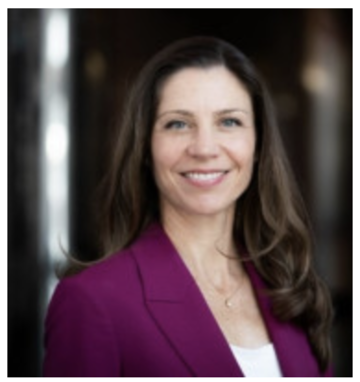
Elissa McCarter LaBorde
LaBorde described Vitas Group as a network of specialized financial services companies that provide loans to small business owners in what she said is often considered the “missing middle” or the underbanked.
“These are often entrepreneurs who are kind of too big for informal services but too small for commercial banks,” LaBorde said. “They also have maybe personal loans, but not credit that's really tailored to their growing business. So, what Vitas Group does is look at how to design credit services to really help the small and growing business.”
The organization has had a primary focus on the Middle East, which LaBorde said is a region with the least financial services penetration and the greatest number of unbanked consumers.
“In many ways it's along the lines of what we do in financial services when we're trying to look at inclusive finance,” she said. “It's just one of the models I think that has been very successful in figuring out how to work in markets that are really, really difficult for banks.”
A Unique Perspective 1.0
What does she and her experience bring to the position that is unique?
“I think I bring a perspective that is agnostic to the business model but very focused on solving for gaps in access by underserved customers–and I know we say members in credit unions,” LaBorde responded. “I have spent my life and career really thinking about how do we look at more equitable ways for our fellow citizens and human beings to be able to have the tools they need to live their lives, to support their children and to give the next generation a better life than they have had.”
Laborde believes the evidence shows that experience for many has not played out in an equitable way, especially over the past several decades, where “we have not done a good job in helping families accumulate wealth or in helping families weather crises and shocks.”
That includes the increasing number of climate-related storms and disasters occurring in the U.S. and around the world, which she said has placed new demands on ensuring the “right tools are in place” to prepare and assist people in responding.
“Credit unions have a unique position in terms of being able to pool peoples’ monies, with very localized solutions in places that are very hard to reach, and to do that in a way that doesn't have to be incredibly expensive or just involve going into the pockets of shareholders,” LaBorde said.
A ‘Critical Eye’
LaBorde said she has arrived at the World Council as someone who cares about how to build financial systems that work for everyone, with a “critical eye” on what cooperative finance has done well and not so well, including whether financial inclusion is taking place.
That critical eye is an experience that goes both ways, LaBorde said, noting she has spent the last 11 years teaching graduate students at Johns Hopkins University’s School of Advanced International Studies.
“I'd like to say that I'm always held accountable and kept honest by really bright young people who are always challenging everything,” LaBorde said. “I think that mentality is critical. It’s not just academic. We want to think about what we are doing, why are we doing it, and what could we do better. I feel like that's what any industry needs. We have to always be questioning, ‘Are we doing everything we can for the members?’ because times are changing and they're not getting easier.”
A Unique Perspective 2.0
Arriving new to credit unions isn’t the only fresh perspective LaBorde brings to the job. After beginning its life as CUNA’s World Extension Department, the World Council of Credit Unions was officially chartered in 1970. LaBorde will be the first woman to lead the 51-year-old organization.
“I think my perspective is probably different than my male predecessors,” LaBorde said. “There is all kinds of evidence of how women leaders think and act differently and have different skill sets that I'm not going to say are better, but I'm going to say are different. I think my understanding in the world today is there's a need for change, there's a need for a more diverse set of perspectives. I think I bring that partly because of my gender, how I think, how I'm wired.”
LaBorde also said she believes being the mother of three children has made her a better person who understands where different people are coming from and is better able to build a team that really appreciates diversity of thought.
“I think it's a new age, a new day for the World Council, and I hope it's a new day for women to have somebody who's a role model who plants a seed in their minds that, ‘Yeah, that could be me, I could be CEO of my credit union association. I can be the head of my organization’,” LaBorde said. “I have a daughter and I always tell her that could be you. Don't ever think you can’t do it. I think if I can pave the way for more women, for more young people, for a more diverse set of leaders, I think the world will be a better place and certainly the credit union movement will be.”
The Early Focus
LaBorde said her initial focus at World Council has been on listening to the organization’s members and seeking to get a handle on different perspectives across the credit union community, both in the U.S. and in many of WOCCU’s member countries.
“I have spoken to board members, stakeholders, funders, thought-leaders, and influencers, so I've had my own methodology of just speaking to a variety of different people, a diversity of voices, to try to get a sense of where those who've been in the industry have seen it work in different countries. Where are the successes? Where the gaps? A lot of what I have come to understand is there are some pretty big issues that everybody is facing right now with regulations and regulatory barriers that have prevented growth in some places and enabled the growth in other places.”
The Next Generation
Under just-retired CEO Brian Branch, the World Council of Credit Unions announced a number of initiatives related to its Challenge 2025, an effort to drive the digitization of the global credit union system by 2025.
It appears to be an effort that dovetails with LaBorde’s own view on the future for credit unions.
“I think there are some big opportunities in how do we think about the young population, the next generation of members, because as I understand it the average credit union member is older than the average bank customer,” said LaBorde. “So, how do you reach youth? That is something that is needed and, for me, very interesting, because that's an opportunity. The other thing is digital and innovation. Everybody’s talking about digital transformation and everybody needs something a little bit different. I think we are always innovating in small and big ways and I think it’s an exciting challenge that I need to think more about.”
What will also “absolutely” be a priority, added LaBorde, is taking advantage of the “massive infrastructure” of credit unions around the planet.
“The World Council has member credit unions in 118 countries and nearly 300 million members,” said LaBorde. “That’s a huge reach that a lot of people don't know about that through technology platforms, through services, through different ways to innovate and learn from one another, is a huge footprint to leverage.”
LaBorde acknowledged the digitalization of financial services is playing out at different speeds in different parts of the world and as a result she plans to focus on “how do we really smartly invest in technology innovations that bring more choices and better products and services to members everywhere.”
Champion & Advocate
While just three weeks into the job at the time she spoke with CUToday.info, LaBorde said she believes the role of the World Council is to be a champion and advocate for credit unions while also enabling learning for its member CUs.
“I can tell you that the board definitely has asked me to come in as an outsider with a fresh perspective on how we grow the movement,” LaBorde said.
She added the WOCCU board has further asked that she explore strategies for diversifying the organization’s funding in a way that is more sustainable to create a more financially healthy organization.
Funding is an area in which LaBorde also has experience. For the 16 years prior to joining WOCCU LaBorde also served as Global Communities’ VP of development finance, overseeing the non-profit organization’s strategy, investment and fundraising efforts, and thought leadership in financial inclusion.
In that role, she was the principal liaison to the U.S. Development Finance Corporation (formerly OPIC) for loan guarantee facilities worth more than $550 million, with commercial banks in Jordan, Egypt, Kenya and Malawi, WOCCU said.
Still Learning
“So, I have a big job and I'm still learning,” LaBorde said. “I have a lot of ideas and a great team. There are a lot of people who are deeply committed to the work we do and what we stand for. I'm hoping for a couple of quick wins and successes to show that I have a grasp of the issues, that I can listen to members and look at piloting some things that can be replicated, especially, again, around youth, around women, around digital.
“I think there's a lot of really exciting things that the World Council can help enable. It should bring members together to really look at growth areas and ways we can learn from one another.”