

By Ray Birch
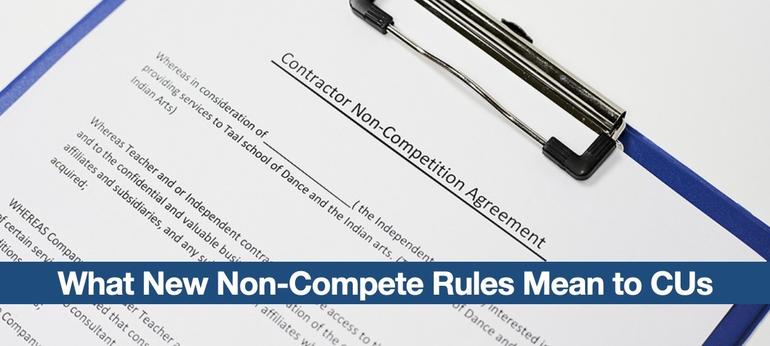
DETROIT—While the Federal Trade Commission (FTC) has issued a final rule banning noncompete clauses in contracts nationwide, the impact the rule might have on credit unions won’t be answered for several months, one attorney says.
As CUToday.info reported, the Federal Trade Commission issued a final rule it said is aimed at promoting competition that bans noncompetes nationwide, “protecting the fundamental freedom of workers to change jobs, increasing innovation, and fostering new business formation,” the FTC said.
“Noncompete clauses keep wages low, suppress new ideas, and rob the American economy of dynamism, including from the more than 8,500 new startups that would be created a year once noncompetes are banned,” FTC Chair Lina M. Khan said at the time the rule was issued. “The FTC’s final rule to ban noncompetes will ensure Americans have the freedom to pursue a new job, start a new business, or bring a new idea to market.”
Much to be Determined
How much of an impact, if any at all, the new rule will have on the CU industry will be determined by the outcomes of legal challenges to the rule, and from what NCUA decides it will do regarding noncompetes, according to one expert.
The FTC rule does not apply to cooperatives.
“We think, after the dust settles on the legal challenges, that we may see banking regulators apply it on their own, even though it doesn't directly cover credit unions,” said Sean Crotty, partner and chair of the labor and employment department at Honigman, LLP. “Credit unions can sort of take a wait and see approach.”
Crotty noted that the FTC rule does apply to bank holding companies, subsidiaries and affiliates of banks that are subject to the FTC rules and jurisdiction.
Limited Exceptions
Crotty said, with limited exceptions, the new FTC rule bans all new noncompetes with workers and invalidates existing noncompetes.
“It also makes it a violation to enter into such agreements or attempt to enforce them,” he said. “It's a very broad rule and it also requires that by the effective date employers must provide notice to affected workers that they're noncompetes are no longer enforceable.”
For now, the rule’s effective date will be Sept. 4, 2024, but that could be stayed or delayed as a result of the current litigation, Crotty explained, adding there are “important caveats” to the rule.
“First, it doesn't prohibit the use of non-disclosure, non-solicit and non-disparagement agreements,” he said. “Intellectual property agreements, and other methods are still available for companies to use to protect their interests; those are still valid.”
The Exceptions

Sean Crotty
The rule includes some exceptions, Crotty pointed out.
“One is that the new rule still allows for a noncompete that's entered into in connection with a bona-fide sale of a business,” he said. “Another exception that's important is that it still permits existing agreements, those that were in place before the effective date, with senior executives.”
He said the rule defines senior executives as those in a policymaking positions earning at least $151,164 through salary, bonuses and other compensation.
“There are some exclusions by virtue of the structure of the FTC,” Crotty told CUToday.info. “The impact on credit unions and banking institutions remains to be seen, because the FTC rule only applies to entities covered by the FTC. Banks, savings and loan institutions and credit unions are not covered by the FTC.”
Crotty also pointed out federal banking agencies can potentially enforce the FTC rule on their own.
“Federal banking regulators are authorized to enforce Section 5 of the FTC Act on their own, and that enforcement has historically centered on the FTC prohibition of unfair and deceptive practices,” he explained. “Federal banking regulators may attempt to apply the FTC noncompete rule after the legal challenges to the rule are decided.”
Waiting for Ruling
Crotty turned to the legal challenges to the new rule.
“There are three lawsuits pending—two in Texas and one in Pennsylvania,” he said. “Those lawsuits can result in an injunction against enforcement of the rule or, alternatively, a partial or complete stay or ‘pause’ of the rule as it goes through appeals. The Ryan lawsuit in Texas is the one that's the furthest along. There, the court has established a briefing schedule for the challenges and is committed to issuing a decision on the merits by July 3. Again, we've got an effective date of Sept. 4, and we expect this Ryan court ruling by July 3.”
Those challenging the FTC rule generally are stating the FTC lacks authority to issue the rule, that the rule violates the “major questions doctrine,” a doctrine that states Congress has to act or speak clearly if it wishes to assign an agency decision of vast economic and political significance, Crotty explained.
“Lastly, they argue that the infrastructure of the rule is overly broad,” said Crotty. “We'll see how those play out. The plaintiffs are widely expected to have some success on those arguments.”
Four Things to Keep in Mind
Whether the rule will stand, and whether or not it will apply to credit unions, Crotty recommends CUs focus on four things today.
“The FTC rule requires companies subject to the rule to provide a notice to those with an existing noncompete that they're no longer valid,” Crotty said. “Even though credit unions are in a wait-and-see mode, they should prepare for possibly having to issue the notice by assembling a list with contact information of those current and former employees who are still subject to their noncompetes. This will help them send notices out easily, if they are ever required to do that.”
Crotty also advised companies that want to make sure senior executives are covered by a noncompete get those signed before Sept. 4.
“The company should also prepare to receive pushback from candidates who may now resist signing a noncompete. Companies should have an explanation for the candidates as to why they're still being required to sign a noncompete,” he said.
A Final Note
Finally, Crotty said companies should prepare for the possibility of a world with fewer noncompetes. He also advised organizations to look at their other types of employment agreements—such as non-disclosure and non-solicitation—to make sure those are in “good shape. Those tools will remain available for companies and can be used to prevent unlawful competition.”