

By Ray Birch
ALEXANDRIA, Va.—The year 2021 seemed a long way off more than a decade ago as NCUA wrestled with a plan to save the corporate credit union system. And the fact it would take that many years to deliver a verdict on the agency’s efforts to resolve the crisis does not surprise Debbie Matz.
The former NCUA chairman said NCUA was confident in the course it took when it created the then novel Corporate System Resolution Program and NCUA Guaranteed Notes (NGN) program, which NCUA has said saved credit unions $40 billion in losses as the result of sales of assets from failed corporates, nearly all mortgage-backed securities.

But in the decade since it enacted those programs and others, the agency has also faced a great deal of debate and criticism from the industry, including from credit unions smarting over what at the time appeared to be losses that would never be recovered, from its decision to pursue a long and expensive course of litigation against Wall Street banks, and from other decisions it made—and didn’t make.
“We took the approach that time would tell, and time has finally told the story,” said Matz, who was NCUA chairman from August 2009 through April 2016. “At that time, when we were working on a plan, 2021 was a long way off. But all of this played out exactly the way we hoped it would.”
The two largest corporates, Wescorp and U.S. Central, had been put into conservatorship in early 2009 before Matz was named chair, when Michael E. Fryzel was leading the agency. At the end of 2008, NCUA said the then 28 corporates had shown paper losses of approximately $18 billion.
Matz’s comments are part of a series in CUToday.info examining the decisions related to cleaning up after the corporate failures, including the NCUA’s Corporate System Resolution Program, the creation of the NCUA NGN program, and more.
A Surprise Payout
As CUToday.info reported, when NCUA placed five corporate credit unions into conservatorship, many of their capital-holding member CUs wrote those investments off. But a decade later, more than $368 million was returned in April 2020 to more than 2,000 credit unions that were members of three of those corporates: U.S. Central Credit Union, Members United Corporate FCU, and Southwest Corporate FCU.

Capital-holders in the defunct Constitution State FCU and Western Corporate FCU (Wescorp) did not see any payouts, according to NCUA.
In mid-2020, nearly 900 credit unions that had membership capital shares in the failed Southwest Corporate shared in a $171-million asset management estate payout. Southwest Corporate eventually merged with Georgia Corporate to create Catalyst Corporate FCU (which eventually absorbed much of the former Wescorp).
When today’s NCUA board made the official announcement about the final disbursements this year at its March board meeting, Matz said the words signaled the end of a very long journey scrutinized by so many within the credit union movement.
“I had a huge smile on my face when I saw that headline,” said Matz, emphasizing the work of the entire NCUA team involved in constructing and executing the plan. “I'm really delighted that $368 million was channeled back to credit unions that had capital in the corporates. I know they'll put it to good use. I feel terrifically proud of the staff and am very gratified.”
But the gratification felt today is a long way from what agency officials heard in 2009 and the years that followed as nearly all of its moves were questioned.
‘The Credibility Gap’
“Part of our problem at the time was a credibility gap,” Matz acknowledged. “The credit union system had a lack of trust in NCUA as a regulator. There was a great deal of concern we were blowing the corporate system’s problems out of proportion, that things were not as bad as we said, and there was no need for (NCUSIF premium) assessments.
“There's always tension between NCUA and credit unions,” continued Matz. “I think that in any given period of time there are people who question the regulator’s credibility, especially if there's something negative in their examination report, if their CAMEL score is reduced, or they face a new regulation they think will hinder their business. At the time there was a great deal of hostility.”
And a crisis situation, such as one faced during the Great Recession, only makes matters worse, said Matz.
“At the same time, credit union officials were wondering if their credit union was going to survive, NCUA was increasing our supervision,” recalled Matz. “We wanted to make sure there would be sufficient capital and less risk in credit union business operations. People were both nervous and upset, and I think that led some to think we didn't know what we were doing. Many did not agree with our increasing NCUA’s budget and staff and then hiring the outside attorneys. And I understand all that. As a regulator we knew what we needed to do if the credit union system was going to survive. But, back then, although there were a lot of moving pieces, we were hopeful that if all the pieces came together, which they finally did, it would be a clear path out. And that’s how it worked out.”
‘Staff Never Gave Up’
Matz reiterated the respect she has for the NCUA staff who had to make some very unique and difficult decisions to save the corporates.
“The NCUA staff, I've always said, are second to none in terms of being smart, hard-working and creative,” said Matz. “And the result NCUA achieved with the corporates is really the epitome of good staff work, with Larry Fazio (then director of Examination and Insurance, now executive director) leading the effort and many people working alongside him. When the chips were down the staff never gave up.”
The plan to securitize the NGN cash flows was driven by Fazio and his team, which closely worked with the Treasury and Barclays. Matz said it took NCUA almost a year to develop the plan, because nothing like it had ever been done before.
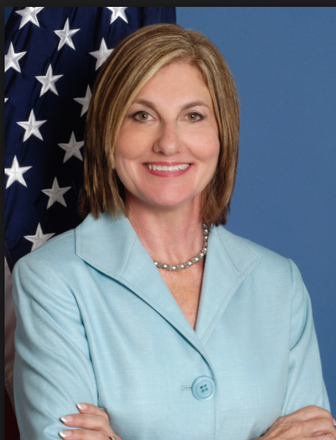
Debbie Matz, NCUA
“We were as nervous as could be,” she recalled. We just had no idea whether the securitized bonds would sell domestically or if we would have to go to the foreign markets to sell the securities—which we did not want to do.”
And there was another issue the federal regulator had never faced before: the potential collapse of the corporate system. That led to the creation of the one proposed solution, with no Plan B, according to Matz That isn’t to say NCUA wasn’t open to suggestions, the former chair explained.
“But no one at that time stepped forward,” she said.
After producing the many components of its bailout plan, NCUA moved on to focusing its efforts on communicating with credit unions, Matz said, recalling the roadshows the agency held across the country to detail how the agency was addressing the corporate crisis.
$1-Billion Plus in Fees
Matz noted the criticism from the industry grew louder when NCUA entered into expensive but potentially lucrative contingency agreements with several law firms as it filed suits against the banks and other firms that had sold the mortgage-backed securities to the corporates. Those firms have since been paid more than $1 billion as a result of what to date has been more than $5.1 billion in recoveries.
“Not everybody–but there were definitely some very loud naysayers who thought that we were squandering credit union dollars, even though we weren't laying out any money at all,” Matz said. “The agreement we had with the attorneys was that they would get a percentage of whatever recoveries were made. At the time, it wasn’t unreasonable to assume that there would be no recoveries. But, despite all that criticism, we plowed ahead and it is clear that all of this would not have ended the way it has without the lawyers—who were, and probably still are, at the top of their game. They were fantastic negotiators, and they know the securities industry inside and out. We certainly didn't have the legal staff or expertise in-house and would not have pursued this course if we didn’t enter into agreement with the outside firms.
In all, NCUA filed more than 26 complaints against 32 defendants in federal court, with the first cases filed in 2011. A breakdown of those legal cases and the fees paid can be found here.
Need for Thick Skins
Regulators have to have thick skins, said Matz, adding that helped her through the early years of the corporate bailout.
“There was a lot of angst back then within credit unions, and a lot of fears—and I understood those fears,” recalled Matz, who is now on the board of directors of Stewart Title Insurance Company. “But after exploring any and all possible ways to stabilize the corporate system, what we came up with was really the best and only way. We didn't have other options.”
NCUA, too, emphasized Matz, had a lot more information on the crisis than credit unions had. She said the agency in 2008 was concerned about the possible failure of some large credit unions, which might have brought down the entire credit union system given the hit to the insurance fund.
“Clearly, the plan we came up with was the correct one, and time has proven us right,” she said.
Where Was the Agency?
There is one question that many in credit unions continue to ask, even a decade later, and that is where was NCUA in the lead-up to the failure of the five corporates? The agency had full-time examiners assigned to corporate CUs and, in the case of Wescorp, for example, examiners working on-site at its San Dimas, Calif., headquarters.
When asked why NCUA examiners missed the problems at the corporates, allowing them to make the investments that eventually went bad, Matz said the NCUA Inspector General’s reports on several corporate CUs, including Wescorp, provide the best answers.
“That’s the most thorough and objective assessment of what did and didn’t occur,” she said.
NCUA’s material loss review of Wescorp found Wescorp‘s management and board of directors “did not implement appropriate risk management practices to adequately limit or control significant risks in its investment strategy.”
Material loss reviews of the remaining conserved corporates can be found here.
More in this series: