

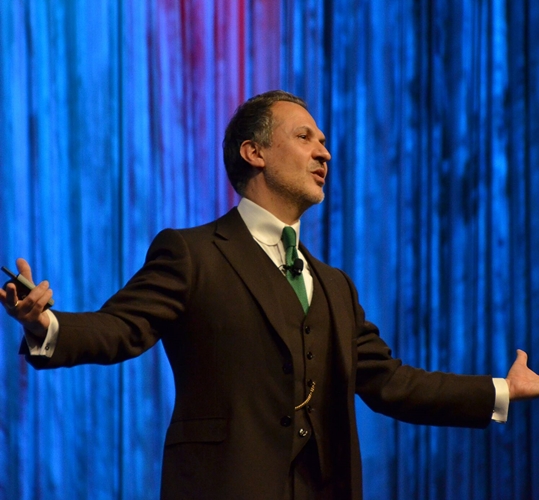
WASHINGTON–In a city known more than ever for divisiveness, one person who has met many of the world’s leading political figures told credit union leaders they would be best served asking themselves if they wanted to be moths, or would their legacies be that of torch bearers?
Platon
The photographer and portrait artist who goes by the single name Platon told an opening session of CUNA’s GAC he has met numerous world leaders, but in many he doesn’t see real leadership. Instead, he said, leadership and change are really driven by a single word, and he urged credit unions to live by that word.
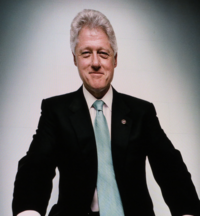
Platon came to meet so many of the world’s best-known figures somewhat by accident. His first-ever photograph of an American president was Bill Clinton, and he got the gig from Esquire after other photographers were not available. He had been given strict orders by the magazine he was to take a standard head shot, and for the first seven and a half minutes of his allotted eight that’s exactly what he did.
‘A Bit of a Moment’
“And then I had a bit of a moment. Have you ever had a bit of a moment when you talk to yourself? When you tell yourself you’re a bit of an imposter?” he asked. “I thought what have I got to lose. I will never have another opportunity to photograph a president. Sometimes we have to roll the dice on ourselves and dare to be authentic.”
So Platon put a wide angle lens on his camera and shot Clinton from below. The resulting image appeared on the cover of Esquire. Not everyone was a fan.
Bill Clinton
CNN’s Larry King called the photo “disgusting.” Famed journalist Bob Woodward appeared on King’s program and said Clinton’s tie was intentionally meant to point toward a specific area. Platon thought his career photographing the powerful and famous was over. But it was anything but.
The Powerful & Famous
First, before sharing Platon’s advice for credit unions and really people in general, here are some of the other world leaders he has photographed, along with his comments about each:
-
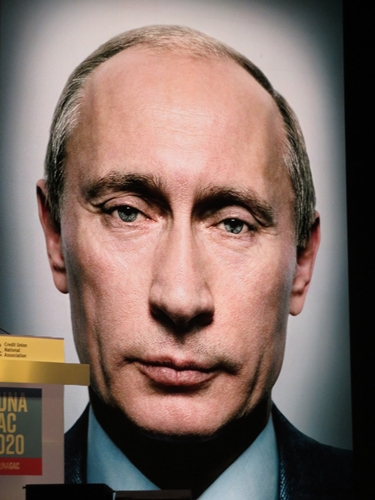
Vladimir Putin. Platon shot Putin for the cover of Time after he was named man of the year. He said he arrived in Russia and was driven past the Kremlin, where he thought the photo shoot would take place, and through the countryside until he arrived at Putin’s private dacha. Surrounded by armed guards and with a gun to his temple, Platon said he was led into a room to await the Russian leader. “I said, ‘Mr. President this I a great honor for me.’ I said before I begin I have a question for you. I said I am an Englishman, now proud to be an American. When I was a kid growing up I listened to the music of the Beatles and I want to know if you ever listened to the Beatles.’ He gets angry, he orders everyone out but the room but the guards. He then said in perfect English, ‘Oh my God, I loved the Beatles.’ He said his favorite song is Yesterday. Think about it. I did think about it. It was a subliminal message about the power and glory of the former Soviet Union. That conversation let me in. I could feel his cold breath on my hand and that’s how I got the truth.
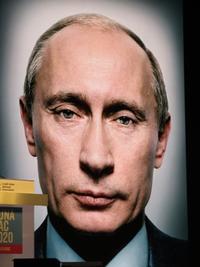
Vladimir Putin
-
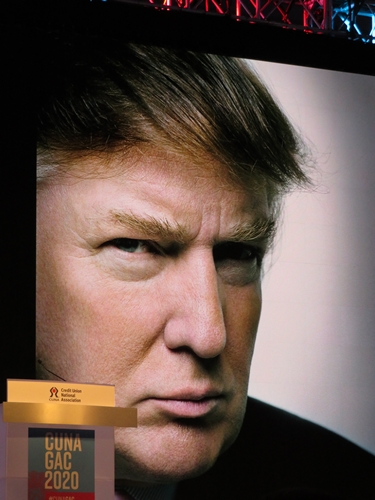
Donald Trump. “OK, everybody calm down,” said Platon to laughs. “He’s one of the most extraordinary people I’ve ever met. I photographed him in Trump Tower. He was very charismatic. I said I want you to look into the camera in a very symmetrical way. He said that’s not how we are going to do this. He said, ‘This is my best side.’ It tells me that despite his great battles with the media, he secretly loves the media. It’s his secret weapon.” Platon said he later said to Trump, “I have followed your career path. Everything you say and do seems to cause controversy; how do you navigate that storm? He calmly looked at me and said, ‘I am the storm.’ I had those words ringing in my head throughout the campaign. The press said he was going to implode or now they now say his presidency is going to implode. But the only person who can navigate the storm is the person who created the storm.”
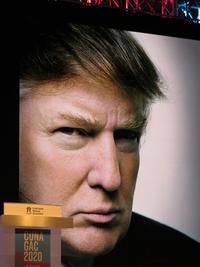
Donald Trump
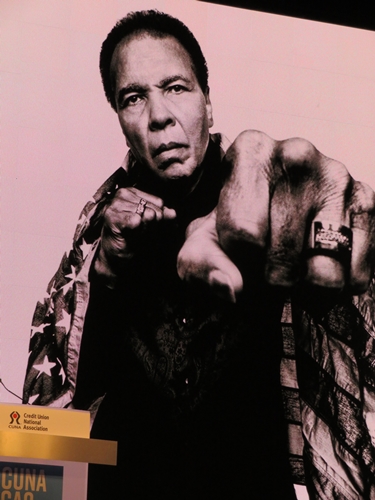
- Mohammad Ali. Platon shot the last photographs of the one-time heavyweight champ, including the last time he was really able to move due to Parkinson’s. “He had essentially lost control of his arms and he couldn’t move them, but when I draped the U.S. flag over his shoulders he was able to muster the strength one time make a fist. I said, ‘Mahammad, you are the greatest; teach me to be great. How can my generation be as great as yours needed to be during the civil rights era?’ And he whispered in my ear, ‘I have a confession to make; I wasn’t as great as I said I was. I thought holy shit, that’s the greatest confession I have heard in my life. He said, ‘You misunderstand. It wasn’t that I was great. It was that the people saw themselves in my struggle. And now I have the great honor to give it back to you.’ If you can get people to see themselves in the story you put forward, then you can achieve greatness. It’s bridge building.”
-
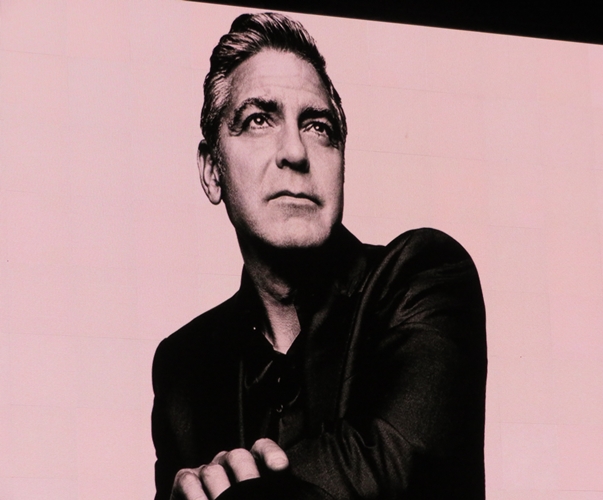
George Clooney. Platon asked Clooney for his thoughts on the world we’re in. Clooney’s response: ‘We live in extraordinary times. We have more information and connectivity than ever before and yet sometimes we know less. If you want a news today you probably go to a source that confirms what you already believe. And the danger is we are trapped in our own echo chamber. That beautiful thing where we come into a central space and debate ideas is rapidly disappearing.”Added Platon, “I am looking at you. You are a part of that beautiful thing called a shared experience. I bet you all believe in different things. But you all showed up in this room to build bridges, to network, to grow, and that gives me great comfort.”
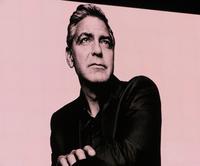
George Clooney
- David Beckham. Platon said halfway through his photo shoot of the former soccer great, Beckham disappeared and was “gone for ages. I nervously went to his dressing room and there was a virtually naked David Beckham standing in front of a full- length mirror with lights on him and he’s quietly admiring the beauty of David Beckham. I am a straight guy who is happily married but I must admit I also found myself marveling at his beauty.”
- Mark Zuckerberg. Although Zuckerberg’s company, Facebook, continues to dominate social media and report record profits, Platon’s take is, “I think this man is in a lot of trouble right now. While I was waiting in his office I saw something on the wall that knocked me out. It was a poster that said, ‘What would you do if you weren’t afraid?’ Would your lives be different? I have to confess fear has played a big role in my life. When Zuckerberg walks in he’s terrified of having an honest portrait study of him by me. I think there’s a question to ask all our tech titans: Are they innovators or are they disruptors profiting from our fear and confusion?”
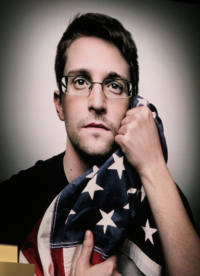
Edward Snowden
- Edward Snowden. Platon said it took nine months of trust-building through various channels to get a message to Edward Snowden, who leaked classified U.S. data and who remains in Russia under that country’s protection. Finally, one day a handwritten note was delivered to his New York office that told him to go to the Hotel Metropole in Moscow on a specific date and to be ready at a specific time. “This is James Bond shit and I’m not cool,” said Platon.
Platon reached out to one of his contacts in the Kremlin who assisted in the Putin photograph and while declining to say who he planned to meet with, he did say, “If you let me in it’s really going to piss off my government. And they gave me a Visa like that.”
Platon said it was like something out of a Jason Bourne movie. At the prescribed hour there was a knock on the door. Unsure if maybe it was the KGB, Platon opened it slightly and a diminutive figure slipped through.
“He sits on the bed. His shoes are scruffy. He says, ‘I’m Ed. Let’s begin.’ He starts an hour-long rant to himself about his journey through the corridors of power. I said, ‘Tell me about loneliness. You are in complete isolation.’ And he said, ‘Loneliness can be a terrifying thing, especially when you’ve been robbed of all the people you love. But loneliness can also be an empowering thing, because when you are lonely you can hear all the voices of history talking to you.’”
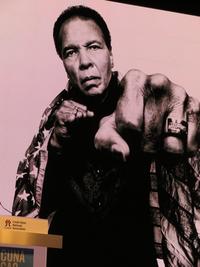
Muhammad Ali
Platon added, “The line between right and wrong is not always right. All of us at some point in our lives will cross over that line. What makes an honorable and courageous person is you recognize you’ve crossed over that line and you do all you can to get back to the right side.”
Platon said Snowden picked up an American flag the photographer had brought with him, and eventually posed with it. “I asked him what everyone wants to know: Are you a patriot or are you a traitor? And he said, ‘Don’t get bogged down with labels. It’s not about us vs. them or red vs. blue. It’s about us coming together to solve common goals. What I did was not for my own benefit. I didn’t ask for money. I took what I took and gave it back to the people.”
Platon’s take on all that: “I’m not clever enough to know if what he did was right or wrong. That’s for you to decide. I feel very privileged to live in this beautiful country called America. I’ve seen people in prison because they dared to sing a song about freedom. We can continue to debate these issues, but we need to be more sensitive to people and respectful.”
- Madeline Albright. “She said, ‘There is plenty of room for mediocre men, but there is no room for mediocre women.”
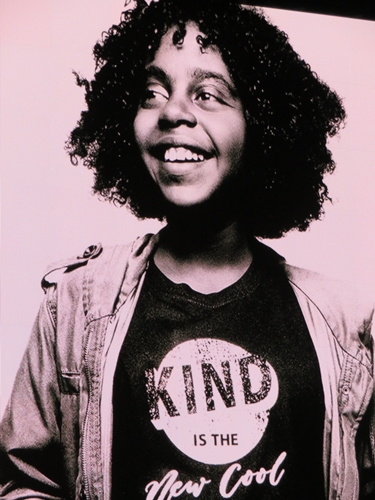
- Naomi Wadler. “She’s 11. She’s part of a bright future. She fights for the rights of young African-American girls. I said, ‘Can you give me some advice on how we should all come together as grown-ups?’ She said, ‘Talk with people, don’t talk at them. Listen to them, don’t just hear them.’
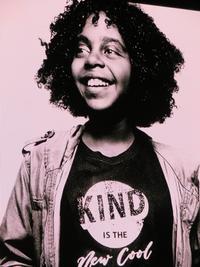
Naomi Wadler
“I asked, ‘What advice do you have for men about women’s empowerment?’ And she said, ‘Stand with us, not in front of us.’”
Late-Night Questions
Looking to his audience, Platon said he was told it was a room full of leaders.
“I bet there is a question you will ask yourself late at night in those quite moments,” he said. “You might say to yourself, ‘Well, I have some responsibility. I’m doing OK. I have a responsibility to my family and work colleagues and community. But how can I be a great leader? How can I be better? I have seen power up close and in person. What I haven’t seen in most of these people is where real power lies and that’s in a little word called service.”
To explore service, Platon stopped shooting pictures of politicians and instead spent a year shooting photos of the military. In one case he visited with a woman named Jessica whose husband had been killed in service. Until he had arrived she had never opened up the box that included his belongings and that had been sent to her by the military.
“As we lifted the lid she broke down in tears. And I felt ashamed of myself. For the first time in my life I had put a photograph above the well-being of a person. I quickly apologized because I had crossed the line of morality Edward Snowden had talked about,” said Platon. “She said, ‘It’s OK. You don’t understand why I’m crying. I just realized they washed his clothes and I wanted to smell him again.’
“If you felt that, then you felt something beautiful,” continued Platon, referring to the response from his audience. “We all came into this room defined by our differences, and yet we all felt that together. What we felt was compassion. Compassion for someone we’ve never even met. That’s the power of storytelling.”
Platon told credit unions empathy starts with storytelling, which is another way to humanize data.
“If you don’t believe in left vs. right but instead believe in right vs. wrong and in a nondivisive form of communication, then empathy starts here,” he said. “So, tear down your filter bubble and your echo chamber and then we’ll fight for what is right. We the people can pick up the torch and carry it over the finish line, but only if we are of one accord.”
A ‘Wow’ Moment
For those who still don’t believe they can do something to change the world, Platon concluded with a story about shooting a photo of the physicist and cosmologist Stephen Hawking, who amyotrophic lateral sclerosis had rendered him unable to move any muscle other than that of his left eye by the time of the photo shoot.
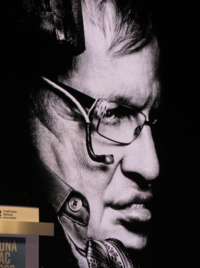
Stephen Hawking
Hawking used his eye to move a cursor to select letters and spell out words.
“I asked for one word of wisdom so I could pass it on to all my friends in America,” recalled Platon. “His nurse told me not to ask. And then I heard beep, beep, beep. He was typing. It went all the way to the letter W. Eventually, he spelled out ‘wow.’ That’s the beauty and majesty and optimism of life. Isn’t it amazing that this man still looked at the world in wonder?”
Rekindled Spirit
Platon dedicated his final words to overcoming the “politicians who divide us for votes, to the tech titans who profit from our echo chambers, and to the journalists who cover facts with opinion,” by saying that fear may be contagious, “but so is optimism.”
“I think we’re going to rise up and rekindle the spirit of optimism,” Platon said. “I see that your sleeves are rolled up and I see greatness in your hearts and I think we’re ready now to reclaim our times. So, leaders in this room, we need you now. Now is the time to think about your legacy while you can still shape it. I will leave you with a question: Are we to be bystanders like moths dancing around someone else’s flame, or are we to be upstanders and relight the torch ourselves with our compassion?”