By Ray Birch
ALEXANDRIA, Va.—To become a CEO of a credit union, you can’t count on luck to get you there, says Timothy L. Anderson, who has some advice for younger African-Americans looking to advance in their credit union careers.

“It takes hard work and preparation,” stressed Anderson, commenting on the road that took him to the helm of the $1-billion US Senate FCU here last year. “My father was a pastor, and he always told me that in life and in business and in anything you do, that if you want to achieve something you have to work hard and prepare.”
That is particularly true with the small number of African-American CEOs within credit unions, said Anderson, who is African-American. He pointed to recent data that shows 165 African-Americans lead CUs today.
“And that is among how many credit unions—more than 5,000?” said Anderson. “Among those 165, only six run credit unions above $1 billion in assets. I think these numbers, overall, are improving, but there still is a lot of work to be done.”
In conjunction with Black History Month during February, CUToday.info is speaking with several African-American leaders within the credit union community.
Leadership from NCUA
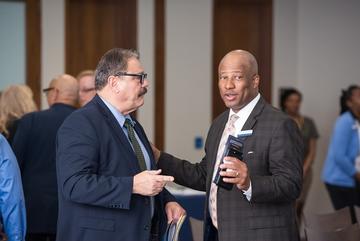
Anderson said NCUA is working to improve diversity and inclusion within credit unions, noting the agency held its first-ever Diversity, Equity and Inclusion Summit last year. (CUToday.info has extensive coverage from the event; search DEI Summit for a list of links.)
“The agency, too, now has its first African-American board chairman in Rodney Hood,” noted Anderson. “I attended that Summit and it was very informative. The African American Credit Union Coalition (AACUC) had representatives in attendance, including vice-chairman Larry Sewell. He is vice president at Anheuser-Busch FCU in St. Louis. And they're almost $2 billion in assets. He talked about the progress of African-American CEOs in credit unions, and he shared those numbers. He, too, feels there has been progress but that much more progress is needed.”
An Eighth Cooperative Principal
Anderson suggested other efforts on a national level might help, including a proposal by Maurice Smith, CEO of Local Government FCU in Raleigh, N.C., and former CUNA board chairman.
“He suggested we add an eighth cooperative principle to the seven credit unions principles—the eighth being diversity, equity and inclusion,” said Anderson.

Anderson believes in order to create a significant increase the number of African-American leaders in credit unions it will require a much more aggressive approach to diversity and inclusion.
“We have to be intentional—we have to say diversity equity and inclusion doesn't happen just because we say everyone can apply for these positions,” explained Anderson. “I think we have to level the playing field somewhat, and to do that we have to be intentional in our recruiting, and not just for African-Americans, but for women, Latinos and all other differences.”
To that end, Anderson said a big part of being intentional in driving diversity among CU leaders is “casting a wider net. The number of candidates has to be bigger. The talent is out there. We’ve just got to identify these candidates.”
Offering Qualified Candidates
Anderson noted the AACUC has been partnering with CUNA and others as part of a drive for greater diversity among credit union executives.
“Credit unions, too, should check with the African American Credit Union Coalition when they are looking to fill C-Suite positions,” said Anderson, an AACUC board member and former AACUC chairman. “The organization can direct them to many qualified candidates.”
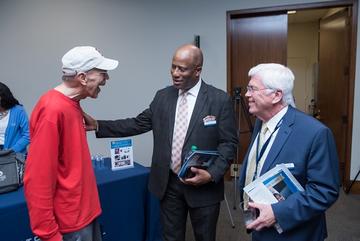
While efforts to increase the number of African-American CEOs can be driven by credit unions and their boards, Anderson said significant responsibility must also fall onto the shoulders of African-Americans within the movement.
Anderson, 61, began his career in financial services 40 years ago, spending the first 20 in executive management positions at many large commercial banks. He would eventually change his course and move over to CUs in 2000 as manager of the US Senate FCU’s flagship branch, at the Senate Hart Building. Before rejoining the credit union in 2018 as EVP, and then taking the CEO’s role the following year, Anderson spent eight years leading the $41-million Government Printing Office FCU in Washington.
“As I said, it takes hard work,” emphasized Anderson. “You have to get all the proper training and education and network. I always knew that. For example, I went back to school and got my MBA. I've always been prepared.”
An Old Adage
Anderson stressed “preparation matters,” and shared advice for young African-American professionals within the movement looking to advance.
“The old adage is luck happens when preparation meets opportunity,” he said. “You have to make your own luck. You don't get anywhere without that. You don't take any shortcuts. Educate yourself. Always be available to complete additional training. And have great mentors—I did. Do all those things to prepare for the position and then seek it out. I mentioned the need for the movement to cast a broader net. Well, positions aren’t going to just fall into your lap. You have to seek them out, put yourself in the running.”