

WASHINGTON—Among the issues indirectly being decided today on Election Day: the future of healthcare costs for credit unions and the fate of the various healthcare initiatives that CUs and related organizations have introduced in recent years.
It’s a complicated issue, and the two presidential candidates have taken opposite positions. Republican Donald Trump has said if he’s elected among the first things he will do is repeal the Affordable Care Act, better known as Obamacare. Opponent Hillary Clinton has said she supports the ACA, but will look to make some tweaks to the law.
The issue is further complicated by debate over what effect Obamacare has had on healthcare costs overall, and the fact Congress will have the ultimate say.
Annette Bechtold, SVP of regulatory affairs and reform initiatives at health benefits advisory firm One Digital in Atlanta, noted that Republicans are seeking to establish a system that provides less government assistance and instead establishes methods to teach people how to better manage their healthcare and healthcare costs.
Not Enough Youth Support
Bechtold, who was an initial supporter of the ACA, believes the GOP plan at this point may be a better option than additional bureaucracy related to Obamacare.
“We know now that (with Obamacare) we don’t have true choice and the costs are too high in a system where we are taking care of people,” said Bechtold. “And based on what we have seen the Democrats say they will do, they will simply create more of these same results.”
A key problem with the ACA, acknowledged Bechtold, is that the number of young people—who do not consume much in the way of healthcare resources—signing up for healthcare plans has fallen considerably short of projections. That lack of low-cost consumers combined with the higher number of high-cost people with pre-existing conditions, h
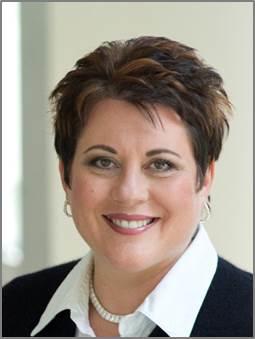
Annette Bechtold
as been a considerable drag on profitability, and has led many providers to exit the healthcare exchanges created by the ACA.
While Republicans continue to put forward a healthcare plan that is based on House Speaker Paul Ryan’s “A Better Way” white paper, any repeal of the ACA won’t be easy. It will be particularly challenging for any politician to take healthcare coverage away from those who have been able to move to the ranks of the insureds.
For that reason, Bechtold believes Republicans will seek to dismantle the ACA piece by piece.
“And they won’t repeal every provision of the Affordable Care Act,” she said. “I think a number of things will stay. For example, people with pre-existing conditions might not be precluded from coverage, as long as they were to keep continual coverage . . . Again, the Republicans will dismantle the ACA slowly, taking a lot of time with each decision. They will begin by dismantling and replacing, carefully determining the costs, ramifications and consequences of each decision.”
Expand Obamacare
On the flip side, said Bechtold, “Clinton says she wants to expand Obamacare and to make modifications that make sense. She is very focused on more oversight. So you will see at least one additional federal agency come into play, one, certainly, that oversees the prescription drug industry. She wants to protect consumers—especially from prescription drug price gouging.”
Bechtold said that she expects Clinton will again seek to place a great deal of emphasis on public health insurance exchanges to provide consumers with more choice.
Should Republicans emerge as winners today, Bechtold believes they will likely seek to cap the employer exclusion on taxes, remove the mandate that forces employers to provide healthcare for staff, and remove the provision that prohibits employers from giving employees money to buy individual healthcare coverage.
“Giving employers the option to give staff money for healthcare provides employers with greater flexibility—greater flexibility to meet their budgets as healthcare costs continue to rise,” she posited.