

By Ray Birch
RALEIGH, N.C.—One of the most successful cooperative partnerships in the U.S. credit union community is ending, and Maurice Smith, CEO of Local Government FCU, which has worked closely with State Employees’ Credit Union in North Carolina, says there is some critical knowledge the movement can take away from the 40-year collaboration.
“I think there's some important lessons the movement should be aware of from our long, working relationship with State Employees Credit Union,” Smith said. “And one of those is there's power in collaboration. We credit union people sort of take for granted that we go to league and chapter meetings and national association conferences and see people and talk to others. We just take that for granted, as if that’s how the world works. But we are a rarity in the world. So, when two organizations like this come together and say let's do something, that's a quid pro quo, that's good for each of us and each of our memberships, I think we should continue to explore these kinds of opportunities.”
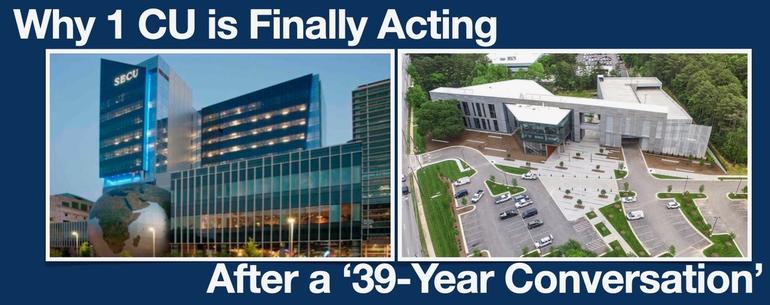
Smith told CUToday.info that while what LGFCU will look like in the future is still being determined, the CU will likely be a digital first organization that does not rely on branches.
As CUToday.info previously reported, the $3.7-billion LGFCU announced it is exploring steps to operate independently of the $52.1-billion SECU to directly serve its 400,000 members. SECU 2.7 million members
Court Decision Led to New Charter
A Supreme Court decision in 1979 required SECU to expel local government employees from its field of membership. SECU assisted LGFCU in obtaining a federal charter in 1983. At that time, LGFCU and SECU entered into an agreement where LGFCU members are served through SECU’s branch network and contact center, while SECU also provides much of LGFCU’s operational infrastructure.
SECU has an extensive branch network that reaches across the state of North Carolina.
Smith told CUToday.info it's important for the movement to understand that membership, ownership and control matters, which has played a part in the decision to end the long-standing relationship. The actual date and timeframe for ending the collaboration has not been determined, Smith noted.
“The local government folks have their own credit union,” said Smith. “I'm fond of telling my members we're the only credit union on Earth that is primarily focused on local government in North Carolina. Nobody else in the world can say that. So, when we think about local government and what it means, it's understanding the culture and needs and to serve the members nobody else understands like our credit union.”
Going Local
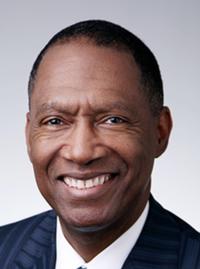
Maurice Smith
Smith believes LGFCU members should have a direct voice in the ownership in their credit union.
“In ending the 40-year relationship it was time to get back to more of a local ownership. There was no reason to merge with SECU,” said Smith. “There’s no reason to merge if you like that separateness and uniqueness. You like your unique membership base, and if we merged we would not have that. Maybe there's a little bit of a chip on the shoulder of people in government. State government doesn't like federal government telling it what to do. County government doesn't like state government telling it what to do. And city government doesn't like county government telling it what to do. You have this sort of independent-minded culture of local government.
“Our members want to know their local board members. They want to see them at church and in the grocery store. They want to have a direct connection with the operation of their credit union, and a larger financial institution whose headquarters is remote to your community…,” continued Smith. “It’s in the best interests of our credit union to recognize that our members want to hold on to that community-owned institution.”
Smith said that kind of thinking finally led LGFCU and its board to bring the long partnership with SECu to an end. He noted LGFCU has grown in size and strength during the past four decades, and he emphasized that growth would not have happened had LGFCU not had such a strong partner to work with.
An Example for Others
Smith stressed that other credit unions, especially smaller and start-up CUs, can benefit from a similar arrangement.
“There's a number of efforts around the country from people who want to form their own credit union,” said Smith. “They want to do de novo institutions. They want to choose their own credit union because they believe a credit union will respect their sensibility of the local market and that matters to them. I think there's an opportunity for credit unions to collaborate to help create these new options, if you will, if a de novo institution can partner with an existing credit union that's successful and it can be a good deal for both of them…Maybe the kind of collaboration we had with State Employees Credit Union might inspire other credit unions to do likewise.”
Plan is to be Digital Only
In moving forward on its own, LGFCU will be a digital only organization for the foreseeable future, said Smith, who noted that a decision on adding its own branches has not yet been made. Smith, who also serves as CEO of the $113-million Civic FCU here, said LGFCU will use the Fiserv DNA core system that Civic FCU runs, which will be scaled to the needs of LGFCU.
“We've been watching the branch transactions of our members for some time and it’s been steadily declining,” explained Smith. “It turned out members are saying, ‘I guess we don’t need all the front-line retail delivery channel.’ We will find another way to repurpose that experience. But we don't have a firm answer on that yet.”
If branches are eventually part of LGFCU’s future, Smith emphasized that what they will look like will likely be different than the SECU branches members have used for years.
“Building a branch for today may not actually suit the needs of members in 2030,” said Smith. “What kinds of services and needs will they have? Those are the kinds of conversations we will be having.”
New CEO to Lead Effort
But Smith won’t be part of ongoing talks, as CUToday.info reported, he will retire in January. Dwayne Naylor, who has been serving as Civic FCU’s president, will lead both organizations. Local Government FCU and Civic FCU are separate brands that operate under one management team. Civic FCU was created in 2018 as a digital-first credit union
A 39-Year Conversation
“We have been working with State Employees Credit Union since 1983,” said Smith. “We're coming up on 40 years and the conversation about what our institution would look like on the day that we exited this collaboration began in 1984, one year after we were formed. So, this is just about a 39-year conversation we've been having about what this would look like on the other side of this collaboration. And what we're focusing on is a celebration. This is an opportunity to highlight a collaborative advantage that has worked, and others can learn from. It’s been good for our credit union and good for the movement. We've shown that two credit unions can be friends, we can work together, and we can serve our respective memberships. As I said, we're looking at this as a celebration more than a mourning of an ending of a partnership.”