

STOCKTON, Calif.–In a unique arrangement as part of a merger between two credit unions here, $10 million was set aside to create a foundation that is now led by the former chairman and former CEO of the acquired credit union and which has drawn criticism from at least one-well known person.
At issue is the 2021 merger by the then $635-million Financial Center Credit Union into the then $2.4-billion Valley Strong Credit Union in Bakersfield, California. The merger led to the creation of the FCCU2 Foundation, based on the acquired CU’s name. The stated purpose is to “support charitable and educational activities for the betterment of the Stockton area.”
The address listed for the Foundation is 18 South Center St. in Stockton, which was also the address of a Financial Center CU location.

In response to inquiries from CUToday.info, the individuals involved in setting up the arrangement say it was approved by regulators and is designed to fulfill the now merged-out CU’s mission, while state and federal regulators issued somewhat vague statements that no laws were violated and that the creation of the $10-million foundation was a “business decision” on the part of the credit union.
But the deal has drawn criticism from one prominent voice in credit unions, and two members also raised objections on NCUA’s website where mergers are reported and members given the opportunity to offer feedback, with one member calling the $10 million given to the foundation “insulting and outrageous.” Another member said his calls to the credit union for information on the arrangement were met with no response.
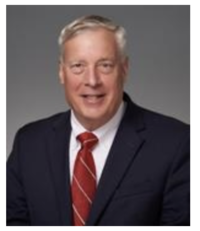
Chip Filson
This report is partially based on a posting by former NCUA Director of Examination and Insurance and Callahan & Associates’ principal Chip Filson, who reported his findings on his blog at www.chipfilson.com. Filson said he reviewed documents sent to members, IRS 990 filings, data obtained through Freedom of Information Act (FOIA) requests and public statements by those involved.
In addition, CUToday.info spoke with those involved with creation of the foundation, as well as the regulators, and also reviewed various documents.
Filson made a number of statements on the blog alleging the credit union misused funds that should have been returned to members. Representatives of Valley Strong Credit Union strongly denied those statements.
The credit union said any “insinuation regarding a ‘quid pro quo’” in setting up the Foundation in order to provide income to the former CEO and chairman of Financial Center Credit Union is “categorically false.”
Listed as the officers/directors of the FCCU2 Foundation are Manuel Lopez, who is identified as CEO and who was the former chairman of Financial Center Credit Union, and Michael Patrick Duffy, the former CEO of the credit union who is listed as the foundation’s secretary/
Documents filed with the California Secretary of State and reviewed by CUToday.info list only the name of the entity, FCCU2 Foundation, and its CEO (Lopez) and secretary (Duffy). The documents do not include any information on any compensation paid to Lopez and Duffy, who have said they are not being paid for those roles.
‘Financial Chaff’
Filson characterized the creation of the Foundation as “a lot of financial chaff around the theft” in which those involved then “decorate(d) the proposal with positive sounding future rhetoric about ‘empowering people and economies of scale.’”
Filson’s reference to “theft” is to members’ accumulated capital in Financial Center CU.
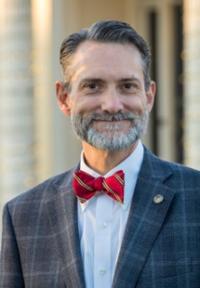
Michael Duffy
But Duffy said that is not the case. “As is common in opinion pieces, this question is framed in a negative connotation,” referring to a reference by Filson that the $10 million was a “diversion” of members’ capital.
“It’s not a diversion, but rather an investment in the communities it serves,” said Duffy in a written statement. “This ensures that the funds will be used in the manner in which it was intended: To advance and support the needs of its members.”
Viewed Through ‘Three Lenses’
But why was the capital not returned to members on top of the payout they did receive?
“The board viewed its strategic decision through three lenses: members, team, and community,” said Duffy. “All three were important in the past and we believe are important to the future. It’s a symbiosis between the three and we wanted to ensure the continuation while improving opportunities through cooperation vs competition.”
According to a timeline of events assembled by Filson, the credit unions submitted its draft proposal to the NCUA regional office, which gave it its stamp of approval, before then forming the FCCU2 Foundation.
The foundation was registered on June 25, 2021. Filson noted Lopez and Duffy were two of the five-person board at FCCU that approved the transfer of the funds.
Statements from Regulators
In a statement to CUToday.info, the California Department of Financial Institutions largely repeated facts already known related to the merger.
“The merger agreement approved by the boards of each credit union provided for the payment of a special dividend of $15 million to members on a pro rata basis and also for the payout prior to the merger of a $10 million distribution to form the non-profit charitable foundation known as FCCU2 Foundation to provide community outreach and use in the San Joaquin Valley area,” the DFI stated. “The application was reviewed per the Department’s procedures and was approved in accordance with California state law.”
NCUA issued a similar statement in response to a CUToday.info query.
“The decision to establish a non-profit foundation or engage in a voluntary merger is a business decision left up to a credit union’s board of directors and, ultimately (in the case of a voluntary merger) the members themselves,” the agency said. “This voluntary merger between two California state-chartered credit unions met all requirements and regulations of the state of California—the primary supervisor of these credit unions—and met NCUA regulatory requirements for disclosure.
“The meeting of the membership occurred Sept. 22, 2021, and the vote was certified,” NCUA continued. “The meeting was held in person and ballots were also received in the mail. A total of 2,680 members voted and 2,297 (86%) voted in favor of the merger.”
Forty-two days after registering FCCU2, Filson said his review shows Board Chair Lopez signed Financial Center Credit Union’s Notice of Special Meeting announcing the intent to merge with Valley Strong Credit Union.
As indicated by the two statements from the regulators, Duffy said neither NCUA nor the Department of Financial Institutions raised any red flags over the transfer of $10 million to the foundation.
“There was nothing to question,” said Duffy. “All documents relating to a merger of this size undergo a thorough review by the appropriate regulatory bodies.”
As for Filson’s statements on the merger, Duffy added, “The Filson blog is based on personal opinion. He is anti-merger.”
Disclosures to Members
In the notice to members, Filson noted the credit union disclosed the plans for the foundation and the $10-million “capital distribution,” along with several other announcements, including:
- A new position for Michael Duffy as chief advocacy officer for the continuing credit union, Valley Strong.
- A statement from Valley Strong Credit Union CEO Nicholas Ambrosini that VSCU would provide “an additional $2,500,000 to the FCCU2 Foundation over a term of 10 years.” Filson said the wording is unclear whether this is $2.5 million in total or $2.5 million per year ($25 million) for 10 years.
- Additional financial benefits for four of the five senior managers at Financial Center CU.
- A special dividend to be members if the combination was approved in their vote.
Payouts to Execs
According to disclosure documents filed with NCUA, the FCCU executives who were offered incentives and compensation related to the merger included:
- EVP Nora Stroh, who was paid an incentive retention bonus of $150,000 on the condition she remain employed by Valley Strong for 30 days after the merger date.
- VP of Finance Steve Leiga, who was paid an incentive retention bonus of $150,000 on the condition he remained employed by Valley Strong for 30 days after the merger date.
- VP of HR and Administration Systems Amanda Verstl, who was offered an incentive retention bonus, severance, sick time payout and a one-time share distribution of $257,352.21 based on a number of conditions.
- VP of Information Systems David Rainwater, who was offered an incentive retention bonus, severance, sick time payout and a one-time share distribution of $43,842.02 based on a number of conditions.
Distribution of Net Worth
Filson stated the special dividend was possible because Financial Center’s net worth heading into the merger was above 16%, double that of Valley Strong CU, where net worth was 8.7%. The estimated payout for the special dividend was “approximately $14,973,948.00,” according to the notice to members.
On Sept. 23, with 38 members in attendance at the special member meeting, 13 members voted in favor of the combination, with no one voting against, Filson reported. Of the more than 2,000 ballots cast, just 383 members opposed the combination. In total, approximately 9% of the credit union’s 29,672 members cast a vote as part of the merger process, according to Filson. The merger was formally announced Oct. 1, 2021.
The Bottom Line
In its last call report, filed Sept. 30, 2021, the then 66-year-old Financial Center reported a loss of $23.7 million, due to the $10 million “capital distribution” to FCCU2, in addition to the special dividend of approximately $15 million. Filson said the red numbers from that one quarter’s loss reduced the credit union’s net worth ratio to 12.4% from 17.2% one year earlier, which was still four percentage points higher than Valley Strong’s net worth at the same date.
On his blog Filson noted Duffy had been with Financial Center since 1993, the last 21 years as CEO. In addition, his sister, Nora Stroh, joined the credit union in the 1990s and was executive VP and COO, the number-two position. As noted above, Stroh was among those who received a merger-related payout. Filson said his review of the credit union’s 990 IRS filing for 2018 showed each reported total compensation of over $1 million.
According to Filson’s analysis, over its final five years FCCU’s loan portfolio declined every year, from a peak of $176.5 million at December 2016 to $102 million at the merger date, according to Filson, reflecting annual growth of negative 10.3%. Over the same period, membership also fell by 2,700 or almost 2% per year, Filson said.
While loans were declining Financial Center continued to increase its net worth ratio, reaching a peak of 20% at December 2018, before falling to 17% one year prior to the merger, according to Filson’s review.
Declining Loan-to-Share Ratio

Jim Lawitz
“As net worth rose, falling loan balances resulted in the loan to asset ratio declining from 39% to 16% at the merger date,” Filson said on his blog. “As these risk assets fell, the credit union continued adding unnecessary reserves, reaching almost three times (300%) the well-capitalized standard. This resulted in shortchanging members on their savings returns and/or charging higher loan rates than necessary for a safe operation.”
Filson’s interpretation: “The credit union’s leadership failed year after year in its most critical member service: making loans. However, it piled up reserves relentlessly, until the leaders decided to bail out (and took) some of the surplus reserves with them.”
Again, Valley Strong’s VP-culture and communication, Jim Lawitz, said Filson’s analysis is off base.
“You might recall there was a pandemic where a number of financial institutions battened down the hatches as a response to economic conditions. That FCCU took a conservative approach to market conditions was not our concern,” he said.
Active in Politics
At the same time the loan portfolio was shrinking and member growth was negative, Filson said his review found Financial Center CU remained active both in its community and politically. According to the 990 filings for 2017 and 2019 reviewed by Filson, the credit union made political donations from members’ funds for local political campaigns, such as Stockton city council and mayor, and for statewide office, including Newsom for California Governor. Political donations in 2019 went to 10 campaigns, while $25,000 went to the California Credit Union League PAC.
On June 1, 2020, the credit union announced a $1 million donation by the Michael Duffy Family Fund and the employees of the credit union. “The same press release also stated that the credit union had developed a Loan Holiday program to ‘alleviate financial burdens for its members’,” observed Filson. “Whatever the program’s intent, outstanding loans at the credit union fell by $40 million in 2020 from the prior year.”
In his analysis, Filson, alleged on his blog, “In contrast with the nationwide member and loan growth in the industry, Financial Center’s data shows it had ceased serving members as its primary activity. Instead, it added to a bigger and bigger reserve nest egg to dip into down the road. In other words, faking it till you can take it.”
‘Not Here to Judge’
In response to that characterization, VSCU’s Lawitz said, “There is no one-size-fits-all business model regarding how a credit union should operate. There are credit unions of all sizes including some of the largest that function more as a savings club than a lending institution. We are not here to judge others’ business models but rather focus on the great things we do each and every day for our members, communities, and employees.”
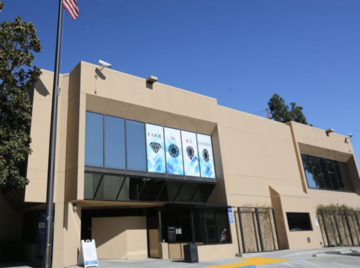
The former Financial Center CU office that is listed as the address for the FCCU2 Foundation.
In addition, Lawitz told CUToday.info Valley Strong believes it will be successful in turning the former Financial Center CU members into credit union borrowers.
“We have a strong track record in loan production, especially over the last two year, far exceeding the national average,” Lawitz said. “FCCU picked a partner with enhanced products and services like mortgage lending which they hadn’t offered their members in the past. Indeed, Valley Strong is supporting the San Joaquin County communities in advance of the completed merger (OD1) because we can, and because it is the right thing to do.”
Achieving Goals ‘Faster’
At the end of May, 2021 as the merger was moving forward, Duffy issued a statement, “As the CEO of Financial Center Credit Union for the past 21 years, my perspective on mergers has evolved just as much as our industry has in that same time period. As credit unions built by select employee groups (SEGs) increasingly partner with community credit unions, I have marveled at what credit unions of today’s scale can accomplish when they join forces with their member-owners and communities chiefly in mind.
“In a financial services sector that is constantly evolving, this merger is a true embodiment of the credit union industry’s cooperative mindset,” he continued. “At its core our partnership with Valley Strong represents us selecting the best credit union partner to help us achieve our goals faster than we could duplicate on our own.”
Member Objections
Two former Financial Center CU members posted objections to the merger on the web page NCUA created to allow members to offer feedback on such combinations.
Those members stated:
- “I am against the merger for several reasons. As a long-time member, I feel we must protect the financial stability of our local credit union. The loan to asset ratio of Valley Strong is 3 times the loans to the total assets. While F.C.C.U. ratios is only 20% loans to our assets. We do not need their loans, but they do need our assets. Let's protect our money, and keep it here in San Joaquin County. Frankly the real strong credit union is not Valley Strong, but our F.C.C.U. By the way, since our California economy is now fully opened this spring, then we should fully open 2 branches that have been closed for too long. Thanks for all of your time reading this.” – Larry Matulich
- “Vote NO on the proposed merger until the provision to transfer $10 million of member assets to a non-profit foundation for ‘Community Outreach’ is eliminated from the proposal. Member financial assets of any amount, especially $10 million, should not be given away for any purpose. If Financial Center Credit Union is so flush with cash that it wants to give away $10 million, then that amount should be distributed to members. I've written to FCCU twice asking for the rationale for giving away $10 million. They have failed to answer me, obviously because there is no rational reason for giving away $10 million from its member-owners. Given that FCCU's current CEO Patrick Duffy is being given the unexplained job of ‘Chief Advocacy Officer’ in the Continuing Credit Union, it's easy to guess that Duffy's only job duties will be running the new foundation, doling out the $10 million to his favorite groups and his own large compensation. The so-called ‘FCCU 2 Foundation’ was created less than two months ago for setting up Duffy in his new give-away-our-assets role. In any case, FCCU's failure to explain to members any rationale for GIVING AWAY $10 MILLION OF MEMBER ASSETS is insulting and outrageous. Vote NO on the merger until the $10 million giveaway of our assets is eliminated from the merge proposal.” –Frederick Butterworth
NCUA Says ‘Net Worth Belongs to Members’
“The magnitude of the grab and the cover story of good intentions diverted multiple regulators from their public responsibility,” wrote Filson. “NCUA is fully aware of the self-dealing possible in mergers. It posted some of its concerns when explaining its new merger regulation approved in June 2018.”
As CUToday.info took the lead in reporting, at the time NCUA put its new rules in place requiring credit unions to provide greater disclosures when mergers take place, there had been numerous incidents of insider dealings by both management and boards.
Among the comments made, Filson noted, was the “net worth of a credit union belongs to its members.”
In the case of Financial Center CU, Filson said his analysis found that as of June 30, 2021 it reported $109.2 million in total capital. Cash on hand was $138.9 million.
“If the credit union were liquidated this would have given the greater Stockton community this immediate cash benefit,” wrote Filson. “The 29,000 members could choose to join another credit union or use the funds for immediate needs. Instead, the members received just 13.7% of their collective savings in a one-time dividend. Even though this option is referred to in the rule, there is no indication this was ever considered.”
In his review on his blog, Filson called for:
- The full $10 million that was given to the FCCU2 Foundation to be “clawed back”
- For the “board and in management who developed and implemented this scheme (to) be permanently barred from participating in credit union affairs”
- For the minutes and all other documentation relating to the additional required contribution(s) of $2.5 million by Valley Strong to FCCU2 for 10 years to be reviewed.
‘Sham Mergers’

In a strongly worded opinion on the Financial Center CU/Valley Strong CU merger, Filson stated, “If this commitment was a quid pro quo (inducement) in return for the merger, then all parties approving this payment(s) should also be barred from engaging in the affairs of a credit union-board and management. Every person in the regulatory approval process of this merger should have their actions reviewed to determine if they should continue to be in positions of responsibility. Every participant will have an excuse. The creator and enablers of this transaction will defend their role by saying NCUA approved it. Then they will point out that the members voted on it. NCUA staff will assert there was no safety and soundness basis to object-despite the many board statements quoted above.
“Citing deeply flawed processes to defend one’s conduct, does not make the actions proper,” Filson added.
As reported above, the credit union has responded by saying any suggestion of a quid pro quo is “categorically false.”
Finally, argued Filson, if regulators do not act in this case it will “just create a new benchmark for the next merger personal enrichment effort. It’s time to halt these sham merger member deprecations.”
Other Foundations Could Follow
But Valley Strong indicated it doesn’t plan to alter its strategies moving forward. Asked if the credit union, which has been active in merging in other CUs, believes other credit unions seeking to merge might also look to create a foundation similar to that of FCCU2, VSCU’s Lawitz replied, “Every merger is unique and should be approached from the perspective of what’s best for the members (is the member value there), what will best serve the communities, and will the merger be good for employees.”
Give Us Less Than 1 Minute & We’ll Give You Good News!
The ongoing popularity of CUToday.info’s daily Fresh Today newsletter has led to a need to move to a new server in order to provide improved service to our readers. In order to continue to receive the daily email, you must register by March 7. To register, just click here. The daily Fresh Today news headlines email remains FREE! The new service is being launched