

By Ray Birch
ARLINGTON, Va.—All of the “back and forth” and even the competition between state and federal chartering systems over the years has been good for credit unions, says the outgoing president and CEO of the National Association of State Chartered CUs (NASCUS).
“That is what has made our credit union system so dynamic and able to grow,” said Lucy Ito, who will retire at the end of the year. “We have checks and balances by having the state and federal regulatory systems, and that has been important over the years.”
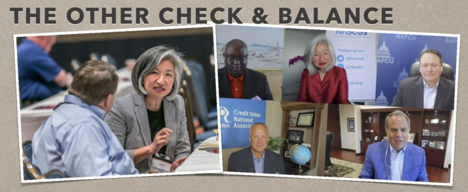
Ito spoke with CUToday.info about her career in credit unions, her time at NASCUS, and what she has observed about CUs.
“I think NASCUS might be more visible than we were seven years ago,” said Ito about her time at the association.
Ito began at NASCUS in 2014, coming from the other side of the country where she AVP/COO with the California and Nevada Leagues.
Ito said she believes the healthy competition between state and federal systems has led to positive change within the entire credit union movement. For example, she said changes made to field of membership rules and credit union expansion in numerous states has led to favorable changes within the federal charter, as well, and vice versa. Those changes have sparked credit unions to choose state over federal chartering, and federal over state.
“I think that we've been really good at reminding folks about how amazing the dual chartering framework is,” said Ito. “Both systems place pressure on each other. At the same time we make advances on the state side, we like to see the federal charter improve as a result. And, we also love the opposite. Advances in the federal charter then make state legislators and state regulators say, ‘You know what, we need to look at that, as well.’”
For the most part, Ito said the partnership between the state regulators and the federal agency has improved over the years.
“State regulators work hand in hand with NCUA,” said Ito. “It takes collaboration to make both systems work well.”
But that isn’t to suggest there aren’t issues that need addressing, emphasized Ito.
“We are always working on collaboration, and I think one piece of evidence is the overhead transfer rate,” Ito said, referring to a long-time point of disagreement between state charters and NCUA. The overhead transfer reflects the money NCUA transfers from the share insurance fund to cover expenses related to state charters. “We pushed hard in 2015, 2016 and 2017 for new methodology, which was eventually created by NCUA, which really recognized the role of state regulators…”
Documents of Cooperation
Ito also pointed to documents of cooperation that were set out on in 2019.
“It was good to see NCUA recognizing that we share the same objectives of ensuring both a safe and sound credit union system,” she said. “The state and federal systems need each other to make supervision work for all credit unions. There's still more collaboration to be done. The subordinated debt rule, which was finalized by NCUA, we're very happy to see that as a rule. But we do believe the rule needs some tweaking to make it work in the credit union system. Banks have a lot of experience with subordinated debt, so, there are a lot of lessons and experiences to be learned there.”
Ito said NCUA is learning, as well, from the states, particularly regarding adding the S to CAMEL, for market risk sensitivity.
“There are between 25 and 30 states that had already adopted the ‘S,’ and NCUA can benefit from what these states have learned,” said Ito.
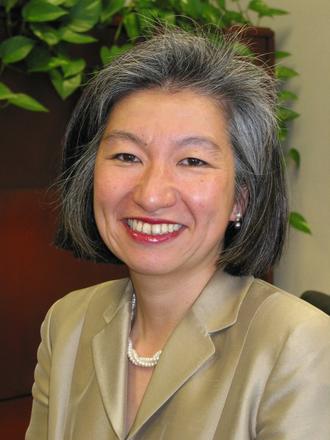
Lucy Ito
Healthy exchange, too, happens during joint examinations of credit unions, said Ito.
“This is a partnership and we have to work together and learn from each other,” said Ito. “There's a lot of exchange that goes on in joint exams. Certainly, state examiners working with federal examiners will learn things about the federal approach to examination and vice versa—right there in the exam setting.”
Two Areas Needing Improvement
While Ito cited a good working relationship between regulators, she said two areas could be improved.
“I’d like to be assured that in the coming years state examiners are getting the same training access as federal regulators,” said Ito. “I’d also like to see a state credit union system voice on the NCUA board. State-chartered credit unions represent 50% of the assets in the system, and that underscores there really needs to be a state voice on the NCUA board. I’d love to see the board expanded, but even if that does not happen I would be in favor of one of the board seats being designated to someone with state credit supervisory experience.”
Ito said a hurdle—digital payments—is heading the way of both federal and state regulators, including the possibility of a U.S. digital dollar.
“What’s coming speedily is the digital revolution, and that is a huge challenge for regulators,” said Ito. “We have all these payment options coming forward…With the talk of a digital dollar, what does it mean for banks and credit unions when consumers start holding their dollars electronically? What does this mean for traditional depository institutions that rely on low-cost deposits to finance their loan portfolios. That’s a really big question.”
‘Uber-Collaboration’
What stands out for Ito in her career in the industry is how greater collaboration has been struck among credit unions and organizations serving them. She said collaboration has been a strong means to avoid mergers, especially for smaller credit unions that often struggle to grow.
“We have seen some uber-collaboration among credit unions, especially with the formation of CUSOs like PSCU, CU*Answers and CO-OP Financial Services,” said Ito. “Collaboration, for many, has been an alternative to merging. What was also interesting to me during the course of my career is how the corporate credit unions have reinvented themselves.”
Catching a Bug
Ito got started in credit unions in 1989 when she responded to an ad in a local Madison, Wis., newspaper for a research assistant at the World Council of Credit Unions.
“I ended up catching a bug for credit unions there and worked internationally for 15 years before I moved on to the California Nevada Leagues,” she recalled. “I guess that stayed with me all these years.”
As for what’s ahead, Ito simply said, “I’ll worry about that next year. I have been planning for a while to retire. I'm in good health, fortunately, and it will be nice to end this crazy, bicoastal lifestyle. We have homes on the east and west coasts—my husband is a chemistry professor at the University of California Irvine.”