

WASHINGTON–There is a lesson for credit unions to be found in how other organizations have overcome huge challenges in the past. Learn those lessons, said one expert, and credit unions will be able to share their “magic” with the world.
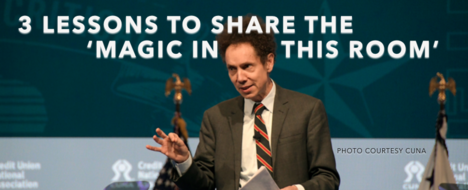
Malcolm Gladwell, the well-known journalist and author of five books, including “The Tipping Point: How Little Things Can Make a Big Difference,” told credit unions at CUNA’s GAC here he was aware of the challenge they face in awareness and the efforts to address that issue and other “myths” through the Open Your Eyes to a Credit Union campaign, and suggested they should look to three examples from history for guidance. Those organizations, he said, were also looking to correct misunderstandings and reshape public impressions.
Here are the examples cited by Gladwell:
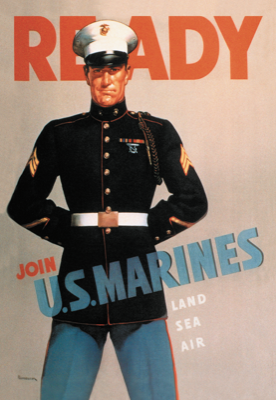
The Marine Corps
Prior to World War II, the Marine Corps was viewed much differently than it is today, according to Gladwell. It was much smaller than it is today and had the worst reputation of all the services. “Ninety percent of enlisted men put the Marine Corps last on where they wanted to serve,” Gladwell said.
In 1941, just after Pearl Harbor, the Marines occupied tiny Wake Island in the North Pacific when the Japanese laid siege to the approximately 250 Marines who were stationed there. Half of the Marines were killed, the other half captured and eventually executed.
“It had an incredible psychological impact. It was the first U.S territory lost to the enemy in the war, and it’s even more devastating to the Marine Corps,” said Gladwell. “The Marines were already teetering on the edge of irrelevancy, and then they suffer an overwhelming defeat.”
In 1941, said Gladwell, the Marine Corps would have been chosen as the least likely of the services to ever succeed. And yet by the end of the war it is the strongest of the military branches and the most prestigious, with the greatest amount of political support.
“In the space of a very short time, the Marine Corps goes from worst to first,” said Gladwell. “How did they do it? Part of the story is they fought bravely. But what distinguished them was the Marine Corps leadership sat down and realized they needed to communicate in a very different way, a specific way. And they decided to stress the values of the service. One general said, ‘If Americans don’t care passionately about the Marine Corps, we will cease to exist.’”
The First Step
The first thing the Marines did was turn a perceived weakness, that it was made up of the youngest, most dangerous men (one-in-five had a criminal record) into a strength, Gladwell explained, noting the Marine Corps opted to embrace who they were by essentially saying, “Yes, we’re wild and crazy, but we’re wild and crazy for you. That’s what we stand for.”
The Marines also changed how they interacted with the public and the press, asking newspaper men, ‘Why don’t you enlist, serve in the trenches, and write stories from the perceptions of a Marine? Write about the people you’re serving next do. And that made a huge difference.”
During World War II the large institutions, the Army and Navy, became alienated as faceless, dispassionate institutions, said Gladwell.
“You can see the differences in the services in the advertising done today,” said Gladwell. “The Marines make an emotional connection. Marines wear an old uniform and carry a sword.”
The Birth of Radio
In 1921, a prize fight involving the well-known Jack Dempsey had been billed as the “Fight of the Century,” with a purse of $1.7 million at the time. David Sarnoff was working for RCA, the leading manufacturer of radio sets in world, although most people weren’t buying them, as radios were not seen as something people needed.
Sarnoff suggests to RCA that they live broadcast the fight, an idea he is told by management is the “stupidest idea we’ve ever heard.” But Sarnoff is persistent, and finally gets the OK, although he is told he is on his own, related Gladwell.
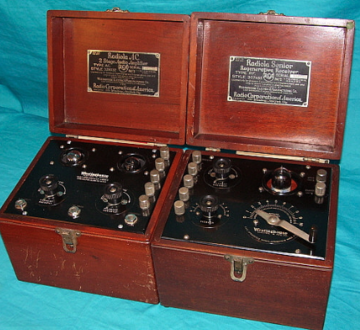
Sarnoff “basically steals” a radio transmitter from the Army, and got the RCA sales staff to put radios in stores and restaurants. The fight was broadcast and lasted 20 minutes. The result? “Radio takes off. That’s the moment this industry goes from a struggling business to a runaway success story for the remainder of the century,” said Gladwell.
It’s Not a Radio, It’s an Experience
What is so special about a 20-minute boxing match?
“Sarnoff reframed what radio meant,” Gladwell explained. “It’s not about getting the news, it’s about being able to attend the greatest sporting event without leaving your house. And suddenly, people who didn’t want something realized it was something they did want.”
The lesson, he said, is it isn’t about the product, said Gladwell, it’s about the experience. He told the GAC audience Uber doesn’t sell a taxi ride, it sells convenience. Nike doesn’t sell athletic wear, it sells a lifestyle, he said.
And radio came to be about experiencing events.
Toyota’s Big Stall
In 2009 a man was driving a Lexus loaner vehicle from a dealer when he and a passenger dial 911 to report the car is accelerating on its own and he can’t stop it. It eventually crashes, killing the occupants and garnering national media attention.
“It kicks off an extraordinary period for Toyota, and for next six months to a year they went through a crisis as great as any it had been through,” said Gladwell. “They faced countless suits. They were charged with having defects that had led to the deaths of more than 100 Americans. They paid fines and claims of more than $2 billion. Their reputation tumbled. It really threatened the future of Toyota.”

But what happened? The company not only survived, Toyota is again right back at #1 on the list of trusted brands, observed Gladwell.
The media attention and lawsuits began to feed off each other, and consumers and Toyota owners began to believe there was something wrong with their car’s software and nothing a driver could do about “sudden acceleration.”
A second crisis erupted for Toyota around “sticky accelerators” on Camry’s and then later there were widespread reports of braking problems on Priuses.
‘Baseless Claims’
But it turned out that almost all the claims were baseless, Gladwell noted. A NASA analysis could find nothing wrong with the software, and the “black boxes” in the crashed vehicles revealed that in nearly every case people in acceleration-related accidents never put their foot on the brake.
“It’s called pedal error, and it turns out it happens to every manufacturer,” said Gladwell. “The sticky accelerators turned out to be a nonexistent. In other words, Toyota did nothing wrong. It kept saying this, and it didn’t make any difference. More and more lawsuits were filed.”
The issue became one of poor communications making the problem worse, Gladwell said.
“Toyota would tell people the black box data showed they never put their foot on the brake, ‘This is all about you being a bad driver,’” Gladwell said. “Toyota was being Toyota, with some of the greatest engineers in the world who are lineal thinkers and who examine problems as engineers would,” seeking out the “logical” answer.
The impasse lasted for months, said Gladwell, until Toyota’s leadership opted to change its communications and talk in a different way.

‘I Know You’re Scared’
“Instead of having the engineers come in and say, ‘You don’t know how to drive,’ they had a different group of people come in and take them by the hand and say, ‘I know you’re scared, I understand what you’re feeling; what can I do to make it better?” said Gladwell. “Instead of talking narrowly about the product, they talked about qualities, what Toyota stood for as a company that always put the needs of the customer first. They said they were there to make things right. As soon as they started talking in that emotional ways with customers, the whole crisis melted away.”
The Lesson for Credit Unions
According to Gladwell, credit unions can learn from the examples set by the Marine Corps, RCA and Toyota.
“In each case the companies and Marines made a great product. But each group had a challenge. The Marine Corp had to prove they were relevant and mattered. RCA had to prove a radio was not a frivolity, that it could bring experiences that mattered to Americans’ lives. And Toyota had to prove it was safe and cared about its customers,” said Gladwell. “In each case they overcame the problem by talking broadly about what they stood for, the values they represent.
“I think there is a really important lesson in that for all of you. You have to win over the hearts and minds of Americans who never thought about banking with a credit union,” continued Gladwell. “You have to address myths in the marketplace. The way to correct myths and apprehensions isn’t by talking narrowly, it’s about talking broadly. It’s talking about how you are institutions willing to go the extra mile and forge a bond with your members, that you are not a lesser bank, you are a better bank. There is magic in this room, it is up to you to share that with the world.”