

By Ray Birch
MADISON, Wis.—With the Gulf Coast of Florida still surveying extensive damage from Hurricane Michael, and with flooding still occurring in saturated North Carolina following Hurricane Florence, it’s time for credit unions everywhere to grasp the “new normal,” according to CUNA Mutual.
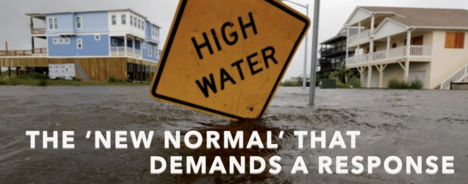
That new normal: flooding is taking place in a growing number of areas, even those thought to be safely distant from the coasts, and credit unions, insurers and other industries are going to have to address the problem.
CUNA Mutual Group spoke with CUToday.info about the desperate situations floodwaters have created for thousands of families who don’t have flood insurance to replace their homes destroyed by Florence. That’s not only causing issues for CU members, but also for credit unions left holding onto virtually worthless pieces of property after members walk away from their home and mortgage.
“Only about 300,000 people throughout the Carolinas have flood insurance,” said Michael McKinley, CUNA Mutual Group senior claims manager, referring to estimates. “A lot of homeowners in the Carolinas do not have flood insurance, and are basically left with what they have today. There’s nothing they can do unless they have a significant amount of money saved. It’s terrible to see.”
Furniture on Front Lawns
McKinley said that when he visited North Carolina last month the damage from the flooding was widespread, but scattered.
“We went through a number of cities—Lumberton was bad, as well as Wilmington and Fayetteville. You drive through some of these towns and all you see are people with their furniture on their front lawns. All of their property is outside,” he said. “The damage was worst where there were creeks and rivers nearby, of course.”
Many creeks and rivers that many people never expected to be problems, McKinley added.
“This situation is repeating itself now, so it’s no longer an anomaly,” McKinley said. “This can be expected to happen more often going forward, and not just in coastal spaces, but inland, as far as the Midwest, as well. We recently had record flooding here in Madison.”
The New Risk for Everyone
McKinley called it a new risk that must be addressed.
“Whether it’s the insurance industry or commercial business, they need to look at this new risk that is not only impacting people, the insurance industry, but the financial industry as a whole,” he said. “Financial institutions, when homeowners walk away, are left picking up the pieces. We saw a lot of that in Houston last year when those record floods from Hurricane Harvey, in so many areas not considered a flood plain, left banks and credit unions picking up the pieces.”
When members walk away, most of the time the CU is left picking up the tab, pointed out McKinley, saying CUs have also typically not purchased insurance coverage to protect them from these situations.
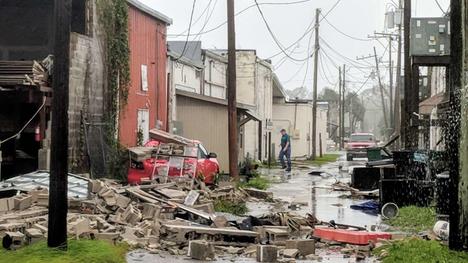
“Coverage for these matters can get complex and there are many different scenarios that come into play,” he said. “On occasion there is a real estate mortgage operation coverage that could come into play, but there are provisions and exclusions—but that is potentially something credit unions could look into. But in my experience, most times if members don’t have flood insurance the CU is left dealing with it afterward.”
Working to Total Up Damages
Turing to North Carolina, McKinley said last month that it was too soon to estimate how many homes have been impacted and how many have flood insurance. Recent reports stated that the vast majority of homes in the Carolinas don't have federal flood insurance. Only about 340,000 homes out of a total of about seven million in the two states have flood insurance.
“We have been in contact with all our insured credit union in the Carolinas well before Florence even approached landfall,” said McKinley. “We have not received reports of any catastrophic CU losses or credit unions needing major help, so overall things could be worse. I believe the losses in the Carolinas will be nothing compared to what happened in Texas last year.
In 2017 Hurricane Harvey caused $17 billion in damages covered by insurance and $40 billion in losses that were uninsured. McKinley said 88 credit unions with a few hundred branches throughout Texas were affected by Harvey. For all states hit by Harvey in 2017 (Alabama, Louisiana, Mississippi, North Carolina, Tennessee and Texas) 136 credit unions were affected, McKinley added.
Looking Ahead
Moving forward, with many more homes in unlikely places to be hit by flooding, McKinley said it’s tough to say how this situation should be addressed.
“We have defined a way of looking at this historically—by having properties in a flood zone required to have flood insurance,” he noted. “But we have to look at this another way. It’s the new normal so this needs to be addressed. But how is the big question. I can tell you as the result of Harvey last year, our product underwriting area has written some flood insurance for customers in different areas of the country directly, and not through National Flood Insurance Program. We are exploring this space to see what we could potentially do.”