

By Ray Birch
ALEXANDRIA, Va.—Will the disruptive challenges from ride-sharing services such as Uber that are now facing the nation’s taxi industry spell even more trouble for credit unions that make medallion loans?
In an interview with CUToday.info, NCUA is making no predictions. But the agency acknowledged that it is closely monitoring the markets in which taxi medallion loans are made, as well as the credit unions that make the loans to cab drivers.
Tim Segerson, NCUA’s deputy director of Examination and Insurance, said the agency is well aware of how emerging services such as Uber and Lyft have driven down the value of the medallions that are collateral behind many CU loans.
Defaults Increasing
That’s leading to rising defaults at banks and credit unions that make medallion loans. And one taxi CU, the $178.5-million Montauk CU in New York, has already been placed into conservatorship on Sept. 18.
The threat to the taxi industry and credit unions from ride sharing services appears to be greatest in New York City, where sources indicate that the value of medallions, inflated before Uber came to town, have fallen the fastest.
The issue facing New York taxi medallion CUs became so serious that four credit unions joined together to sue the city, alleging the mayor’s office is allowing Uber to operate illegally. The four CUs—Montauk, $2.1-billion Melrose CU, $692-million Progressive CU, and $278-million LOMTO FCU—recently lost their lawsuit. Following a judge’s ruling in that case, Todd Higgins, the lawyer representing the CUs, offered a sober assessment: “A catastrophe is unfolding, as an entire industry continues to be illegally destroyed.”
NCUA data shows that delinquencies at Montauk Credit Union rose to 2.96% through June, and had been steadily increasing in the past year. Delinquencies at Progressive have leveled off at 1.04%, while at LOMTO the same ratio is 3.68%. At Melrose CU, delinquencies and troubled debt increased 25% over the two-month period ended July 31. According to Crain’s New York Business, delinquent and troubled debt at Melrose is now approximately $400 million, which is nearly equal to Melrose’s capital.

Segerson, acknowledging the shakeup in the taxi industry, said that disruption “will work its way through financial institutions as well.”
Taxi CUs Ready For The Ride?
Asked if taxi CUs are prepared for the disruption, Segerson responded that he did not want to address something that might relate to supervisory activities, as the agency does not comment on those matters. Instead, Segerson discussed the letter NCUA issued in early 2014 (14-CU-06) that addressed taxi medallion lending, including sharing the importance of CUs preparing for fluctuations in medallion value.
Segerson reminded that the letter was sent before ride sharing companies became a serious issue for the taxi industry. He said part of the letter’s intent was to caution credit unions and examiners when evaluating CUs that make medallion loans against the fact there did not seem to be much logic between the sale price of medallions and the level they were being financed at. Segerson emphasized the agency was concerned over the ability of medallions to produce income sufficient to service the debt.
“Before Uber we started to see some of the prices of medallions were growing beyond what we would consider sound fundamentals from their revenue-generating capability,” Segerson said. “That caused us to do lot of research on the taxi industry and on their practices. And one thing we did with that letter was to reinforce our supervisory expectations for how these institutions manage that risk—the concentration in this specific industry. We wanted to make sure these institutions got that message.”
Segerson pointed out that the large majority of credit unions that make medallion loans have high capital levels. Progressive CU in New York has 39.94% through June. “That is by design—a buffer against market disruption due to the concentration of the assets.”
Capital Levels Vary
Capital at the conserved Montauk CU fell from 12.35% at the end of 2014 to 10.34% by the end of June. Melrose CU showed 18.04% capital through June and LOMTO stood at 16.73%.
With NCUA suggesting the impact of ride sharing may be biggest in the Big Apple, compared to other major cities like San Francisco, Boston, Chicago and Philadelphia, how much capital is needed by CUs in this market?
“Extra capital is always a good cushion against unforeseen market influences,” said Segerson. “It’s a reflection of the credit union’s acknowledgment that their taxi medallion loan concentration poses some risk. What is the magic (capital) number, I don’t want to speculate.
“There are market forces in play here, and these market forces will result in an answer at some point in time,” continued Segerson. “But we are monitoring the situation closely on the ground, continually assessing the exposure, and if there is a point where we don’t believe an institution is capable of weathering the storm we will take whatever supervisory action we have to.”
Segerson again suggested that the impact of ride sharing services and the corresponding price of medallions is being felt the greatest in New York City.
“When you look at the taxi industry across the country it is quite diverse. There are hundreds of what we could call ‘small countries,’” he said.
Each city for the most part, regulates its taxi industry and is not monolithic in how it approaches medallions. But New York City is a special case—being a premier destination city medallions and taxis are regulated as a monopoly. A limited number of medallions with exclusive rights to the city has resulted in some significant price appreciations that we have not seen in every market across the country.”
Future Is Uncertain
How long will CUs that make medallion loans have to weather tough times, will cities begin to regulate Uber to level the playing field, and will medallion values come back in New York? Segerson said it’s anyone’s guess.
“Will Uber be here in five to 10 years and will the company look the same as it does now, I don’t know,” said Segerson. “Will taxis be driving around the city then? Probably, and they will be regulated and probably have a medallion stamped on them. But there are a lot of moving parts to this situation. It really depends on what city and state authorities do, and how fierce the competition is between cabs and ride share companies.”
If problems for the taxi industry continue, and a worst-case scenario happens in which some of the credit unions serving the taxi industry would eventually fail, Segerson was asked to assess the exposure to the share insurance fund, especially since taxi medallion loans—once considered rock solid—are often participated out.
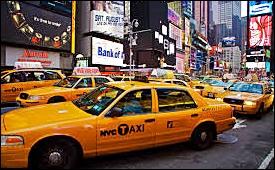
“We are monitoring (participations) as well,” responded Segerson. “Whenever we see market disruption that could have an impact on our supervised institutions we have concern.”
NCUA has termed the level of potential exposure from taxi medallion CUs to the NCUSIF as “limited,” making these points:
- Federally insured credit unions have $745 billion in loans outstanding.
- Of that $745 billion, about $7.15 billion, or less than 1%, are non-real-estate commercial loans.
- Of that $7.15 billion, about $1.5 billion are medallion loans, and about $959 million are participations serviced by taxi medallion lenders.
- “The four credit unions that sued New York City handle nearly all the medallion lending activity. Taxi medallion lending outside that circle of four is not significant,” the agency stated.
- “About 122 credit unions have taxi medallion participations (as do some banks and some non-bank lenders); the overwhelming majority do not have a concentration risk. A very small number of these credit unions have that risk,” NCUA said.
- Of the medallion lending in New York City, about one-third involves credit unions.
Segerson reminded that for taxi businesses to be successful they have to have drivers on the road and taxis not sitting in their lots, a situation that has occurred in New York as many taxi drivers have left to work for Uber.
“If things settle down and we end up with a smoothing of the driver turnover we have seen in New York in the last several months, the Big Apple could tell a different tale,” said Segerson, who declined to speculate on the future of taxi CUs in that city.