

By Ray Birch
HOUSTON—The pandemic has changed how consumers think of ATMs and how credit unions need to promote them, according to one company, which said new technology is making ATM marketing a simpler process.
Joe Woods, SVP of sales and marketing at Dolphin Debit, told CUToday.info the credit unions faring best with their ATM networks, and driving the greatest usage, are those who understand members’ preferences for the placement of ATMs and more.
“The savvy credit unions are learning more about where their members are located, and then helping their members find ATM locations nearby,” said Woods, adding that new technology allows credit unions to overlay data to identify where members are and where they are searching for ATMs.
Turning Up the Heat
“It’s heat mapping,” said Woods, saying that technology is available from Dolphin Debit through its partnership with Wave2. “The credit union may discover they’re incredibly saturated with ATMs on the west side of town, but have a large number of members searching on the east side of town and not finding anything. Mapping this data gives obvious visual cues to the credit union about how the ATM usage is clustered or varies over a given geography.”
As a result, the data helps determine the location of future ATMs.
“The credit union can plot out a map with their branch and ATM locations and overlay member search data to find gaps,” he said.
Woods said the new locator technology is a vast improvement over old “one-dimensional” ATM locators that only allow consumers to perform basic searches, and often not easily on a mobile device.
Other Uses for Data
Woods, emphasized, too, there is more involved than just properly placing ATMs. Credit unions can do a better job of letting members not only know where the credit union’s ATMs are, but to identify where there is additional surcharge-free access, he said.
“It’s relatively easy to find an ATM,” he said. “The goal is to help the member find a surcharge-free ATM.”
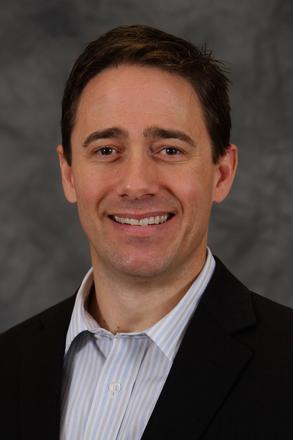
Joe Woods
The new locator not only provides locations of ATMs, but driving instructions as well through a mobile app that guides members to the ATM from wherever they’re located.
Woods said making it easier for members to find ATMs became a greater priority during the pandemic, as branches shut down and consumers who wanted cash were sometimes in a pinch over where to get money.
Not Limited to ATM Locations
The ATM technology that shows where members are clustering and needing ATM access can also help a credit union make other decisions.
“It can help determine where to put that next office and what size should it be, whether a full-service or micro-branch,” Woods explained.
So, what’s next? According to Woods, credit unions should be on the lookout for expanded ATM functionality.
“We’re seeing an increase in discussions regarding automated deposit at the ATM,” said Woods.
Automated deposit lets consumers make a deposit at the ATM—cash and checks—without using an envelope.
“We’ve been deploying deposit-taking ATMs for quite some time, but in small numbers,” he explained. “With the pandemic and subsequent retail lockdown, members weren’t able to walk into a branch to make deposits. This increased the importance of what the credit union can provide outside the walls of the branch to allow members to continue to conduct their usual business with minimal disruption.”
Different Names, Same Interest
But automated deposit isn’t the only functionality garnering more attention. Woods said conversations around interactive teller machines (ITM) have increased dramatically.
“Whether you call them ITMs, PTMs, whatever the acronym, ITMs are becoming more a part of the dialogue we’re having with credit unions,” said Woods. “ITMs have a much larger transaction set, giving members the ability to perform loan payments, move money to and from multiple accounts and even speak to a live member service representative via a video screen.”
Woods said ITMs are a critical component to the future of branching.
“Through the use of the ITM and increasingly savvy technology, credit unions can eliminate cash management and vault space, footprints can be much smaller, staffing can be lighter and still properly serve the membership,” he noted.