

By Ray Birch
EDWARDSVILLE, Ill.—Is the growing trend by some large banks and larger credit unions to reduce or even eliminate their nonsufficient funds fees creating a dilemma for smaller CUs? One credit union CEO told CUToday.info the issue is “one of the biggest concerns facing the credit union movement in many years.”
Several credit union CEOs believe it is a concern for the entire industry, but an even larger number worry for small shops. Specifically, they say, these credit unions are being forced from having to choose between reducing or eliminating overdraft fees—which will threaten the future of their organizations—or having to keep their pricing in place, which could lead to a loss of members as they seek out better deals elsewhere.

As CUToday.info has been reporting, a growing list of primarily large credit unions and banks have announced the elimination or reduction in OD fees, with $8.1-billion Pennsylvania State Employees CU being the latest.
In addition, one recent analysis by The Pew Charitable Trusts has found that consumers could save more than $2 billion a year as a result of five of the country’s largest banks—Bank of America, Wells Fargo, U.S. Bank, Truist, and Regions Bank—eliminating nonsufficient funds (NSF) fees and making major changes to their overdraft programs.
In interviews with CUToday.info, a number of credit union leaders chose to remain anonymous or offer comments off the record, reflecting the “sensitivity” of the matter. Some of those sources suggested big banks are simply grabbing big headlines to win consumer sentiment with the cuts, even as they recover the lost fee revenue in other areas.

Glenn Christensen
Indeed, one credit union leader referred to banks’ announcements they are eliminating overdraft fees as nothing more than a “head fake.”
Moreover, the sources, many of whom represent smaller institutions, said large CUs—while not seeking headlines—have a much greater ability to make up the lost revenue due to their size, while small credit unions will likely struggle if they cut the fees, which will only lead more small shops to contemplate their future.
Merger expert Glenn Christensen, who leads CEO Advisory Group, in a previous CUToday.info report said he expects the overdraft pressure to bring about more credit union mergers in 2022.
One credit union CEO, speaking on the condition of anonymity, called the issue “one of the biggest concerns facing the credit union movement in many years.”
Dealing With The Headlines
At issue, many CU leaders agree, are members seeing headlines about FIs cutting overdrafts fees while their organization does not. That, along with growing scrutiny from Washington under a new administration, is creating additional consternation within the movement.
Many CEOs also contend the CFPB does not fully understand the issue as it relates to credit unions, adding if they are forced by the Bureau to cut an overdraft fee they believe is fairly priced, they will simply have to add the charge back elsewhere, affecting members who do not use overdrafts.
According to a recent report from the CFPB, overdraft and NSF fees comprise nearly two-thirds of fee revenue at banks and credit unions, reaching an estimated $15.47 billion in 2019. Credit unions generated $2.39 billion, or 15.2%, of the total.
An Individual Decision
In Edwardsville, Ill., Frank Padak, CEO of the $1.6-billion Scott CU, said the decisions on overdraft policy will certainly vary.
“I feel these decisions are very much an individual credit union decision that each credit union has to make based on their philosophical beliefs and financial position,” Padak said. “I would add that while there certainly has been some press on larger institutions—both bank and credit unions making moves—in our market no one is in a hurry to make similar moves.”
Padak added that if a credit union is on the fence about reducing its overdraft charge, the rash of OD headlines could influence an organization to move on the issue.
“But, personally, I don’t believe there currently has been enough movement to put any real pressure on an institution to feel forced to make a move,” he said.
Padak said Scott Credit Union has always charged “very reasonable” below-market NSF/OD fees.
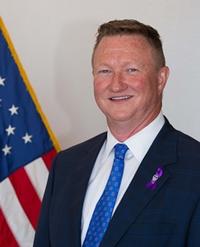
Frank Padak
“And we are not considering eliminating or cutting our fees,” Padak said. “As with any fee there are typically three objectives: deter a certain activity, cover the cost of an associated activity or generate income. With margins being razor thin, fees have been an integral part of financial institutions’ income and right now would be a very difficult time for many institutions to further reduce any income stream.”
According to Scott CU’s website, on its basic checking account it offers a “Ready Reserve Account” line of credit to cover overdrafts that carries a 16% APR, with loan advances in $100 increments.
Focus on Financial Ed
Instead of just reacting to the headlines, Padak suggested credit unions focus on greater education around overdrafts, especially on how to use them and how to avoid them.
“Financial education is an area of opportunity to educate consumers on how to create a budget and manage their finances,” Padak said. “There are options to using OD programs or simply going negative in an account to cover expenses. Unfortunately, there are far too many consumers who simply are not aware of those options. I have long advocated that financial education should be a requirement of our educational system, no different than reading, writing and arithmetic. It is shameful that we graduate kids from school and they have absolutely no idea how credit cards work or what a budget is. When we talk about the root cause of issues, this is where we need to put our efforts.”
Overall, Padak said, larger financial institutions will have a much easier time addressing overdraft charges.
“The largest institutions tend to have greater economies of scale and are better positioned to reduce certain revenue streams, which I would suspect will be made up elsewhere,” he said. “The other point that needs to be considered is how much of an institution’s income is made up of the fees being cut. We have excellent penetration of checking accounts with debit cards which helps us generate good interchange, and the NSF/OD is a significant part of our income.”
Costly Service to Provide
Michigan First Credit Union CEO Michael Poulos emphasized that every valuable service, such as overdrafts, costs money to provide.

Michael Poulos
“Credit unions just need to figure out how to price those services, knowing they need to balance revenue needs with the possibility of some members leaving,” said Poulos, who runs the $1.5-billion cooperative based in Lathrup Village, Mich. “I don’t believe (overdrafts) is a one-size-fits-all issue. Every credit union handles the pricing of services differently, based upon their field of membership and the competitive forces in their market. Within their own financial and business models, they try to provide value to members.”
According to Michigan First’s website, it charges a $31 fee for non-sufficient funds.
No Changes Planned
In California, Christine Wood said her $92-million VA Desert Pacific CU in Signal Hill is not making any changes to its OD pricing.
“We currently charge overdraft fees for all ACH and share drafts clearing, and it’s not cheap—$30,” the CEO said. “We do not charge overdraft for debit card transactions. I’m with the camp about educating our members about how expensive it is each time they overdraw. However, it’s a significant fee income stream for our credit union and I’m perfectly fine with members using our OD service instead of going to payday lenders for these small-dollar loans. We don’t waive these overdraft fees and are not considering reducing the amount either.”
‘Very Interesting Time’
But another, larger credit union in California does not have the same position, calling the situation a “very interesting time,” with the CEO adding the organization is still working on its overdraft pricing plan.

Chris Call
Yet another West Coast CU, too, told CUToday.info it is currently evaluating its OD policies, adding the matter is “more complex than the headlines suggest.”
In Santa Rosa, Calif., the $92-million North Bay CU gives its members a pass on overdraft fees unless they abuse the service.
“We will waive the first two—under the assumption that everyone makes a mistake now and then—but then charge $30 if it becomes habitual,” said CEO Chris Call. “I think what is different between banks and credit unions is that CUs will pick up the phone and have a conversation with the person to determine what is happening and how we might help. The current wave of bank press releases about waiving fees is, to me, is a head fake to distract from all the other egregiously poor treatment of their customers.”
A 'Big Mistake'
Many CU CEOs are waiting to see what the rest of the herd is going to do, and this is a “big mistake,” said Michael Moebs, economist and CEO at Moebs $ervices.

Michael Moebs
“The Walmarts and BofAs are taking checking away from right under their noses and they don’t see it,” stated Moebs. “Overdrafting is a valuable service to more than 20% of working Americans. These people are moving now since they want to deal with the hardships of COVID in the past two years.”
To address what is happening with overdrafts, Moebs, as he has stated in previous CUToday.info reports, said ODs must be priced per transaction, as most FIs do now, or priced on end-of-day balance only. Transaction price must be under $20. A primary checking account must be required to have at least 40 swipe fee charges per month. Checking offerings need to be reduced to no more than two accounts and designed and priced simply and competitively.
“And having just one checking account is even better,” said Moebs. “With COVID the world has changed. Financial Services must adapt quickly now.”