

By Ray Birch
RANCHO CUCAMONGA, Calif.—Should credit unions consider reissuing their plastic cards with vertical designs?
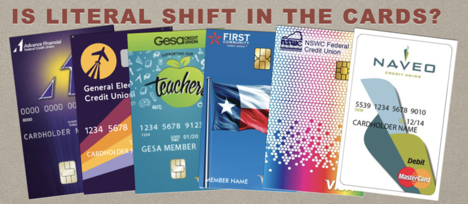
A literal shift is occurring, with a growing number of issuers adopting vertical, or portrait, designs on their cards due to consumers now dipping their chips or tapping their cards at the point of sale. The vertical designs better mimic how customers typically handle their cards when dipping or tapping, according to advocates.
The change, most popular with younger consumers, is worth CUs’ attention, sources told CUToday.info.
But decisions regarding the design change will be influenced by costs, members’ payments habits and demographics, and the number of card not present transactions within the portfolio each month, experts say.
PayPal recently joined several other banks in releasing credit and debit cards with vertical designs for its Venmo app.
“The vertical cards will make for a smoother user experience, as they will mimic how customers typically handle their cards when they either tap to pay or dip the card into the chip reader vertically,” Business Insider said.
Daniela Jorge, VP at PayPal, told Bloomberg the company's new vertical orientation was inspired by TikTok and Instagram. "The world around us is becoming more of the portrait mode and the vertical orientation," Jorge said.
An Ongoing Debate

John Patton
John Patton, senior payments advisor at CO-OP Financial Services, noted credit unions and banks have been engaged in the vertical versus horizontal card orientation debate for years.
“Some believe changing from a horizontal to vertical card format will drive cardholder spend,” Patton said. “However, the places cardholders put their cards—purse, wallet, digital device—are designed today for horizontal.”
Patton said design and timing of debit and credit card design orientation is typically addressed when a new card program is being launched or a program is undergoing a major redesign.
“Several credit unions have shifted their debit and credit card to vertical orientation with success,” Patton pointed out. “That said, credit unions should leverage the data they have to help determine the impact the shift may have with their cardholders.”
The Recommendations
Patton recommended credit unions:
- Review transaction data to determine the percentage of card present versus card not present transactions. “More CNP transactions indicates the card orientation isn’t a major factor in the purchasing experience,” Patton said.
- Recognize generational biases indicate more senior generations prefer horizontal-orientated cards. “Depending on the percentages, the need for both orientations may be needed to support the credit union’s demographic makeup,” Patton said.
- Pay attention to the fact card design includes the placement of the contactless antenna or EMV chip. “If vertical cards are going to be offered, make sure the placement of the antenna or chip are conducive for the cardholder’s dominant hand. The credit union also needs to take care that its branding is prominently aligned for viewing when inserted into the POS device,” Patton said.
- Know the debate over design will wane. “As digital issuance grows, the likely impact of vertical versus horizontal will lessen as today’s digital wallets portray the card image in vertical orientation,” noted Patton.
Alignment Needed

Bill Hardekopf
Patton emphasized as consumers continue to receive financial services offerings from banks and fintechs, credit unions must offer not just offer competitive financial products and services, but those must align with consumer needs.
“Debit and credit card orientation is just one of the many services consumers will look for as they chose their financial service partner,” he said.
Bill Hardekopf of CardRates.com said the vertical design is more appealing to younger cardholders.
“I do think younger people like to do things differently, and I think there will be some younger people who will think that it's cool to have a card like that—there is this cool factor to vertical designs,” said Hardekopf.
Hardekopf said he is not sure how much easier portrait designs make it for consumers to dip or tap their plastic. He acknowledged, however, health concerns today have more consumers turning to contactless payments.
“I think you're seeing some issuers turn to vertical designs so they can differentiate their cards. It’s marketing, trying to be different,” he said.
‘Modest’ Improvement, But…
Tim Kolk, principal at TRK Advisors, agreed with Hardekopf that the health crisis is increasing issuers’ attention to contactless cards.
“The vertical card design provides some modest functional improvement to the contactless experience while also presenting a modern and appealing identity to cardholders,” Kolk said. “It won’t move the dial a whole lot as compared to baseline portfolio management elements, like up-front promotions and reward programs. But it is another example of the nearly countless things all issuers need to stay on top of to make the most of their programs.”

Tim Kolk, TRK Advisors
Kolk stressed credit unions must at least pay attention to the design changes that are happening.
“If someone doesn’t keep pace, on this specific evolution or any other, their program will fall short of best serving member expectations,” he said. “An issuer never knows what each individual shortfall costs them, but over time portfolios with persistent shortfalls fail to compete effectively and weaken their member relationships. Will vertical cards change the market? No. Will a failure to even think about card redesigns based on market preferences like vertical designs weaken a program? Yes, a little.”
Many Have Changed Already

Brian Scott
A number of PSCU clients have already moved to vertical cards.
“They did that when they moved to chip cards so the card is facing the right way when you stick it into a card reader,” said Brian Scott, SVP and chief growth officer at PSCU. “Many credit unions still need to be issuing contactless cards. It’s probably fewer than half of CUs have issued contactless, and this is a great opportunity to both issue contactless and redesign their card image at the same time.”
Scott said he does not think a credit union’s card will lose top-of-wallet status because of the orientation of the plastic.
“But I do think you lose it if you don’t have contactless,” he said. “Contactless is a gateway to true mobile payments.”