

By Ray Birch
HARAHAN, La.—The leader of an organization that has opened a “No Credit Union Left Behind Store” is suggesting CUs perhaps look to the Peace Corps for answers to the challenges facing small credit unions, among other ideas.
Juan Fernandez, president and CEO of Luminate, the new name and brand for the Louisiana CU League, made that observation during an interview with CUToday.info about the league’s efforts to not only help small CUs compete, but to also tackle some of the major obstacles that have left many small shops believing their only option is to merge.
“There is great prosperity happening right now within credit unions, but that prosperity is not shared equally among all credit unions,” Fernandez said. “There are some credit unions that are struggling and are not doing as well. I think we as a movement need to ensure that we do everything we can to make sure no credit unions are left behind.”

Going to the Store
That thinking is behind what the league is doing around a new effort called: “No Credit Union Left Behind.” As CUToday.info reported, Luminate has opened what it is calling a “No Credit Union Left Behind Store,” with a goal of raising funds from the sale of T-shirts (see image) to support credit unions of less than $50 million in assets. Shirts range $20-$25.
“To magnify the collaborative voices of ‘No Credit Union Left Behind,’ the Luminate Foundation has created a small, but mighty, ensemble of apparel to allow everyone to wear their support,” the association said.
Proceeds from the sales will benefit the foundation.
“I feel like every credit union has the drive and the desire to forge ahead and grow to do well for their communities,” Fernandez said. “But each should have the tools necessary to thrive. That's what we're aiming to do, help give small CUs those tools.”
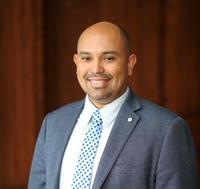
Juan Fernandez
Fernandez said the league is using those funds to set up programs within its foundation to help smaller credit unions with their education and operational needs and to “really help set them up for success,” he said.
Hundreds of Shirts Sold
In the very early weeks of the program, Fernandez said the league has sold hundreds of shirts.
The T-shirt idea came from the LCUL team, Fernandez said.
“People were using it as a hashtag and my team designed the shirt,” he said. “We used the (Credit Union Little Man) umbrella.”
Fernandez said the effort will expand.
“There will be other types of efforts to fundraise,” he said. “We're hiring for a foundation position right now for this effort. We're also looking at what we can do to solve more small credit union pain points.”
Seeking to Address Operational Issues
LCUL is also looking at what it can do operationally to help smaller credit unions.
“We're going to be in Baton Rouge, having a dialogue about some new initiatives that we're exploring. One of them is doing some back-office support for smaller credit unions,” Fernandez said. “Instead of each credit union having to do all their accounting services, they could outsource some of those to us. Hopefully, we can save them money and help them focus on serving their members.”
Challenges to De Novos
Fernandez said he has been part of a group for a couple of years that has been looking at the challenges that de novo credit unions face as they attempt to launch operations.
“I think there is a lot of need to help not just chartering credits union but to help these new credit unions overcome some obstacles,” he said. “Louisiana is a perfect state to get started because we have a huge number of credit unions, and probably a disproportionate number of credit unions that are really small. The vast majority of our credit unions are well under $100 million in assets, probably under $50 million assets. There's tremendous need and opportunity for us to help them find purpose and find strategies for growth.”
The Pain Points
As for the specific pain points, Hernandez noted challenges many credit unions will recognize.
“When you're a large credit union you have teams of people that specialize in accounting, in strategy, in operations, et cetera,” he said. “When you're CEO or manager of a small credit union, sometimes it's just you and maybe a teller or two,” he said. “That creates some big challenges, because you, as the manager, have to do the accounting, the risk management, the compliance. You have to do all the functions that in larger credit union are done by teams. In my opinion, that's one of the biggest opportunities we have—come up with collaborative solutions to solve this issue, to find ways to do things more jointly.”
Fernandez acknowledged smaller credit unions also need assistance with succession planning, and that without these plans in place, many simply choose to merge out. NCUA currently has a proposal out for comment that requires all CUs to have a succession plan in place.
A Strategy from the Peace Corps
“We need to do a much better job of identifying talent,” he said. “We need to find people who are eager to grow their resume and are willing to go to rural and remote areas and work in a smaller credit union for a couple of years. We need to reate some new strategies as they are preparing themselves for something bigger later. Think of it almost like the Peace Corps—you'd have someone that's younger, maybe a recent graduate. They do good, bring more services to small credit unio communities…There are models outside of the credit union space where that's worked. I look forward to exploring how we could do some of that and train the next generation of CU leaders who are really mission driven and are willing to put in the work.”