

By Ray Birch
DULUTH, Ga.—Driving diversity, equity, and inclusion (DEI) within the credit union community begins with people sitting down and talking with each other, says Tony Hernandez.
“It all starts with conversations,” said the president and CEO of the Defense Credit Union Council (DCUC). “I think, in general, people agree more than they disagree. But in those areas where we disagree, we’ve got to manage those areas carefully, and how we talk about the differences and different perspectives…we must always be respectful to build trust. Without these conversations things fester underneath, leading to discord, distrust and always having to look over your shoulder.”

Hernandez shared his insights as the African-American Credit Union Coalition (AACUC) has launched a Cross-Cultural Exchange Program, which is part of the coalition’s Commitment to Change: Credit Unions Unite Against Racism initiative.
As part of the exchange program, participants will work to build rapport with paired partners and participate in small groups to find consensus on DEI topics and emerging events. Hernandez is a member of the exchange program’s steering committee.
A Cup of Tea, or Three
“If you can share a cup of tea with someone, after three visits you start to develop personal relationships,” said Hernandez. “The side-effect of establishing a personal relationship is that you create a stronger network of professionals across the country, which helps people move forward and find better opportunities. I've always been a big believer in networking, and our hope is to build a stronger credit union movement. I've enjoyed this program. I've enjoyed the conversations. I'm very optimistic about it and I believe we're going to learn a lot.”
Hernandez is participating in the pilot exchange program and is paired with AACUC President Renee Sattiewhite.
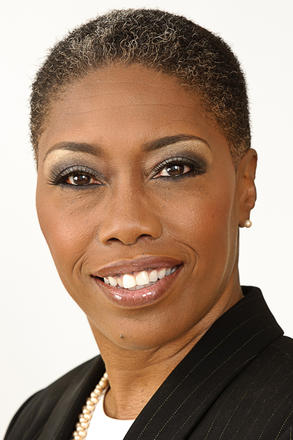
Renee Sattiewhite
“We were very intentional about who we paired people with because we wanted to get the greatest impact,” said Sattiewhite. “We want to make sure that each person gets something out of this. We think that developing a personal relationship is most important—once you develop that, then then you're building trust, and then there is camaraderie.”
Hernandez said the exchange program has a solid mix of participants, including those with Pacific-Island, Native American, Hispanic, and Asian heritages.
“There’s also a mix of people from very large credit unions and from very small CUs. We have representatives from state and federal charters…each with similar and dissimilar challenges,” he said.
An Informal Structure
Sattiewhite emphasized the exchange program does not have a formal structure.
“We are just encouraging people to meet with each other every two weeks for an hour or an hour and a half,” said Sattiewhite, who explained most of the meetings are conducted remotely. “It's been going really well. We've had two follow-up full meetings of participants, and we break them down into small groups and each of those groups is led by a steering committee member from the exchange program. We're keeping that consistent throughout this cohort.”
Sattiewhite added state leagues are interested in the program and will likely be involved in the next cohort.
“We are getting a lot of traction,” she said.
Hernandez agreed.
“This program is something we can build on—I think it can catch fire across the country as this is easily duplicated,” he said. “It is not a formal program. It’s not document-intensive. It’s very simple to implement. We do establish some boundaries. In other words, we’ve got a couple left and right, top and bottom limits. Yet, whatever happens inside this box is largely unstructured. Thus, it can be easily duplicated inside a credit union, at a credit union league, among trade associations…”
Sattiewhite said it is simply time these kinds of conversations sweep across the credit union community nationally, marking an actual step being taken to eliminate racism and drive greater racial equality.
“We're not copyrighting this. This is just an idea that works,” she said.
A ‘Unique Perspective’
The program has worked for Sattiewhite and Hernandez, whose conversations have sparked a friendship.
“Tony's given me a unique perspective,” said Sattiewhite. “I’ve learned a great deal from Tony and about Tony, how he’s building up a trade organization. I’ve learned about his military background. He’s an intelligent man, he had rank in the Air Force…It’s been a great learning experience for me. I had not come into contact with a Hispanic leader before Tony. My world had been working with leaders—White men, a few White women, and obviously a plethora of Black leaders. For me to have an opportunity to converse with Tony has been a great experience.”
Hernandez said he has learned much more about how Sattiewhite is moving her organization forward and taking strides to eliminate racism.
“I am proud to see what my friend is doing,” said Hernandez. “And I have relied on Renee for advice.”
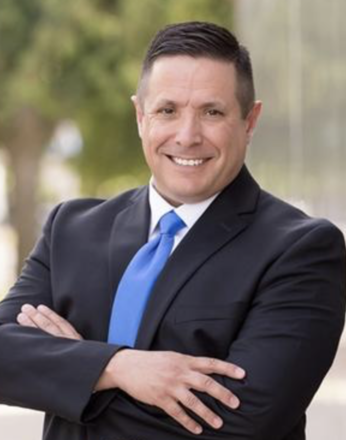
Anthony Hernandez
Hernandez said Sattiewhite helped him share advice with military credit unions around the new Juneteenth federal holiday as legislation was passed recently creating a national holiday marking the abolition of slavery.
“We we’re getting asked if we were going to close for the holiday,” said Hernandez. “It was really helpful to ask Renee her perspective on that. And then I was able to better inform our membership about the decisions they would make.”
‘A Huge Step’
The conversations taking place within the exchange program are expected to spark greater discussions across the credit union community as the program expands and as more credit unions and CU organizations adopt the model, Hernandez said.
“This is a huge step,” said Hernandez. The pilot program began in late April and will end on July 23. “I believe with the Commitment to Change Credit Unions United Against Racism initiative, our industry will help lead the United States towards eradicating racial injustice. If we can lean into this and really embrace this, there will be fewer economic disparities leading to social unrest. For me, this program is a small step but will lead to one that will be really big.”
Founding Members & Participants
Additional founding members of the Steering Committee for the CCEP are: John Bissell, president/CEO of Greylock FCU; Dan McCue, SVP, Alaska USA FCU; Jill Nowaki, president/CEO of Humandei, and Grace Sanchez, Latino Community engagement manager, AACUC.
Participating organizations include: AACUC, Alaska USA FCU, Chartway FCU, Chartway Federal Credit Union, Coca-Cola Credit Union, Community First Credit Union, Cornerstone Credit Union League, Corporate Central CU, Credit Union Association of New Mexico, CUES, CUNA, CUNA Mutual Group, DCUC, Dover Federal Credit Union, Greylock FCU, Humanidei, Inclusiv, Infuze Credit Union, Local Government FCU, Michigan State University FCU, Montana Credit Union League, NASCUS, Navy FCU, Northeast Family FCU, Ohio Credit Union League, Pearl Hawaii FCU, PenFed Credit Union, Plexcity, Point West Credit Union, RBFCU, SEFCU, Service at Coastal Credit Union, Service Credit Union, St. Louis Community Credit Union, TFCU, The Armed Forces Financial Network – AFFN, Travis Credit Union, True North FCU, USC Credit Union, VSECU, and Woodlawn FCU.