

BOULDER CITY, Nev.–For one person, it was the story of an employee who felt they had to leave their real self in the car when they arrived at work. For another, it was the realization that while well-intentioned, standing on the sidelines accomplishes little. And for four CU leaders overall, it is an understanding that everyone, including all who are part of the LBGTQ plus community, needs to be a valued piece of “union” piece if the credit union really expects to thrive and grow.
Those kinds of diverse opinions, personal experiences, and lessons were shared during a panel discussion that was part of the CU Pride Leadership Conference.

CU Pride, which has grown rapidly since being formed three years ago by cofounders Linda Bodie, Dan Marquez, Brandi Stankovic, and Zach Christensen, is aimed at promoting diversity and supporting what its founders said is the often “invisible” LGBTQ plus community in credit unions.
Panelists included Tammy Schultz, president of preplanning solutions at TruStage; Chip Lusk, president and CEO at IDB Global FCU in New York; Marci Francisco, chief experience officer at Premier America Credit Union in Chatsworth, Calif.; and Lynn Heckler, chief talent officer at PSCU in St. Petersburg, Fla. The discussion was moderated by Zach Christensen of Mitchell Stankovic & Associates.
Christensen: Are you a safe space for people to share their authentic selves? And if not, have you asked the question of yourself? Why? Why are you not that person? Why are you not that organization?
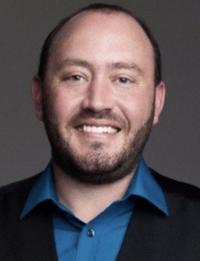
Zach Christensen
Heckler: It really comes from a deep-seated belief that gender identity and sexual orientation are as much a part of the person as the nose on our faces. We wouldn't suppress or persecute a person because of their nose. But we have done it, we have done it to the LGBTQ plus community broadly, historically.
And, of course, I have friends and I have family members that are part of the community. I believe that they should have exactly the same rights and privileges as I do. I don't think that anything should be different, just because they're part of the community. I also feel like our workplaces are better when people can live their truth at work, and show up as who they truly are. This is a little bit about why allyship is important to me.
Lusk: I'm going to start off by saying it's the right thing to do. I know several people who identify with the LGBTQ plus community and my guess is that we all know several people who identify. It’s interesting: 7% of the U.S. population identifies, but today 25% of high school students identify as LGBTQ plus, so if you don't currently know someone, then odds are that you will soon as these high schoolers enter the workforce.
For me and probably for you, the closer you are to someone who identifies as LGBTQ plus, either as a coworker, an advisor, a family member or a neighbor, the more you realize why allyship is important, because homophobia, transphobia, these are real. I think we have a moral obligation, we need to do our part, to make the world a better place free from violence and discrimination against those that identify as LGBTQ plus.
Schultz: During my life there have been two things that have been important to me. One is happiness, and the other is belongingness. And when it comes to happiness, I believe that even in your worst moments you have to try to find the silver lining and surround yourself with people who build you up. Sometimes, that means making difficult choices in life around jobs, around people in your life, around groups that you hang out with.
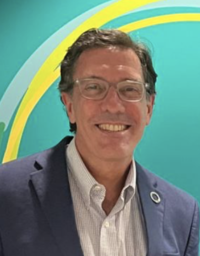
Chip Lusk
The other thing is around belongingness. While we say inclusive, I can include you, but does that mean you actually feel like you belong? That’s always been really, really important to me.
I think the other thing, too, is that as the mother of two gay children, finding a way to advocate and champion for them has really helped me (know) what it is like to walk in their shoes and make sure that no matter who you are, that everyone is included and gets the same opportunity to have the same experience as everyone else.
Francisco: I believe that everyone has a right to live, love and be themselves. Being an ally is important because it's about showing solidarity, being part of the community, amplifying the voices of authentic stories, people just living their lives and standing up ultimately for what's right.
If we believe every person on earth has a right to dignity, to family, to representation, to opportunity, then allies need to stand up and advocate for that, amplify the voices of the community, and just say we're here with you, we help you, we support you, and we're going to do everything we can to clear the way so you can just live your life.
I came out of the theater world. When you work in musical theater, so many of my friends, my best friends, the best man at our wedding, (are members) of the LGBTQ plus community. Like becoming a parent, I thought I understood, and then you have your children. I have two incredible children. And my youngest, at a very early age...we knew that they were just going through something that kids that are one and two—you don't always see kids go through. There was such a disconnect between who they were on the outside and who they are on the inside.
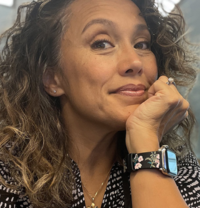
Marci Francisco
As our children got older we didn't know if our children were trans. We saw all the pain and the confusion that they went through…and have that tension of are they allowed to be themselves? It’s brutal. I don't have the same lived experience that my eldest child does, but you know, they're the most beautiful human beings I've ever met in my life. So creative. I believe that the world needs to see how beautiful the community is. It’s been a completely different journey, and the only person that's an expert in who my child is is my child. I just don't want the world telling my kids who my kid is allowed to be.
Christensen: Tell us more about being an ally, about being an advocate.
Schultz: One of my favorite quotes is from Martin Luther King: “Silence is betrayal.” Sitting back and saying nothing when you see something, that's not right. It's really hard for me to do.
I think the other piece on my journey is it wasn't long ago that I was listening to a panel and there was somebody who was an employee telling their story about how sometimes when they get to work--back when we drove to work--she would leave her magic in the car. And I had this moment where a sadness came over me that I just can't imagine having any employees feel like they need to leave what they think makes them who they are in the car, because they don't know how someone will treat them, react to them. I just thought, it's really important to make sure we're advocating for everybody.
As a leader, I need that magic every day. I need that magic to show up. When we think about those two things, don't remain silent. Make sure people feel comfortable and are working in a safe environment where people can be who they are, their authentic selves.
Lusk: When I was growing up our church was not a welcoming place to non cisgender heterosexual males. And so the question I had was, how does that church reconcile (talking about) grace, love, kindness and compassion when we don't welcome lesbians and gays? I had to park those thoughts in the parking lot of my mind.
Then, in college, I spent time with people that were like me; they were cisgender heterosexual males. As I got out of college, my career evolved. I got to know people who weren't like me who were gay or lesbian. And these are impressive professionals who are making a positive difference in their communities and in the world.
My wife and I ended up changing churches because we believe that God's concept of grace, love, kindness and compassion is much larger than I had originally been led to believe. And even with that change and these new friends and work colleagues, I was an ally, but I was a silent ally, watching from the stands, or watching from the sidelines.
It wasn't until the death of George Floyd that I became more engaged. I was at a George Floyd March at the National Cathedral in Washington and I was standing there, I was there to witness history, and I wasn't carrying a sign. I wasn't chanting. I was watching from the sidelines.
As I was watching everything that was going on around me, I was taking it all in, I saw a sign. There might have been more than one of these. But I saw a sign. I felt like it was for me, it wasn't for everyone else…This sign said, ‘Silence equals violence.’ And suddenly, as I reflected on that, I decided that I needed to move from being on the sidelines to what was happening to the field of action. As Teddy Roosevelt put it, I needed to move into the arena. I needed to be a positive ally for those that need an ally, for those who are discriminated against based on skin color, gender identity, sexual orientation, or religion. That is how my journey ended up to where I am today.
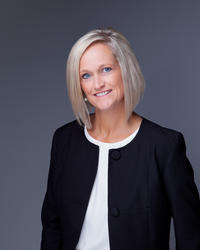
Tammy Schultz
Francisco: I don't know if I was ever someone who was really out there with standing up for what I believe. I tried to help other people and amplify other people's voices and kind of create connections and build community. But that's just not enough. We have to stand up for what we believe in. It's not enough to just be silently behind the thing. If we don't make our voices heard, if we don't try to create the change that needs to happen in the world, it's just not going to happen.
I've been so pleased to be a part of this organization that really stands for creating opportunity for people. And I have an incredible, incredible board of directors and incredible leadership team that really focuses the organization on serving the community and standing up for people in the community. I'm proud that our organizations strive to become leaders in the community.
We all have a way to go, but I think I've really found my voice personally.
Heckler: When I first entered the workforce…it was the mid-1980s and I recognized very quickly that there were a lot of LGBTQ plus team members that were not comfortable being out at work. In fact, in the mid-80s, gay men in particular were actively discriminated against because of the fear of AIDS. Back then it was an irrational fear of AIDS, like you could catch it just by working next to someone. And this made me really, really sad, and it made me angry. I think that's really where things started to spark for me when I saw how these guys were being treated.
Back then I was younger and I thought it was enough just to be personally accepting. As long as I was kind and I was accepting of my LGBTQ plus coworkers, that was enough.
But as time went on I realized it's definitely not enough…to create change, that's for sure. As time went on, I realized that it was speaking up, it was standing up, it was advocating, for lack of a better word, for those who are being treated unfairly. That's what's needed to change the status quo.
It's also standing up for people when the little comments are made behind their back.
In order to level this playing field and actually create systemic change, we have to work together, right? Because these systems that have kept people out, they weren't built overnight. The ways folks in this community have been excluded have been going on forever, So, it’s not going to be just Lynn being kind to a coworker, it's going to take us working together to actually change operational systems within our own organizations.
Schultz: I think it's important to ask, am I doing enough? Because I think there's a lot of things that you can do. It can be really simple. I think it seems like sometimes you're like, ‘How can I move that mountain?’ But sometimes you can have an impact on people's lives and not even really realize it.

Lynn Heckler
I can give you maybe an example. We do coffee chats across our organization and we say everybody is included, but there are times where it's not easy for everybody in the organization to attend. Or maybe they don't feel welcome…So, maybe instead of a one-on-one coffee chat, maybe you feel a bit more like three or four in a coffee chat and that sort of thing. We were able to kind of land on there's other ways to do this, to create that safe space.
Lusk: There’s a musical group called Michael Franti and Spearhead that has an album called ‘Work Hard and Be Nice.’ There’s a song on that album that says, ‘Start small and think big.’ My encouragement to other credit union CEOs is start small and think big. I would encourage you, if you're inclined to learn more about DEI or to learn more about the LGBTQ plus community, to enroll in a DEI certification program.
I did one a couple of years ago through Georgetown University in collaboration with the Maryland/DC Credit Union Association. I did this along with our director of human resources, and our awareness of concepts and terminology increased significantly from there, so that was the starting point.
It was a three-month process to get the certification. From there, it took us about a year, but we were able to establish a DEI Council in our credit union. We created a DEI charter, we have a DEI strategic plan. These things don't happen overnight…but it is an evolution that I encourage you to do. Now we have ongoing training around concepts such as unconscious bias or microaggressions. And our staff’s knowledge is growing, too.
Heckler: First of all, you have to educate yourself. You really have to do that on your own. I've read books and articles online and downloaded every piece of information I could get from Out & Equal, which if you haven't checked out Out & Equal and Human Rights Campaign, those are two just amazing, amazing resources. They have toolkits. They have like ‘Pride in a Box’ on the Out & Equal website.
You can start by doing the little things that make people feel welcome. It's as simple as flying the pride flag outside of your credit union, outside of your facility. Find a champion within the organization that's comfortable and wants to start an employee resource group.
I remember the first year we participated in the Pride Parade. Oh my gosh, it was so much fun, first of all, but also it was very freeing. For a lot of our team members, they're like, ‘Oh, yes, PSCU is not just saying, ‘Oh, yeah, team members go participate in Pride if you want.’ No, we're going down with banners and showing the world that we're an employer that welcomes people from the community to apply to PSCU.
There are a lot of little things like that. Ask your employees what they would like. Recognize incorrect, exclusionary practices, use correct pronouns. I mean, there's just hundreds of things. But it all starts with educating yourself and then asking your team members what would make you feel more welcome? What would make you feel like you belong to even more than you do in our organization?
We found it just sort of takes on this life of its own, and then it's not owned by leadership anymore; then the team members own it. It’s so amazing, because all I have to do is say, ‘Yes, you can.’ And they just create it and evolve it. I just provide some guidance and resources.