


ALEXANDRIA, Va.—After leading NCUA’s Office of Small Credit Union Initiatives (OSCUI) since June of 2011, Director William Myers is leaving NCUA. His final day will be June 11.
Myers, the second person to guide the office since Chairman Debbie Matz created the OSCUI five years ago, spoke with CUToday.info about his career at NCUA, and how his office has assisted small credit unions in their struggle to grow and survive.
Myers, 64, acknowledged that despite the agency creating an office dedicated to small CUs, the pace at which the smallest CUs continue to disappear has not slowed, nor are their any signs that the trend won’t continue. But, noted Myers, a former CU CEO himself, more small credit unions are in a better financial position than when the OSCUI opened its doors in 2011. Myers said that research his office is finalizing indicates that many small credit unions are growing and moving out of the small CU class, an indication that OSCUI programs have had an impact.
CUToday.info: When you first started at NCUA, you pointed out that 200 small CUs were disappearing each year, and you wondered if it was possible to understand the causes and use the resources of OSCUI to intervene. Why are so many small credit unions still dying on the vine?
Myers: I do not agree that small credit unions are dying on the vine (defining small CUs as $100 million an under). Small credit unions that have established themselves often choose to merge to capture the new financial environment and provide more services to their members. The vast majority of small credit unions that go away leave through merger. They merge into a bigger CU, expand their services, and maintain the membership within the credit union system. This is a win, not a loss.
NCUA had only three small credit union liquidations this year, which is a small number. The pace of small credit unions leaving is about 200 a year, the same pace over the last 20 years. Our office does recognize that small credit union liquidations are often due to fraud. That is why OSCUI has introduced its supervisory committee training program.
CUToday.info: If you say a small CU merging out into a bigger CU so members receive expanded services is a win, why are many people within the credit union movement concerned about how the industry is losing small CUs?
Myers: Every business started as a small business, and the lessons learned in starting and running a small business teach entrepreneurs how to be successful. We rely on small credit unions to do things like:
- Serve underserved markets. There are many niches that the biggest banks can't reach.
- Give truly personal service.
- Test new product and service concepts.
- Test new business structures and pricing strategies.
While the various kinds of support provided by the Office of Small Credit Union Initiatives cannot guarantee every small credit union will continue it its current configuration, the office offers ideas and assistance that can help these credit unions survive and thrive in the long run.
CUToday.info: How has the OSCUI achieved its best results?

William Myers
Myers: We have engaged in two major pieces of research, one with the Filene Research Institute. They looked at every credit union we touched over the last five years and we began to see a pattern of what worked and what did not—where we had our best results. So we changed our programs to focus on the things we do that achieve the best results.
Some of the things we found: We had a sweet spot with credit unions between $1 million and $10 million in assets, where nearly every contact was productive. Uniformly, within a year or 18 months, these credit unions saw significant improvements.
On the other hand, credit unions under $1 million did not have the capacity to absorb the changes we recommended, which were necessary for them to move forward.
For credit unions with larger asset sizes, specialized services—such as CDFI certification assistance, how to apply for grants, how to start a member business lending program—is where we have made the biggest impact.
For smaller credit unions it’s been strategic planning. It used to be we would go into a plan with a credit union and we would cover everything we could think of, which was too much. Now we have narrowed plans down to two to three strategic initiatives for a small credit union. This allows them to focus and move forward.
We also found that plans should not go out longer than 18 months, 24 at the longest. Five years is too long for a small credit union. We say when you are getting done with this first plan, come back to us for another.
CUToday.info: You mentioned that your remote training programs have been effective for both large and small credit unions?
Myers: Yes, they have been well received by credit unions of all sizes, even those outside the $100-million asset category. Credit unions of all sizes attend our virtual events. It was really surprising how big the attendance became once we moved away from on-site training to webinars and videos. The throughput has been amazing.
CUToday.info: What has been the biggest change you’ve seen in your office since you started?
Myers: When I began the relationship we have with the (NCUA regional offices) was different than it is now. And that is due largely to the fact that examiners do not do consulting with small credit unions anymore. I recall when I was in New York (as CEO of Alternatives FCU) an examiner took the time to teach me some points in accounting. But with the NCUA’s focus on exams changing, spending less time at small credit unions and more time at larger ones, examiners don’t have the time to consult a great deal with small CUs.
The OSCUI is not part of the exam process, and we deliver a different perspective to small credit unions than our examination team. So when examiners spot a need for consulting they contact us. This is the best arrangement, and one in which our office has had a big impact on small credit unions. The role of an examiner and consultant are very different. An exam is a formal, technical process. For example, they issue you a DOR and you follow it. A consultant can look at the DOR, examine what it means, share best options and ways to resolve it that keep with the mission of the credit union. That kind of discussion you can’t have with an examiner, but you can with our staff.
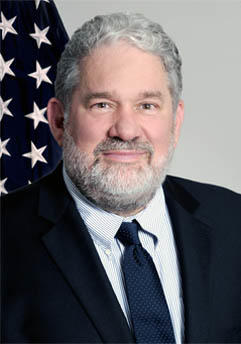
William Myers
CUToday.info: Have the trade associations provided support to small credit unions?
Myers: They do. We work with the trade associations, get referrals from them, and they sponsor training programs we partner on. Sometimes we get calls from the associations letting us know about a credit union that may be in trouble, and we follow up. We get valuable feedback from trades.
I do realize, though, that the role of the trade associations in helping small credit unions may not be the same as it was in the past—as they are now more focused on advocacy and helping large credit unions, where they get most of their money.
CUToday.info: What’s next for you?
Myers: A warmer climate and one that does not rain that much, which is where my wife wants to go. We have moved all over the country for my career and now it is her turn to make the decision. So that is why I am leaving.
Also, it’s a good time to turn this office over to someone else. The OSCUI is hitting on all cylinders. We are focused on consulting that produces results for small credit unions . . . I think the fact our newsletter has 22,200 subscribers says a lot about what we have accomplished in the last five years. OSCUI is well respected inside and outside NCUA.
CUToday.info: What’s ahead for small credit unions?
Myers: We are chartering about five new credit unions a year, so I say let the flowers bloom. There are new ideas that come up—new ideas for how to structure a financial institution, and I like seeing those come to the surface. There are many areas of this country that are underserved, and credit unions can step in and support those areas.
As for the credit unions that go away, the name disappears but the members remain, along with the lessons those credit unions passed along.