By Ray Birch
WASHINGTON—Before Evan Clark stepped down as CEO of Department of Commerce FCU in June, he asked his successor, Patrick Collins, what the E stands for in CEO.
Collins gave what he thought was the correct answer.
“He said it stands for executive. I said, no, it stands for entertainment—so, chief entertainment officer,” explained Clark. “I said what you need to be doing constantly is making sure your people are happy and that you're looking for ways to make them even more happy. Because if you do that they're going to be willing to walk through brick walls for you. When I announced my retirement to the staff there wasn't a dry eye in the place. I really appreciated that, and that confirmed my focus over the years was correct.”
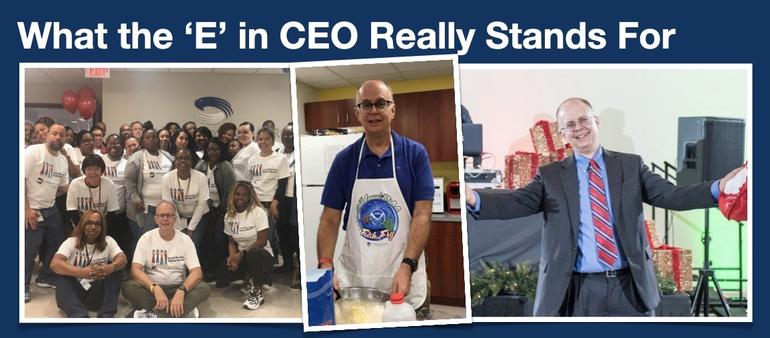
For much of his life, Clark has always been focused on numbers—first working for an accounting firm, and then managing spreads and carefully managing the CU’s bottom line. But he said those skills are not what really made DOCFCU successful over the years, growing from $123 million in assets nearly two decades ago to $835 million today. The CU’s ROAA was 2.89% in 2022 and net worth is 8.63%, according to Call Report data.
Message Taken to Heart
“When I got the CEO job at Department of Commerce 19 years ago, a very good friend of mine, Joe Robertson, was the CEO of a credit union in the state of Washington. He called me and told me one thing that I always took to heart,” recalled Clark. “He said, ‘Evan, you need your people more than they need you.’ And I've always made it a point of following that advice.
“I did that, and then I made sure our depositors were rewarded as best as we could reward them, giving them the best CD rates in the country,” continued Cark. “And that's been something that Department of Commerce has always been good at—offering great rates to depositors. And our depositors have rewarded us by making us one of the fastest-growing credit unions over my 19-year span. We only had one tiny little merger, so all of that has been organic growth.”

Clark said during his tenure he made sure the credit union’s net earnings were plowed back into two areas.
“One was returning dollars to savers, because that is really important. But the other thing I did was made sure the credit union was a really fun place to work—and I mean super fun, hence the chief entertainment title,” he said.
‘More Intense’ Competition
As he looks at the present and future state of credit unions and financial services, Clark said he has seen the market become “more intense” over the years.
“We just see more consolidation. When I started with credit unions 40 years ago. there were about 25,000 credit unions, and now there's just a handful left in comparison,” said Clark of the approximately 4,800 CUs operating today. “The same is true throughout the financial services industry, and you see more and more players coming in from other directions. You see the tech banks and online banks and, although it's gotten a bad reputation, crypto. I think crypto is going to be part of the scene going forward. It's going to evolve.”
Beyond the players in the market all seeking to entice consumers and members, Clark said there is another critical difference from the days he began leading the CU.
“The spreads were bigger. It’s cyclical,” he said. “The spreads will eventually widen again. But part of it is the fact that there's just so much competition for the business. That's one of the bad things about what credit unions face today.”

The Good News
There will also be challenges to the new leadership in credit unions that they haven’t experienced, he said, but he sees that as good news.
“I think that some of these young people—and I’ll use the example of Pat Collins, who is now my replacement—have never seen interest rates like they are now. When he got out of college interest rates were close to zero.”
Looking to Fed funds, Clark pointed out that a study of Fed funds rates over the last 50 years reveals the current landscape is actually normal.
“We're right at the average now,” said Cark. “It's really encouraging to me to see young people like Pat get into the industry, but also realize that he's going through some things that he's never experienced before. It's going to be a good learning experience for him and also for the other young executives who are coming into the industry, replacing people like me. It’s going to be difficult for them because of the spreads being so tight. But there are a lot of really good young people coming into the credit union business. That speaks volumes for the success the industry's going to have going forward.
“They're going to get their noses bloodied a little bit,” he continued. “I think that’s good, because they will learn some important lessons they will take with them throughout their careers.”

It Began With the Peace Corps
Clark began his credit union career thanks to his work as a Peace Corps volunteer in the Caribbean in 1983.
“I was working for Peat, Marwick, Mitchell, the largest accounting firm in the world, and I was lucky enough to have a friend who asked as we were driving home from the job, ‘Do you like what you're doing?’ I said no. I hated it,” recalled Clark. “She asked me what I’d do if I quit. I said I’d join the Peace Corps. I did that the following weekend. I called the Peace Corps in Washington and sent my application. My application was the number-one application in the entire country because not many people from Big Eight accounting firms joined the Peace Corps. They had an opening for a co-op officer in the Eastern Caribbean, and they sent me to Saint Kitts and Nevis. That's where I got my start with credit unions, working with tiny little credit unions in the Caribbean.”

Why Scholarships Were Created
While Clark’s CU roots started growing overseas, his commitment to people was fueled at a young age. It’s the reason he worked to create a scholarship program for DOCFCU staff.
“I came from a poor family, so the U.S. government paid for my college education,” he said. “The government policies (about college tuition for low-income families) were different back then. So, I said to my staff, years ago, ‘Why don't we pay for the college education of all of our employees (who take the credit union’s offer’”
The Department of Commerce FCU board OK’d the program.
“We offer a full-ride scholarship to any of our employees who want to go to school and get a degree,” Clark told CUToday.info. “We've had a number of employees do just that. I think every single one of those employees that got a degree from that program has been promoted within the credit union. That's been really important to me, because I understand you need education. In my case I came from a very poor family in Montana and it was education that got me out of that poverty.”
Clark credited the skill and understanding of his board for DOCFCU’s accomplishments.
“One thing that helped make me successful is that my board was incredibly supportive throughout all the 19 years I've been leading the credit union. They've always been right. They've never made a mistake. They're just a wise group of people,” he said.
Ending With a Party
But in the end, it all comes back to being that chief entertainment officer, according to Clark, who said he will always remember the year-end holiday parties that were key to injecting more fun into the organization and keeping staff motivated and smiling.
“We would have this fabulous holiday party every year. People would go to it and always say this is so much fun,” recalled Clark. “Yes, it cost a few nickels. But take that amount of money that we put into that holiday party and divide it by our total assets, it's a minuscule expense whose return is exceptional.”
Moving On
Clark now plans to pursue several of his passions, including genealogy research, writing, smoking ribs, judging barbecue competitions and travel, he said.

Evan Clark doing what he loves to do the most.