

By Ray Birch
IRVINE, Calif.—Forecasting a “garden variety recession” in 2023 that may last a year, one economist is telling credit unions to pay close attention to delinquencies that are now rising and will likely reach levels even higher than before the health crisis.
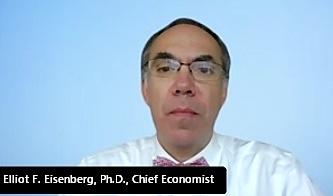
“Thirty-day delinquencies are going up as we are reverting to more normal delinquency levels,” said Elliot Eisenberg, chief economist for economic consultancy GraphsandLaughs, during a recent Origence webinar. “I suspect they will go up to pre-COVID levels and then maybe higher.”
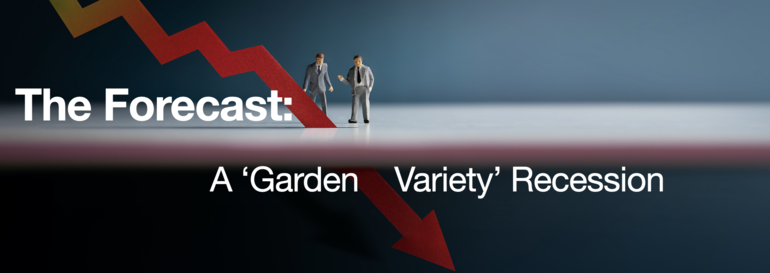
Turning to the threat of a prolonged recession, Eisenberg pointed out GDP is already “beginning to flatline. It’s not there yet, but it's starting to slow.”
He noted that while savings and wealth levels among Americans have declined, he said there is no one clear indicator of a recession, including jobs.
For example, he noted auto sales are generally a strong indicator of an economic downturn, yet even though vehicle sales are below traditional annual levels, that does not indicate a recession is taking place, as the decline is not a result of consumers not having money to purchase cars.
Instead, the sales decline is the result of a supply shortage.
“I love looking at car sales, as they are generally a good indicator of how the economy is doing. But you can’t do that now because there are not enough cars to sell. So, you can’t just look at car sales to make a determination,” Eisenberg said. “Car sales don’t give us any look into the economy.”
And the car sales category isn’t alone as a misleading indicator. According to Eisenberg, retail sales are also not the dependable data point they once were, as retail trade remains at levels well above the typical trendline.
‘We Have a Problem on Our Hands’
“So, even if retail trade comes down it is still at a high level,” Eisenberg noted. “Cars don’t tell us much, retail sales don’t. But, if you put retail sales together with cars and services, you can see things are beginning to flatten. People are running out of money. People are getting nervous. Wealth is going down because the stock market is getting hit. Wages are not keeping up with inflation. We have a problem on our hands.”
And that “problem,” stated Eisenberg, is all part of the Fed’s design.
“Just as (Fed Chairman Jay) Powell drove up the stock market by lowering rates, he is raising rates to drive the market down and wealth out of the system…to reduce spending,” Eisenberg said. “The main reason we have been doing so well is this overhang of wealth generated during COVID.”
Some Good News
There is some good news, continued Eisenberg, pointing to lower energy costs, especially for gas.
“Supply chain problems are going away. Food and energy prices are coming down, which will lead to deflationary tendencies, which is important,” he said.
“This won’t be enough, however, to get rid of inflation. The Fed won’t be fooled by this and will keep their foot on the gas (of rate increases),” added Eisenberg, who expects at least 75 basis points will be added to the Federal Funds rate by the close of 2022. “Visible little cracks are starting to weaken the economy.”
The real concern in the economy is sentiment, continued Eisenberg, saying confidence is waning across more sectors than just consumers.
“If it were just consumer sentiment falling I would not be that concerned,” said Eisenberg, who said the weak economic outlook has now spread across manufacturing, small business and now CEOs. “CEO confidence is as low it has been in 40 years.”
That is a big warning sign of an impending recession, emphasized Eisenberg. He pointed out big drops in CEO confidence have always been a strong indicator of an impending recession.
“Every time CEO confidence is as low as it is now, bam, we have a recession,” said Eisenberg. “But between CEO sentiment, consumer sentiment, small business sentiment, manufacturing sentiment, and now even homebuilder sentiment slipping—the weight of the evidence and the headwinds are not trivial.”
As the country braces for a recession, CU Direct credit unions, collectively, remain the top auto lender in the nation, reported David Adams, VP of lender client services at Origence.
CU Direct credit unions hold the top spot with 908,038 loans through July—a growth rate of 23.68%. Capital One Auto Finance is second with 621,429 loans through July.