

By Ray Birch
DUBLIN, Ohio—While an oversight that temporarily prohibited some credit unions from making PPP was resolved last year, it’s an indicator that there remains significant misunderstanding in Washington over just how credit unions work, according to one person.
When the coronavirus pandemic first struck the U.S. in 2020 and the Paycheck Protection Program (PPP) was hurriedly launched, many privately insured CUs found themselves referring members to other credit unions for a PPP loan.
And they had to do that, in part, because not all of Washington has a strong understanding of credit unions, contends Dennis Adams.
Adams, president and CEO of American Share insurance (ASI), which provides private share insurance to 106 CUs across 10 states, spoke with CUToday.info about how in the first round of the Paycheck Protection Program, privately insured lenders were largely left out of the funding as part of what he believes is a bigger challenge for all credit unions.
By the time the second round of PPP opened in late April/early May, the problem had been corrected due to extensive advocacy work by ASI, associations and credit unions themselves. But Adams emphasized the oversight still shows not everyone in Washington has a clear understanding of credit unions, whether privately insured or not.
‘One Size Fits All’
“I think it's a Washington issue of one size fits all,” Adams said about the decisions that led to the initial SBA rules surrounding PPP. “It was a classic example of something that can happen in D.C. when emergency measures are taken. I know there was no harm intended, just a lot of things were happening very quickly, and I think we really did very well to get changes made in 30 days.”
Despite all of the rapid movement to deploy PPP, Adams said all of Washington should know that privately insured credit unions are not different—outside their insurance coverage—than any other CU in the nation.
“Half of the nation’s credit unions are state-chartered and privately insured credit unions represent about 5% of these organizations,” said Adams. “We are not a dominant force, but we shouldn't be ignored, and we should have the same rights as any other licensed institution. It's a lack of understanding.”
The Issue
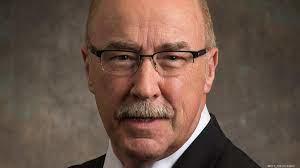
Dennis Adams
As the PPP was being rolled out, the privately insured credit unions found themselves in an unfortunate position, according to Adams.
“What the CARES Act did was put privately insured credit unions in a bucket called ‘other lenders’ in the initial writing of the Act,” explained Adams. “They were not considered under the definition of insured credit unions.”
While the credit unions offer private insurance, that definition, Adams explained, did not meet the federal guidelines, which stipulated PPP lending institutions must have federal insurance.
“That was an unfortunate oversight,” stated Adams. “I know the legislation was put together hurriedly, which is why I believe this oversight occurred.”
Adams said the national bureaucracy, when it does move quickly, will often focus on the federal level and then let states work out the details later.
But that did not help the image of privately insured credit unions that had to turn away members who desperately needed assistance, noted Adams.
‘Really Frustrating’
“I spoke with a number of our credit unions back in March and April who told me they had to refer members to their friendly privately insured credit union down the road who was a 7(a) lender, or just send them over to ABC Credit Union,” said Adams. “It was a really frustrating situation for some of our member credit unions. You take a good member and have to send them over to what can be considered a competitor within your own market.”
Privately insured credit unions already established as SBA 7(a) lenders were immediately included in the PPP process when it launched, said Adams. But for the remaining privately insured credit unions, Adams and ASI, a number of the state credit union leagues and CUNA all diligently began talking with state and national congressional representatives and with the SBA to get the problem corrected.
Adams pointed out that if a lender was placed in the “other lender” bucket, they had to have significant commercial lending operation in place to be considered for PPP.
Serious Lobbying
“If you were not considered a traditional financial institution, you had to show significant commercial lending expertise,” said Adams. “For example, if you're $300 million credit union you would have to have $50 million in commercial lending history. Well, you know NCUA has a 6% guideline on commercial lending. So, nobody could qualify. It was a ridiculous requirement, and we eventually won that argument.”
In the lobbying effort from the leagues, ASI and CUNA, Adams said the groups were able to change the SBA’s PPP definition of credit unions to become all-inclusive, instead of just federally insured CUs.
“Especially the leagues in California, Nevada, Illinois and Ohio, where we have good representation of privately insured credit unions, the legislators in these states were helpful in getting letters written to House Speaker Nancy Pelosi (D-CA) and Maxine Waters (D-CA),” said Adams.