

By Ray Birch
THE NORTH POLE, Returns Department—As Christmas arrives and presents are joyously unwrapped, sometimes the gift just doesn’t fit—like an ugly holiday sweater two sizes too large—and then consumers line up at retailers’ return desks.
But what about credit unions? Are there gifts they’ve given themselves over the years—decisions made or new solutions acquired—that simply didn’t fit either? In the spirit of the holidays, CUToday.info asked credit union CEOs about things they would like to send to the Returns Department, including decisions they’d like to take back.
On the return lists of CU leaders are loans that bounced back, employees who needed to be “returned,” CUSOs missing the letters ROI, and investments that—for a while—were headed to the South Pole, not the North.
Here are some of the well-intended decisions that have led to many unhappy returns in Credit Union Land.
‘A Bond That Yielded Zero’
In the nation’s capital, Evan Clark, CEO of the $439-million Department of Commerce FCU, years ago wanted to return an investment he made for the credit union before the Great Recession arrived.
“I pride myself on my knowledge of investments that are permissible for credit unions,” said Clark. “Our credit union’s overall yield on investments is always

Evan Clark, DOCFCU
significantly above peer. To show what a genius I am in this arena, I bought a bond that at some point yielded zero.”
Clark explained that in September 2005, the CU bought an inverse floater bond.
“The yield on an inverse floater moves in the opposite direction of interest rates. If interest rates are going up, the rate on an inverse floater goes down,” explained Clark. “I thought it was a great bond, because we bought it at 80 cents on the dollar.”
Of course, noted Clark, that bond was purchased during a rising-rate environment…
“So put on your investment manager hat and tell me the direction the return on this inverse floater was going in a rising-rate environment? Sure enough, in October 2007, the coupon on this bond fell to zero. We tracked the returns on this bond at our monthly ALCO meetings, so I felt really great telling my board we were yielding zero,” Clark recalled.
But the recession that soon followed began driving interest rates down.
“The prepayment speed on the bond had picked up, too, as people were refinancing out of the underlying mortgages, so eventually the bond was yielding north of 20%,” said Clark. “But I felt like a heel in October of 2007. I’d like to wish everyone happy holidays—and be very careful in your investing in 2019. The yield curve is super flat and it’s so tempting to chase yield by going out further on the curve or injecting unknown risks into your balance sheet. Don’t do it because eventually the roosters do come home to roost.”
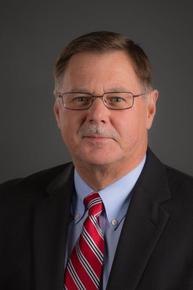
Greg Smith
A CUSO to Return-O
Like Department of Commerce FCU, $5.3-billion Pennsylvania State Employees CU, too, notes another kind of investment that just did not work out.
CEO Greg Smith recalled an investment his Harrisburg, Penn.-based CU made in an IT CUSO years ago that did pay off as expected.
“Back in 2001, we decided to form a software CUSO. We called it eCU Tech,” recalled Smith. “We started the company, because so many credit unions who visited PSECU often asked if we could help them with their technology issues.”
Smith said the CUSO sold a wide range of software solutions.
“We offered an online banking solution, one that PSECU still uses today. It gives us so much more flexibility when it comes to making custom changes. We offered an online bill payer solution—one that uses the Mastercard Remote Payment Processing System, and saves PSECU about $2 million per year. We offered credit score reporting for members in online banking and mobile products, well ahead of many other credit unions doing this. And we delivered Upost@home, one of the first remote deposit programs before smartphones that allowed members to snap photos of their checks.”
As good of an idea as the CUSO was, Smith said PSECU could never break even with the company.

Dan McGowan
“Selling technology to some credit unions is a hard thing to do,” he said. “We used to joke that we needed more CUs like PSECU to sell to. I also thought that it was hard to run a for-profit company with a non-profit heart. So seven years later we sold the company to Wescom Resources Group.”
Several Things (and People) to Return
Charleston, W.Va.-based Pioneer West Virginia CU CEO Dan McGowan said the $205-million credit union certainly has things it would like to return, like a branch office building it acquired through a merger.
“I also wish I could return and receive a dime for every click we received in our social media campaigns that didn’t actually result in tangible business,” said McGowan, who added Pioneer West Virginia has returned some unproductive staff members to the ranks of the unemployed.
“Presumably, at least one of them now has more time to surf the Internet on their smartphones, unencumbered by annoying credit union work,” he said.
McGowan emphasized the CU understands returns work both ways.
“That is, some members choose to return things for which we’ve loaned them money,” he said. “For instance, as we wrap up the year—just in time to kill otherwise commendable delinquency and charge-off numbers—it appears we’ll be getting a return from a borrower in the form of a large-dollar commercial property.”
Nothing Recreational About It
Bobby Michael, CEO of $1.2-billion Army Aviation Center FCU in Daleville, Ala., says one of the worst “returns” his shop ever received was from a member with a loan tied to an RV.
“One member voluntarily surrendered their RV. They told us to come get the RV they had that was securing a $60,000 loan with us,” recalled Michael. “When our repo man went out to their home, they had a new—but smaller and cheaper—RV sitting right beside it they just bought. Apparently they wanted to downsize their RV and payment, but at the credit union’s expense.”
Michael added that type of return ends up not being as bad when the CU repossesses a car only to find the member’s pay stub and check book inside the vehicle.
“When that happens it makes it easier to garnish their wages and levy their accounts to cover the deficient balance of the car,” he said.
Sharefax CU, Cincinnati, recently offered a promotion, which turned out to be the “fruitcake” of all promos, said CEO Art Kremer.
“Lesson one: Never go through the expense of implementing a new loan product, which offers 90 days of no payments, and then give members the option to take advantage of the 90-day no payment offer or receive a $100 gift card. They will always take the money and run, especially at Christmas time.
Another lesson Sharefax learned, said Kremer, followed adding P2P to drive younger members to its e-delivery channels.

“Lesson two: Never invest in what you think a young person wants without first asking a Millennial, especially when they have grown-up on Venmo,” Kremer said. “It’s like buying a rocking chair for your grandmother at Christmas when she really wanted an airline ticket to Hawaii…Hopefully, we have learned from these lessons, but I am certain there are a few more pieces of coal in our stocking.”
Avoiding Returns
Two CEOs told CUToday.info that their return lists in recent years, thankfully, are blank.
Bernie McLaughlin said that over the past five years Point Breeze Credit Union, Hunt Valley, Md., has “shunned the Grinch and his bah humbug attitude” with gifts that keep on giving.
“In 2013, the credit union shifted its strategic direction after experiencing a full decade (2003-2013) of zero-member growth,” said the CEO of the $775-million Point Breeze. “Since then, we have unleashed a growth path that has washed away the smiles on local bankers like a splash of sour eggnog.”
McLaughlin said in the last five years Point Breeze has experienced average annual revenue growth of $1.6 million, member growth of 18.5%, five-year loan portfolio growth of over 63.3%, built a new headquarters, and received five major national and regional awards.
“Point Breeze has a lot to be thankful for this holiday season,” said McLaughlin.
‘It’s A Wonderful Life’
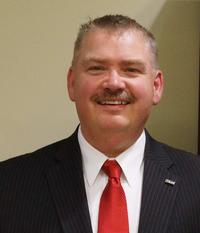
Scott Wilson
Scott Wilson, CEO at the $552-million SeaComm FCU in Massena, N.Y., says what the credit union gives back to members is the return that’s on his mind this holiday season.
“One of my favorite holiday movies is the classic, ‘It’s a Wonderful Life’,” said Wilson. “The central theme of the movie is that each person’s life touches so many others and sometimes you don’t even know the effect you have on others.
Wilson reminded that the Bailey Brothers Building & Loan in the movie is is a mutually owned financial cooperative, structured like a credit union, that is a vital source of financial services to the movie’s community of Bedford Falls.
“Without the Bailey Building and Loan, people wouldn’t have had access to affordable mortgages and other loans, and would have to utilize Potter’s Bank, whose owner and sole objective was to maximize profit at the expense of its customers,” said Wilson. “So, like George Bailey, we all at SeaComm this holiday season feel good knowing that we have made a difference in the lives of our members and the communities in which we do business.”