

NEW YORK–What is the role of Black credit unions in addressing racial equity?
That question and others were the subject of an hour-long discussion during a webinar hosted by Inclusiv that examined issues plaguing unserved communities, what can be done to resolve those challenges, and the uncomfortable discussions credit unions—and their trade associations—need to be having.
Participating in the discussion were Renee Sattiewhite, president of the African American Credit Union Coalition; Cathie Mahon, president of Inclusiv; Bill Bynum, CEO of Hope CU, and Angela Morrison, community development manager with Meritus Credit Union and an Inclusiv board member.
Below is a look at the discussion and the points raised during the webinar.

First, Mahon said Black credit unions have “played an important role, a critical role in reaching underserved members of their communities.”
But Mahon also noted that while “there is a moment right now” that is appreciating the importance of financial institutions owned and led by people of color “it’s not a new thing in the credit union movement.”
A ‘Legacy’
Mahon cited a “legacy” dating back to the 1930s and 40s of Black-led credit unions, and further noted that in 1974 it was those same CUs that were the driving force behind the formation of the then new National Federation of CDCUs, which is now Inclusiv.
Of the 500 CUs certified as minority deposit institutions (MDIs), approximately 350 are Black-led.
Mahon said Inclusiv research has shown Black-led CUs are the most financially inclusive.
Mahon also announced Inclusiv will soon release a new report called, “Preserving and Growing Black Credit Unions. Inclusiv’s Guide For Building Capacity and Providing Technical Assistance.”
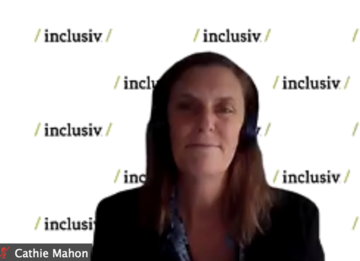
Cathie Mahon during webinar.
“There has been a historic disinvestment in these Black-led credit unions,” said Mahon. “As a result of these pressures and others, many were forced to merge, forced to liquidate or made to feel they could not control their own destiny. Over the last few years with support from the CU movement and with support from Citibank we have really dug in with some leading Black credit unions to really define the business model for success for them in 2021 and going forward.”
Other Points Made
Also discussed during the Q&A was the following:
Morrison: Tell us more about HOPE Credit Union (in Jackson, Miss.).
Bynum: We are Black-owned, woman-owned CDCU. We have an affiliate that’s a loan fund and intermediary and a policy arm, the Hope Policy Institute. For past 26 years we have been working to make sure where someone is born, what their race is, their gender, does not determine their ability to support their families and to contribute to their community’s economy. We know that at some point climbing the economic ladder means having access to financial tools.
There are not enough tools or philanthropy in the Deep South to do that. We built a credit union that started as a volunteer project. We knitted the CU and the loan fund together and have been busy ever since.
We are in the Blackest and the poorest part of the country. People in this region are too often on the outside of the economy looking in.
Morrison: Tell us more about the Netflix deposit (the company deposited $10 million with Hope Credit Union).
Bynum: The Netflix deposit and other deposits from significant corporations came about with the awakening that so many people in the country have been exposed to over the past year. George Floyd’s terrible murder made some people see for the first time what so many people here in the Deep South and in communities of color have known for a long time and that is that there are disparities, certainly in policing, but also in banking and financial services.
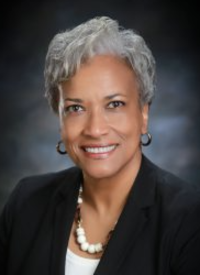
Angela Morrison
People of color don’t trust the traditional banking system, because they aren’t respected in traditional banks, or credit unions for that matter. Unfortunately, we also know our communities are under-resourced, just like Black credit unions and Latino credit unions and Native-American credit unions. There are disparities in capital access, not just for the people we serve, but for our institutions.
Fortunately, Netflix recognized Black financial institutions play a critical role in closing gaps and extending a lifeline in the most vulnerable communities. We were excited to be the first direct investment Netflix made in a Black credit union of $10 million, which we call a transformational deposit, because it’s transforming the communities in which we work. It’s priced at 10 basis points and takes the place of core deposits.
It was really important both in capitalizing our work in these communities but also in making a point to the rest of the world that these places are worth investing in.
Morrison: Tell us more about what people can do?
Sattiewhite: Join AACUC’s Commitment to Change initiative. I think it’s most important you have people who look like the people you are serving in upper management.
Often-times, people don’t have anyone who can give you information or a different perspective. I think the white-led institutions—and thank God, we have many who come to AACUC—are looking to how they can proactively change some things.

Renee Sattiewhite during webinar.
Our corporate partners have been putting the resources behind what they say they want to do. They are looking for how to create products and services for what I call the colored majority. When you own that you see how you can make a difference.
At AACUC, we are inclusive, not exclusive, We have a cross cultural learning program. I admire CUNA Mutual for a couple of reasons. When they realized they had a misinformation about communities of color and how we pay our bills, they changed up. It wasn’t that people didn’t want to pay their bills; it was that communities of color don’t want direct debit. They watch their money closely. They go and get money orders. So, they redirected how they do things. It takes an open mind.
Often, people will say we want to help make social change, but they only want to do it their way. If you only want to do it your way, you’re not going to get different results. And sometimes you have to have the uncomfortable discussions. You need to hear from the people who know the people they are dealing with.
Morrison: How do we ensure that Black credit unions are not left out of the recovery efforts?
Bynum: I think part of it builds on what Renee just mentioned. We have to have more people, and not just people of color, making the case for a country that works for everyone. Truth is that while the country is becoming majority Black and brown, it is taking a while for the country to get comfortable with that notion.
It’s not in any of our collective interests to leave so many people on the outside, under-resourced, without adequate ability to contribute to the economy. So, we have to first and foremost put the data on the table so everyone can see everyone benefits.
When the economy works better, we all win. Quite honestly, Black folk, brown folk, our voices aren’t going to be enough. We need other people making the case. Unfortunately, we look at our brother and sister credit unions and banks and you do not see people who represent the community on the board and in the C suites.
It’s up to us to hold people accountable, including in the Biden-Harris administration. We cannot let those resources go wasted.
Morrison: Some of the white-owned credit unions I have heard from, whenever we talk about these issues, talk about how regulatory barriers keep them from collecting data on demographics. How do we overcome that in those discussions?
Bynum: I’m always concerned and I will get tomatoes thrown at me when I speak with my fellow credit unions, but we choose to be credit unions. We choose to have federal insurance. That comes with certain responsibilities. We have to have reasonable rules. Dodd-Frank requires financial institutions to tell you who they lend to. Previous administrations didn’t act on that in a strong way. I am hopeful the current administration will act on Dodd-Frank section 1071. Let’s be transparent. There is a reasonable expectation we should be held accountable. CUNA does some good things, as does NAFCU. But a lot of our trade associations use regulations as red meat to rev up their members. Regulation is why we exist and we need to be reasonable about why we exist.
Morrison: Is there something you would like us to reflect on and take with us?
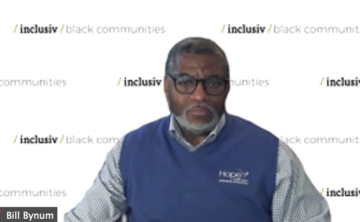
Bill Bynum during webinar.
Sattiewhite: My concern is with MDIs and smaller CUs, and the need for compliance and the pressures to implement new technologies, is more of a growth opportunity than a threat. But I don’t think we see it that way. I keep trying to get to that right corporate partner that wants to make a huge difference. Fiserv maybe, CO-OP maybe? How can we help these smaller institutions have one (back office) system so they wouldn’t have to worry about their back office? They could have the clear state of mind and only need to worry about how to serve their members.
Morrison: What’s on horizon for Black credit unions?
Sattiewhite: I think we are going to be better and are going to find the solutions. I think enough people will step up.
Bynum: I agree. I’m reminded of what one of my founding board members said in talking about people in the (Mississippi) delta. He said, ‘People can do anything as long as they have the tools.’
Unfortunately, the resources have been extracted from our communities and organizations. Fortunately, people are recognizing that is not in the best interests of everyone. I think now is our time. We have millions of stories about what happens when you give people the tools.