

By Ray Birch
CHICAGO—While reports indicate many student loan borrowers were caught off-guard by having to begin paying on their student debt again, one analyst contends there are two key reasons why credit unions should not worry about borrowers now having too little money at the end of the month to cover their loan obligations—while also seeing an opportunity for CUs.
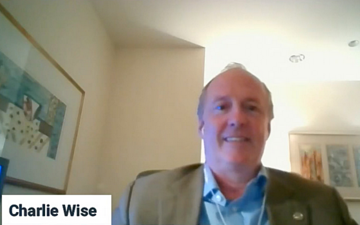
Indeed, Charlie Wise, head of global research at TransUnion, told CUToday.info urged CU leaders to lean into the ability to deepen member relationships through education.
As CUToday.info reported, two in three consumers (65%) with a federal student loan said they were caught by surprise when the U.S. Department of Education announced this summer that student loan repayments would begin once more in October 2023. TransUnion’s Q4 2023 Consumer Pulse study found 49% of student loan borrowers expected the resumption to occur in 2024, with another 14% believing it would happen in 2025 or beyond. The Q4 2023 Consumer Pulse study was based on a survey of 3,000 American adults between Sept. 27 and Oct. 9.
Wise said if some credit union lenders are concerned over findings, they should pay attention to two points: The number of people who actually go to college, and the new Department of Education’s SAVE Plan, which includes an on-ramp feature that allows borrowers to miss payments over the next year and not have the delinquencies reported to credit bureaus.
A Myth-Buster
“The impression is that everyone goes to college, but in reality it's only a small fraction of the U.S. population that does attend college,” said Wise. “So, when we found…about 40 million consumers out of 265-plus-million U.S. adults have student loans on their books right now. With the resumption of loan payments, about 26-27 million of them are going to be returning to payments. It's not the majority, and it’s not a huge population.”
Wise emphasized the benefits to borrowers and lenders of the on-ramp feature of the SAVE Plan.
“There is this confusion about expectations over potential missed payments and how that will impact other loans with financial institutions, for example,” he said. “The concern is, will consumers continue to make on-time payments with auto loans, mortgages and credit cards with this new, additional debt that many were not truly prepared for? Well, there are consequences for not making payments on credit cards and auto loans. But, with the on-ramp feature, those missed payments, again, will not be reported to credit bureaus.”
Paying the CU First
Wise believes because of that situation, if a borrower at a credit union becomes strapped with payments due to a student loan bill they now have to pay each month, the member will pay the credit union first.
“If you don't pay your credit card you lose your credit card. You don't pay your mortgage, they can foreclose on your home. But if you don’t pay your student loan…,” he added, making an inferrance to the inability to repo an education. “What we're likely to find is that if consumers are facing financial difficulties, if they have to make tradeoff, it's very likely that they're going to choose to not pay the student loan, at least for the next year.”
Limited Economic Impact
Wise does think the sudden repayments will impact the overall economy, but not to a great extent.
“I think there could likely be a drag on the economy. But not to the extent that it's going to have a material impact on our economic situation. I mean, it will not tip us into a recession,” he said.
What will be the impact on lenders?
“As I said, it makes sense to me that student loan borrowers will prioritize their credit union payments ahead of their student loan payments,” stated Wise. “But that doesn't mean everybody acts and behaves like I expect them to. That's what makes the American consumer such an interesting creature. But I am fairly confident that financial institutions will not see widespread defaults.”
Advice for CU Leaders
Wise advises credit unions to keep their eyes open and be ready to help borrowers.
“Look to the lower-income folks with student loans,” he said. “Credit unions have a great opportunity to educate consumers on the reality of the current situation. One important thing is that there's a lot of opportunity, particularly with lower-income consumers, for income-based repayment programs. If they're not aware of these, and they don't understand what's available to them, credit unions ought to educate consumers on the fact they should explore what they are eligible for.
“That is a great opportunity for consumers that may be in in financial distress or feel squeezed to say I can now right size my student loan payments to better match my income,” continued Wise. “I think that's important because many consumers, as we've seen from some of our surveys, are just not even aware that these programs are available and that they're eligible. I think credit unions can steer consumers toward the income-based repayment programs that are available. That is going to be really important so they are able to make the best decisions about how to prioritize their limited budgets.”
Understanding Sentiment
Wise added it's always important for credit unions to understand the consumer sentiment.
“And it does appear that consumers continue to be generally optimistic about their own financial futures,” he said. “I think that is important to remember, that despite all the doom and gloom headlines, despite all the challenges that we hear about, consumers still consider themselves to be relatively resilient. In other words, consumers may have a negative outlook on the economy but they still say we’re doing OK.”
Wise said TransUnion will be closely watching how consumers with student loans behave in the coming year.
“This causes consumers to have to change their own financial calculus around what the future holds, and what they are going to have to spend on and afford. It meant a lot of people had to make some relatively quick decisions,” he told CUToday.info. “It's an evolving situation and we will continue to very closely watch this.”