

By Ray Birch
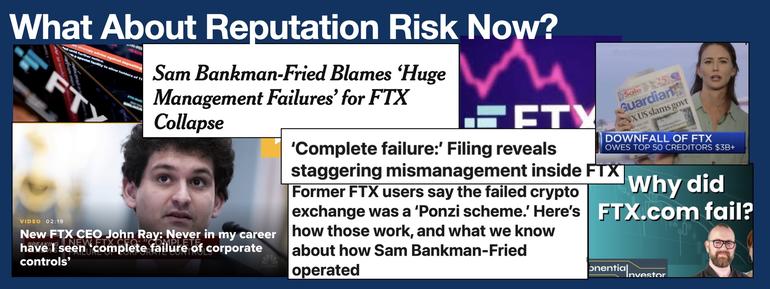
DALLAS—One of the biggest concerns credit unions have had around offering cryptocurrency has been “reputation risk,” that their names and brands would be tarnished by association in the event of negative crypto news. Now that one of the biggest exchanges has failed, just how realistic have those fears proven to be?
Credit unions that have been offering crypto-services along with others say the crash of the FTX exchange and others has not broad brushed their names with negativity. But one CU CEO whose credit union has chosen a non-custodial crypto wallet—where the member controls the digital money, not the crypto platform—is thankful for that decision, and further states that while the platforms failures have “spooked” some CUs, now is a good time to get in on the “ground floor.”
As CUToday.info reported, the $162-million Lone Star here is now offering its members the ability to buy, sell and hold cryptocurrency through BankSocial.

Becky Reed
“One of the main reasons we chose BankSocial is because they are non-custodial—self custody,” said Becky Reed, CEO of the $162-million Lone Star CU here. “That was a key differentiator and one that was very important to our credit union. That was the right decision. The current situation with custodial exchanges is highlighting that importance now.”
Reed emphasized a non-custodial wallet is a “safer” play for members.
“When you buy your crypto from BankSocial you own it day one,” she said.
As CUToday.info reported, most recently, FTX, one of the world’s biggest crypto exchanges, has filed for Chapter 11 bankruptcy protection in the U.S., with many of its investors suffering substantial losses and with significant mystery surrounding where their funds might be.
Over the past year, CUToday.info has featured several credit unions that are offering a service that allows members to buy, sell and hold cryptocurrency. Some of the CUs are even considering leveraging crypto investments as collateral to drive lending. All of the credit unions featured, with the exception of Lone Star, are working with NYDIG, which is a custodial cryptocurrency exchange.
“Our members’ trust is very important,” said Reed. “Yes, there is reputational risk involved any time we recommend a third-party solution. Low risk was the number-one reason we partnered with BankSocial. As I said, when our members buy crypto from BankSocial, they own it day one, no matter what happens to BankSocial tomorrow.”
Many Remain ‘Crypto-Curious’
Among those who believe credit unions have not suffered any reputational risk related to cryptocurrency, despite the headlines, is Lou Grilli, senior innovation strategist with PSCU in St. Petersburg, Fla.
“I’ve not heard of members from the dozen or so credit unions that have stepped into the crypto space complaining on social media, or demanding their credit union reimburse them for losses,” said Grilli.
Grill noted that one of the primary drivers for credit unions in offering members the ability to buy, sell and hold crypto has been the recognition some members are already involved in cryptocurrency.

Lou Grilli
“There were many more members who fell into the crypto curious category—members who would like to participate if there was a convenient, simple, intuitive way to dip their toes into crypto,” explained Grilli. “Those credit unions wanted to offer an alternative to the large centralized exchanges, such as Coinbase, Crypto.com, Kraken, FTX, Binance, eToro… The alternatives that these credit unions chose are safer, more compliant, and usually have lower transaction fees. These three criteria are the reasons why credit unions are not seeing their brand being diminished.”
Grilli said as the country sees further fallout from the FTX collapse and the recent filing for bankruptcy by BlockFi, he still does not see credit unions suffering any reputational damage.
An ‘Awakening’
“Crypto is not going away,” he said. “I do believe that the business model for crypto has moved beyond bitcoin. More people are seeing that the speculative investment aspect of crypto will give way to the use of the underlying technology to greatly disrupt cross-border payments and international payments. Credit unions are starting to see the potential for updating auto lending, an important source of revenue, by representing loans more efficiently as smart contracts on a blockchain.”
However, Grill sees the FTX collapse, leaving at least one-million investors without the ability to withdraw their funds, is “awakening” many participants in this space.
“They are now paying attention to ‘not my key, not my crypto,’” he said. “Meaning, if you are not holding the keys to your digital asset holdings in a wallet you control, then the crypto is not in your control. And if the entity that is holding your crypto fails, as did happen with FTX, then you may end up with pennies on the dollar, or worse, nothing.”
The Challenge
Grilli said the challenge is that once a member moves their digital assets to an offline wallet, the credit union loses its view of what that member subsequently does with their crypto funds.
“Members could potentially evade anti-money laundering rules, possibly send crypto funds to OFAC sanctioned people or countries, and the credit union does not have the data to file a suspicious activity report. It is no different than a member who withdraws cash and then is free to do whatever they want with that cash. It’s just that crypto is digital, so it’s easier to move. With that said, there is at least one credit union—Lone Star—that is offering a service that allows the member to self-custody their digital assets.”
Not Heard From Members
Lone Star CU’s Reed said her members have not reached out with concerns around the crypto market developments.
“Our members have not directly contacted us about the custodial exchange situation, but they are using the BankSocial exchange with increasing regularity, which speaks louder than words,” she said.
Achieva CU in Dunedin, Fla., which is another cooperative that began offering crypto services through NYDIG in response to members who were already making investments in crypto, told CUToday.info it, too, has not seen negative effects following the big platform failures. Achieva CU reported that no members have approached the organization with concerns.
The credit union pointed out that NYDIG, the platform Achieva has partnered with, has to date indicated it is “solid.”
On its website, NYDIG Founder Ross Stevens stated on the company’s website: “(Our) Fund’s bitcoin holdings are verified on the bitcoin blockchain daily by the Fund’s administrator (U.S. Bank) and at least annually by the Fund’s auditor (EY). EY also audits and regularly tests our 100% cold storage custody controls. And NYDIG does not have, has never had, and will never have, a hot wallet. Too risky for my tastes.”
However, as CUToday.info reported here, in October NYDIG announced it was laying off a third of its employees. At the time, the company issued a statement, however, that its balance sheet is the “strongest it has ever been.”
‘Spooked a Lot of People’
Despite all the assurances, Reed said the growing number of crypto platform failures has the movement’s attention.
“The recent custodial exchange bankruptcy filings have spooked a lot of credit union people, and rightly so,” she said. “It has highlighted to the world the risks involved with the custodial exchange model. Consumers got hurt. But this debacle has not stopped what’s been building in the crypto ecosystem. Thankfully, I feel that what comes out of all this will be a more transparent and regulated environment. Crypto is not dead. NCUA has been clear that credit unions should pay attention to this space and do their own due diligence on what partners to choose. To me, this is not the time to sit back and wait, but instead is the time to get in on the ground floor of the new paradigm in finance.”