

RANCHO CUCAMONGA, Calif.–Many credit union leaders continue to think their primary value lies in the products and services they offer. The problem? Most consumers no longer think that way.
Instead, a large study of more than 3,000 credit union members and other consumers conducted by CO-OP Financial Services and EY has found the ability to not just meet other needs but anticipate those needs—and do so quickly—along with other consumer preferences for other concepts such as “fluidity” and “curated value” are the new drivers—something many fast-growing fintechs have already figured out.

The insights from the new market research were shared during a THINK webinar hosted by CO-OP that was moderated by financial journalist Jean Chatzky
Here’s a look at what was discussed and at some of what the research has revealed:
One Finding Says It All
Nikhil Lele, a principal in EY's Financial Services Office in New York, said there is no better data point to illustrate consumers’ rapid embrace of fintechs than this: Two years ago, when EY and CO-OP surveyed members and consumers, just 6% named a fintech as their primary financial relationship (PFR). In the most recent survey, more than 30% did so, a figure that rose to more than 40% for those under age 40.
The reason has nothing to do with products and services, he said.
“Experience becomes the central part of how you satisfy a set of needs,” Lele stated. “The reality is your products are no longer your SKUs. Your experiences are your SKUs.”
The CO-OP/EY research makes clear fintechs are no longer “fringe providers,” he said, citing three things the upstart providers have done well:
- Fintechs have bundled together access to what are commodity banking products.
- Fintechs have integrated the three most critical aspects of the payments stream: contactless, P2P and mobile wallets.
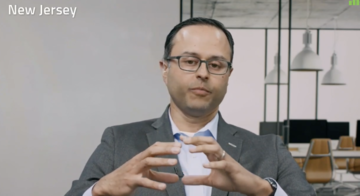
Nikhil Lele during THINK discussion.
- Fintechs have integrated all of their offerings into a seamless ecosystem.
“It’s the products connected to the seamless fluidity,” said Lele of fintechs’ appeal to consumers.
Benefiting From a Shift
During the THINK discussion CO-OP representatives consistently pointed to the “shift” in putting the member at the center of the P&L.
“Nothing we’re saying here says credit unions don’t put members first,” clarified Todd Clark, CEO of CO-OP. “This is about baking member centricity into your P&L.”
As an example, Clark cited CO-OP itself. He said when he arrived at the company five years ago it performed one member survey per year and hosted a couple of user groups twice a year. The result has been a change in the centricity of credit unions in its own strategies, said Clark.
“We quickly started putting in listening posts all over the company,” said Clark. “We formed the Co-Creation Councils in which 75 credit unions send people to meet in person twice a year and then also meet (virtually) quarterly. We have clients and then we have the member behind you and we need to listen to both of you. What I heard when I got here was we were not very good. That has been slowly changing.”
Echoing Lele, Clark said credit union leaders need to understand “it’s more about the experience you are delivering than it is the product you are delivering, and we are trying to gear ourselves to make that easier and better for our client credit unions.”
Studying Credit Unions
To that end, CO-OP has been studying the “pain points” for its client CUs and for members, according to Samantha Paxson, chief experience officer with CO-OP. That has included thinking through the daily life of both the credit union and its members, she added, “so we know what an end-member is trying to do, which is to access their financial life whenever from wherever.”
Paxon said the CUSO recognizes the challenge to credit unions in attempting to reach that understanding.
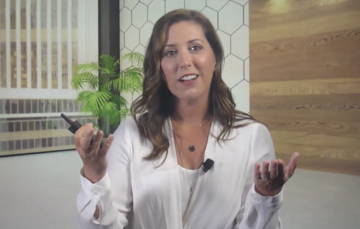
Samantha Paxson during THINK discussion.
“We know there is a bandwidth and investment challenge from a credit union perspective,” she said. “What we do at CO-OP is help (CUs) to go faster in that digital transformation so they don’t have to do it all themselves.”
What Does Lifestyle Mean?
Asked by Chatzky to offer a more granular definition of what “lifestyle banking” means, including the solutions that need to be delivered, Clark pointed to the acceleration that has occurred since the onset of the COVID restrictions with contactless solutions, P2P and digital apps. For an example of a response, he looked outside credit unions.
“Kroger and Publix, which are huge supermarket chains, had resisted contactless payments forever, and within a week they opened up contactless at their checkout lanes,” he observed.
In terms of more personal lifestyle decisions, he pointed to another reality.
“The other thing is when I can’t go to the credit union to solve my problem, where do I go? I go to my phone. I type into my phone, ‘How to I solve this problem?’ It brings you an app like SoFi or PayPal or Chime. These solutions are being provided to your members. It’s the fintechs’ plan to slowly strip off these pieces of your business. We think CO-OP’s value is in investing at scale and doing things that empower you to fend this off and also get out there and lead.”
For that granular data, Paxson noted the card spend data every credit union has at its fingertips reveals trends that can help bring the CU closer to the member.
“In the past year we have been able to see how members are spending, such as hardware stores and subscriptions and groceries,” said Paxson of a shift in member spend during the pandemic. “What I think credit unions can take advantage of right now is maximizing the opportunity to make sure they are the card used for Netflix and Amazon and in the digital wallet and that they understand member behavior.”
The Big Difference
What is the difference between a traditional financial services model and a needs-based approach?
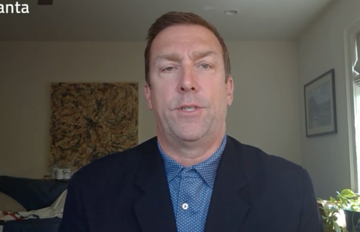
Todd Clark during THINK discussion.
It’s a question that was central to the CO-OP/EY study, according to Lele.
“(Credit unions are) now a fixed industry waiting for people to have a need,” he said. “What we are really talking about now is shifting away from this reactionary, product-centric model to a much more active model that reaches the members in the spaces where they are.”
Providers successfully doing that do three things, he said:
- They curate value specifically for the customers, members and users they are seeking to serve. “It means making the experiences tailored and bespoke; they know it’s for them, not the masses,” Lele said.
- They are doing it in a connected way. He pointed to research that found 73% said they would place great value on their credit union connecting the value between their own products and services and third party products and services. “Today, consumers don’t care if you don’t offer it; all they care about is that it is being connected,” he said.
- They are hyper-personalized. Lele said fintechs have an exceptional mechanism for knowing how their users interact with them across every channel in real time, and in real time they are able to synthesize tailored offerings.
Developing Personas
Another piece of the research addresses using data to create “personas” for each individual marketing, which is a highly individualized understanding of the member that is far deeper than just lumping them into a demographic group.
How can a credit union use personas to become a member’s primary financial relationship?
“What the research has helped us to do is get under the skin of the segments,” responded Paxson. “It’s anticipating what they might need, understanding what their daily life might be like. What goals are they trying to reach? It’s not just the wealth tier and where they live? We need to better understand what drives these personas. It helps you to better understand how you can put your solution sets together in a way that provides better value.”
And why are payments at the center of all that?
“Payments is a juggernaut,” said Paxson. “If my credit union is delighting me through the transactions, from the payments information they had better understand Sam Paxson. It is the blanket that keeps the member feeling warm and connected to their credit union. I think it is highly underutilized.”
‘No Longer Relevant’
What credit union decision-makers must understand, according to Lele, is what the research really revealed.
“What we need to unpack in this research is how do members value the experiences they were offered and how do they consume those values,” he said. “Historically, banks and credit unions were attracted to this notion of a primary relationship being where the consumer had direct deposit or an online account. The data now show that of the CU members who have a fintech as their PFI, 51% have direct deposit. These are no longer the relevant constructs for whether you have that PFI relationship. Now, it’s about who is helping you create fluidity in that relationship. Payments and fluidity sit in the middle of all this…There are an array of things credit unions should be thinking about for how can we curate value?”
The research found that what consumers valued most wasn’t rate driven, according to Lele.
“It’s about meeting other needs,” he said.
And why does all that matter? Clark noted that less than a quarter of all members think of their credit union as their PFR, and that even without adding one member CUs could drive significant increases in profitability just by increasing relationships with the members they already have.