

ALPHARETTA, Ga.–Do credit unions need fitness trackers of their own?
As consumers flock to fitness trackers and other wearables to easily measure and manage large amounts of information, one analyst believes CUs are going to need to take a similar approach with their massive amounts of member data.
Chad Davis, SVP of marketing at FMSI, believes that for 2017 credit unions will need to leverage Big Data in a bigger way—but for it to really work they will also need to ensure reporting is easy to understand and applicable to driving the right outcomes.
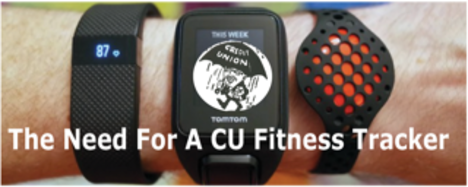
Davis emphasized that the simplicity of the consumer data tracking devices, with their easy-to-use dashboards, has positively impacted adoption rates of the technology.
“By design the creators of the technology knew it was critical to make this valuable information not only readily available, but also easy to read and digest,” said Davis.
Countless Opportunities
Davis said that within financial services there are countless opportunities to apply these same data management principles around Big Data initiatives.
“For decades, financial institutions have collected consumer information, like transaction activities from credit cards and branch visits, filling up data warehouses the size of football fields,” said Davis.
So, Davis asked, why do so many banks and credit unions balk at the idea of practical applications for utilizing Big Data at their institutions?
The answers, he believes, lie in security concerns, a lack of technology and prioritization all stand in the way of moving these data initiatives forward at FIs, along with concerns over the project being extremely daunting.
“With 2017 approaching, these roadblocks should play less of a role in the decision to tackle big data head on,” said Davis. “There are numerous technology providers in the financial services space, making managing massive amounts of information as practical as Fitbit has done with tracking and managing fitness for consumers.”

Chad Davis, FMSI
Davis said areas in which data can play key roles for credit unions and banks are using front-line transaction information to better schedule staff to branch traffic volumes, and measuring visitor interaction intervals in the lobby to improve sales and service effectiveness.
“Workforce optimization solution providers help banks and credit unions to leverage their core system data and HR data to develop easy-to-use and readily available performance management information,” said Davis. “Managers utilize this data through interactive dashboards and monthly reports to make critical branch staffing decisions, like whether or not to replace full-time employees when they leave through natural attrition. Schedulers also leverage the big data to create day-to-day forecasted branch staff schedules, based on actual historic transactions from their institution.”
'Eye-opening' Revelations
Measuring visitor interaction intervals, like assist times per product/service and wait times, can lead to “eye-opening” revelations about the performance of the branch, said Davis.
“Realizing that one service representative spends 15 minutes longer per average car loan interaction than all his or her peers, sets the stage for an immediate coaching opportunity,” said Davis. “Managers can also see real-time metrics throughout their branch networks, like excessive wait times—an accountability loop helping to drive world-class staff performance. These systems can also be set-up to send by-the-minute automatic service alerts when undesirable service thresholds are surpassed.”
Like the fitness applications have taught, making sure that the reporting is easy to understand and is applicable to driving the right outcomes is key to a successful Big Data initiative, reiterated Davis.
“Both workforce optimization solutions and lobby tracking software are just two examples of ways banks and credit unions can leverage technology to cash in on the Big Data movement,” said Davis. “With many more sophisticated programs out there, and some exciting technologies in development, we’re living in exciting times.”