

NASHVILLE–Had CUToday.info given you a dozen headlines to choose from for this story, it’s likely you wouldn’t have read it. And the same holds true for credit union products and services.

While many CUs like to offer “a full menu of offerings,” it turns out many members and consumers find the process overwhelming and choose to make no choice at all. What do they choose instead? Products and services from providers that make it easy, according to Sheena S. Iyengar.
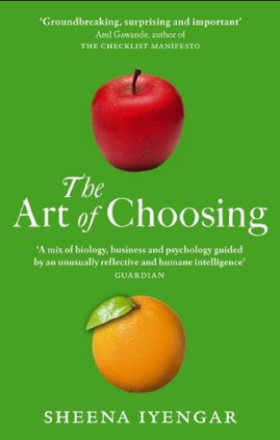
Iyengar, who teaches at Columbia Business School and who is the author of the book “The Art of Choosing,” explained to credit unions at the CUNA Lending Council annual meeting here why numerous lending options may make sense to a credit union’s management team, but not for the member.
What’s critical, said Iyengar, is to understand how people are overwhelmed by all the choices they have in life outside the credit union. She noted for instance, in the 1970s the average grocery store had 9,000 products. Today, the grocery store has 42,000 choices on its shelves, and online provider Amazon has more than 300 million choices.
Moreover, consumers are spending 28% of their day on email and social media with the flow of information coming at the average person estimated to be the equivalent of reading 174 newspapers every day.
“The question is what are the consequences of all this and how can we better manage it,” said Iyengar.
The Jam Study
Iyengar said she was working toward her Ph. D at Stanford when she became overwhelmed at the hundreds of choices for just extra virgin oil at a local grocery store. That led to what became known as the “Jam Study.”

At that time, the store had 348 types of jam. In the study, one brand of jam was selected and a testing booth was set up at the store in which either six flavors were available for tasting, or 24 flavors for testing. “We looked at which case were people more likely to stop and sample some jam. Which would make them more likely to buy a jar. More people (60%) stopped when there were 24 flavors on display, than when there six on display (40%). But when it came to buying behavior there was the opposite effect. Only 3% of those who stopped when 24 flavors were on display bought jam, but 30% of those who stopped and tasted bought a bottle of jam when six were on display.”
In other words, she said, people are more likely to buy more when they are confronted with fewer choices.
That lesson doesn’t just apply to jams and jellies, Iyengar said, noting she has done work with Vanguard on its defined contribution programs, or 401(k)s. Examining 650 providers of such products, it found lower participation rates in plans that offered the most options.
“And where you get the highest participation is where you get automatic enrollment, or no choice,” said Iyengar.
Iyengar told credit unions what’s at work isn’t the issue of riskiness, but instead simplicity. There are three negative consequences to providing more and more choices, she said:
1. The more choices people have, the more likely that are to delay or not to choose
2. The more choices people have, the more likely they are to make errors
3. The more choices people have, the less satisfied they are with that they have chosen
How to Think About This Problem
Iyengar said that credit union execs and lenders may be experts at what they do all day, which helps them to sort through complex concepts and to prioritize much more readily than non-experts.
“So, here’s the dilemma I think your industry has, but it’s a challenge I encourage you to embrace,” said Iyengar. “You are in this interesting world where almost every other competitor is offering lots and lots and lots of choice and they are literally bombarding customers with choice and creating a world of noise. People WANT these choices, yet at the same time they can’t actually handle all those choices. Here’s what I think they really want is to feel competent during the choosing process and confident with the choice they have made. And credit unions are in a unique opportunity to offer that; you’re not bombarding them with more and more and more choice. You’re giving them a decent amount of choice without overwhelming them.”

Sheena S. Iyengar speaking to CUNA Lending Council in Nashville.
Six Techniques to Better Manage the Choosing Experience
Iyengar then offered these six strategies to be followed in managing choice and improving the process for both the credit union and the member.
Cut and Curate
Iyengar noted there are many examples of companies that have reduced choice and seen an increase in sales and revenue, including Aldi, which has become the fourth largest grocery retailer in world and it offers just 1,400 products. Eighty percent of profit comes from 20% of offerings, she reminded. “People like a way to compare and contrast. This is something to keep in mind whether there is a lot of choice or low choice: help them to evaluate each of the choices you are giving them so they understand why you are giving them these choices. And I think for them to understand the difference between credit unions and banks is really, really important. That differentiation has to happen."
Concretize
“I think this is really important in your industry where what you offer is really abstract. You want people to think about savings, rainy days, when they are going to die. These are not exactly vivid choices. So, the more you can concretize it the better off you and your choosers will be. For me to understand whether I want it or not, I need to feel it. This is why people have trouble with risk profiles and graphs. We don’t understand risk in abstract terms; we understand it when we can feel it. And when you can help people feel it the better they will understand their choices.”
Iyengar said she believes one thing would be beneficial for credit unions in which CUs better identify the benefits a consumer gets from putting their money with a credit union versus a bank over the next three to five years. “I think that needs to be more vivid. People think of credit unions as sort of an abstract community and don’t realize how available it is to the common person.”
Categorize
Iyengar acknowledged there are times when credit unions have no choice but to give consumers and members more choices. In response, CUs must then make it easier for people. She said that as a CU begins to offer more than five choices in any one area those choices should be categorized. “And category names have to be meaningful. They have to tell me something; they can’t be cutesy. It’s really important with financial products and something I have to inherently trust.”
Customizatize
Customization can have a lot of benefits, said Iyengar, but it also turns out that as more choices are offered the consumer becomes tired and fatigued and even their immune system drops by the end of the process.
“So how do you make the customization process helpful rather than depleting?” Iyengar asked. “When you give people lots of choices, divide it up into tiers. I call it the 3x3 rule, so as I make choices I understand how I made choices along the way and how I arrived at that final choice.”
Consolidate
“Consider the Big picture. Taking a holistic view of what really matters in making a choice is more important than getting mired in the details.”
Create an Idea Bank
“Let me tell you the truth—most of the ideas we get, suck. If two out of your 10 ideas are worth keeping, that’s success. What can you do to do enhance the Idea Bank? Generate ideas by yourself, and then go out and talk to people. You can talk to people you know well, but their ideas are going to be a lot like yours. So, go and talk to people you don’t know well and they will give you ideas that may sound out there, but they don’t know your constraints and it gets you thinking outside the box. Jot those down. This is what gives you the competitive edge not just for your credit union, but for your industry.”
When a person has generated a list of approximately 25 ideas, Iyengar urged execs to cross out the ones “where there is just no way, but be open-minded about the ideas that might have some possibility. When you have ideas that are improvements over the status quo, that is a legitimate idea. Don’t wait around for the ideal. Once you have two, three, four choices that are an improvement over the status quo, now you are in a position to start saying, ‘OK, what choice should we add and how are we going to tweak it?’ That is where the true power of choice really comes from, when you can take charge of choice. In the end, choosing is really an act of creating.”