

By Frank J. Diekmann
How about a little something different this year? How about a prediction about a developing story that is going to change everything?

New years bring with them some common experiences: bewilderment at the number on the new year; resurrected resolutions (no, really, I’m going to follow through this time), and bloggers and columnists with the perfunctory “predictions” articles.
The last in that trio is what’s known in the business as an easy space filler, as the job can entail little more than shining a light on already blinding glimpses of the obvious. In the CU media biz, for instance, you “predict” mergers, membership growth, and, risking your life way out on the forecast limb, more “competitive pressure, especially from non-traditional players.” In that vein, let me also offer up these keen predictions for this year: the sun will rise, the weather will change, and at every sporting event one team’s fans will be unhappy.
So let’s look at a “trend” that will continue to develop in 2016, but which will really be felt by credit unions and the marketplace in the years after that: virtual reality. Almost no one is talking about it outside of Silicon Valley, but VR, as it’s known, is going to have extraordinary consequences in ways that will far surpass what the development of mobile devices has meant to the delivery of content, information and even experiences.
Game changer. Tipping point. Historical watershed. Black swan. Call it what you want—VR is going to change the world, and that goes for credit unions. It may be the technology that finally, really, no, seriously, makes branch networks obsolete. It’s a technology that could once and for all “level the playing field” for small CUs, but likely won’t, as the potential may be there but the reality is that larger, deeper-pocketed competitors of all types will be able to invest first and build a big advantage.
Yeah, I hear you. You’re thinking, “Just a minute there, Frank; history is full of predictions about technologies that were supposed to be unstoppable freight trains that ultimately went off the rails.” And it’s true that predictions of virtual reality have been around since people began watching monster movies in 3-D and later wearing what looked like toaster ovens strapped to their heads. One head-mount was even so big it had to be suspended from the ceiling because it was too heavy for the average person to support. VR got a temporary rebirth in the 1990s, and it was even the entertainment at some credit union event receptions when the coolest people were putting on goggles and gloves. And then it began, well, virtually treading water.
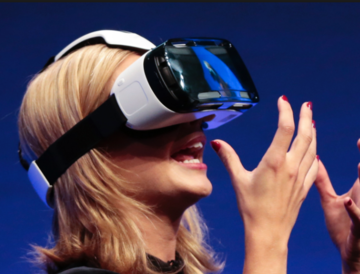
Cheap, miniaturized computing power has changed all that, and all you have to do is follow the money to see what’s most certainly about to come around the corner. In 2014, Facebook bought the maker of a virtual reality head-mounted display headset, Oculus Rift, for $2 billion. Facebook isn’t alone; venture capitalists are pouring billions into the development of virtual reality, which one person has described as the ability to put on goggles and “go nowhere and be transported anywhere.”
Prepare to Be Transported
Prepare for you and your members to be transported. Mobile devices have indeed taken the credit union anywhere the member wants to go, but it remains a two-dimensional experience and can feel impersonal, especially if you really want to interact with human being (no, “chat” doesn’t count). That’s why seemingly to everyone’s amazement, branches remain popular.
But what if you could have a face-to-face exchange with a member in an experience that is, in the vernacular of virtual reality, “totally immersive.” What if it felt just like the member was sitting across the desk from you? What if you could turn your head and the view would change? What if you could move around and all of it feels just like you and the member are in the same room, even if you’re 10 or 10,000 miles apart? Imagine being able to present financial information, graphics and even demos right there between you and your member—or employee.
I had originally written that I can envision call centers with the traditional rows of cubicles, but instead of reps on telephone headsets they would all be wearing light, comfortable virtual reality headsets, instead. But then I realized, “Why would the reps need to be in a call center at all?” Sitting at home somewhere will ultimately provide the exact same experience, without the oddly frightening coworker who has filled his or her cube with My Little Pony merchandise. (There is a whole other “reality” that will need to be deal with in the future with VR, the big one being whether many of those employees can make the transition or will be needed at all.)
It may be difficult to get your brain around just how transformative VR is going to be. Imagine feeling just like you’re sitting in the front row at an NBA game, but without the traffic and parking and $12 beers because you’re at home or in a pub? What about every doctor’s call being a house call? Members who are home shopping will be able to do “walk-through’s” without ever walking through (I imagine some people won’t ever need to look for a larger home, since they can have one virtually.) VR is going to change credit union conferences, employee training, on-site examinations, and so much more.
It sounds incredible, you say, but also a long way off. And yet if I had been at a credit union conference 20 years ago and said imagine having a pocket sized device in your hand that responds to your voice, can allow you to talk to someone via real-time video, and ask just about any question and get an answer, and most folks would have said, ‘Yes, we’ve seen that on Star Trek, but that’s the 23rd century.” If you want to see some demonstrations, just go to YouTube and search “virtual reality demonstrations.”
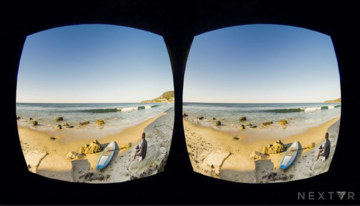
So get ready—the 23rd century has arrived. Beyond CUs VR is going to have all kinds of not just marketplace implications, but psycho-social implications. Virtual reality is sometimes called “augmented” reality, and many people are going to be very reluctant to leave their augmented worlds. And if you think the way everyone stares at their phones now is obnoxious, get ready to rage.
Credit unions are going to need to develop new forms of content and people skills to function in virtual reality world. And it’s going to happen if CUs are ready or not, so it would be wise to start now—it would seem to be the kind of thing the Filene folks should be leading the way on. Credit unions have an opportunity here to tap that collaboration/cooperation kumbaya stuff to create a movement-wide head start over banks. So get started.
VR is virtually here. That’s the reality.
Frank J. Diekmann is Cooperator in Chief at CUToday.info and can be reached at Frank@CUToday.info and followed by @FrankCUToday.