

By Frank J. Diekmann

Let me apologize right up front for any typos: I’m writing this from a dark, locked hotel conference room two floors below ground. Where is the hotel? For safety reasons, that I can’t tell you. I can say only that while at other credit union conferences you sit at tables, we are sitting beneath them, their black tablecloths draped all the way to the floor. You. Can’t. Be. Too. Cautious.
Here’s what I can share. I’m typing out this column from the National Association of Déjà vu Credit Unions’ Déjà vu CU Emergency Meeting, where I always have the odd feeling I’ve been here before.
Because the recent headlines in CUToday.info and elsewhere all feel like, well, we’ve been here before.
A surging economy with record stock market performance. An overheated housing market short on supply. Quickly mounting credit card debt being piled on by consumers. The same consumers who say they couldn’t cover a $400 emergency to save their own kids’ favorite pet. A new technology most people don’t really understand that hasn’t stopped them from buying it. Car loans that are upside down before vehicles ever roll off the lot. And reassurances from all the best and brightest “experts” that there is nothing to be alarmed about. Just move along, move along.
Just Sayin'
Hmmm, I dunno, it just kinda feels somehow like we’ve all walked–before falling–down this path before.
Carefully, I’m peeking out now from under the tablecloth toward the podium where our speaker, who refuses to give his name but who is wearing an orange life vest and blue bike helmet while holding a Hefty garbage bag with his life’s savings inside in cash, is advancing through PowerPoint slides that were part of a presentation originally created in Microsoft Office 2007.
Now’s he’s back with updated slides, showing:
- Fed data show that as of November 2017, revolving debt increased by $11.2 billion to a total of $1.023 trillion—higher than the pre-recession high of $1.021 trillion. But the experts say not too worry, as the ratio of credit card debt to gross domestic product is lower now than it was in 2008: 5% vs. 6.5%.
- Speaking of November 2017 spending, "Growth was led by revolving credit, which rose to an all-time high and surpassed the previous record set in 2008," observed NAFCU Chief Economist and Vice President of Research Curt Long in a recent Macro Data Flash report.

- U.S. consumers racked up an average of $1,054 of debt over the recent holiday period, about 5% more than 2016, according a new report. Twenty-five percent of those consumers said it will take more than six months to pay off their holiday spending—which just about brings them to the next holiday shopping season.
- The good news? Recent data show that nationally 5.1% of mortgages were in some stage of delinquency (30 days or more past due including those in foreclosure) in October 2017, a 0.1% percentage point year-over-year decline in the overall delinquency rate compared with October 2016. But the data also show some markets are starting to see increases in early stage delinquencies, with rates above 5% in the Florida markets Miami, Orlando, Tampa, Naples and Cape Coral, and in the Texas markets of Houston, Beaumont, Victoria and Corpus Christie. The experts say these markets are expected to improve, and since when have Florida or Texas really been bellwethers for anything?
- The Federal Reserve’s December 2017 rate hike will cost consumers roughly $1.46 billion in additional credit card finance charges during 2018, according to WalletHub’s latest Credit Card Landscape report. The Federal Open Market Committee (FOMC) is expected to raise rates three times in 2018. Thankfully, the experts at the Fed have shown they know what they’re doing.
- A LendEDU survey found about 18% of Bitcoin investors used a credit card to fund purchases of the cryptocurrency, and of those 22% said they could not pay off the balance. But no problem, as the experts have said Bitcoin can only go up. And while the buyers are waiting for the steady appreciation, they can go online and try to figure out what Bitcoin is exactly.
- The credit score for all borrowers declined to 722 in November 2017 from 728 in November 2016, according to a report from Ellie Mae. “With the average credit score dipping, lenders are extending credit to borrowers who may have had no previous access to the housing market,” said Joe Tyrell, EVP of corporate strategy at Ellie Mae, in a released statement.
- Four in five Americans are in the red, according to the analysis of personal finances by CNBC. “More than a quarter of those with debt don't have a plan to pay it off. Lack of planning can lead to plenty of financial struggles, from late payments and credit problems to extra months (even years) in debt,” CNBC said.
- Several data sources have indicated that more than one-third of all consumers are upside down in a car loan (with negative equity) before they ever take on more debt with a new car. Mark Hein of SWBC recently shared concerns with CUToday.info that as lenders go to longer and longer terms to keep payments down, it’s increasingly likely a “life event” will keep those borrowers from being able to make their payments.
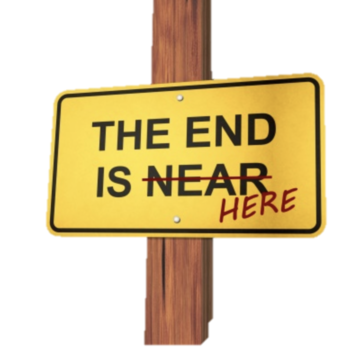
'We Learned Nothing...'
The conference presenter, whom I can’t help but notice keeps glancing nervously at his smartphone every time he gets a news alert, closes with a slide quoting Stephen Moore, an economist with the conservative Heritage Foundation, who recently said, “I'm very worried that we're making the same kinds of mistake in the housing market that we made in 2006 and 2007 and 2008. Fannie Mae and Freddie Mac, which I think were at the center of the crisis, providing hundred-percent guarantees on mortgages with 1%, 2%, 3% down payments was a catastrophe. And guess what, ladies and gentlemen, we learned nothing. We learned nothing from the financial crisis. Fannie and Freddie and other, you know, units like Federal Housing Administration are doing the same thing. And I worry that we could see another housing panic."
I’d like to keep sharing news out of the Déjà vu CU Conference, but why spread any worries or false alarms? The experts are all very reassuring that everything’s good, and it looks like some new jobs are being created as the casting director for The Big Short II is at this meeting. Besides, I’m late for a reception being hosted by Wescorp.
Frank J. Diekmann is CUToday.info and can be reached at Frank@CUToday.info or @FrankCUToday.