

By Frank J. Diekmann

“Harmony in Washington” sounds like the lead headline in a post on The Onion or the first sign of the apocalypse, but at least in the credit union space it’s been the theme of the early part of this week.
How harmonious has it been? One person with CUNA described NCUA by saying he had been “generally impressed” by the agency. Another person with NAFCU called a recent NCUA announcement a “positive.” And yet another CU person announced that were it not for the pandemic, he would personally visit NCUA’s headquarters in Alexandria, Va. with a bottle of champagne, a cheese tray and a card hand selected from Hallmark’s Show Your Love or a Federal Agency line.
OK, I made up the last one, but the first two are true and have to do with NCUA’s release late last week of its draft budget for 2021 and 2022. The piece here that has everyone so happy: the proposed budget for the next few years is smaller than the current 2020 budget.
If you’ve always said you would consider your life complete on the day the words “federal” and “budget decrease” appeared in the same sentence, go activate your succession plan--you’ve now led a fulfilling existence.
Of course, just as a coach in any sport can be declared an idiot or a genius depending on the way a ball bounces, NCUA has gotten a pretty big budget break thanks to something it has no control over (and which has had few silver linings to date): the pandemic.
The agency had long talked about—and the CU trade groups had for even longer pushed for—more remote, off-site exams to both cuts costs for NCUA and the strain on credit unions themselves. The kind of nice, slow rollout for which the federal government is known had been the plan—and then the plan got panned. By the pandemic, that is.
No More Grind
Just like credit unions themselves, NCUA and its army of examiners had to quickly adjust to a work-from-home world. A field force that has traditionally the kind of turnover associated with a summer camp due to the grinding on-the-road lifestyle of government-negotiated hotel rooms and per diems found itself forced out of the field. And that has led to savings. A lot of savings, in fact, for NCUA where travel-related expenses are one of its biggest budget line items. (And it will be interesting to see if the turnover among NCUA examiners slows down.)
Indeed, the proposed NCUA budget of $342 million for 2021 is almost 5% lower than the spending level approved earlier by the board and is 1.5% less than comparable spending for 2020.
And that’s the kind of trendline that, regardless of the cause, brings about headlines about harmony in Washington usually reserved for conference speaker one-liners.
New & Novel Ideas
As I continue to clean out the notebook on observations and developments during 2020 that deserve to be shared again, the New & Novel Ideas webinar that was hosted by Filene was among the best.
It was agreed every credit union is “grappling” with the low-rate environment and the pressure on margins, and the conversation turned to how CU leaders might best respond. Offering their insights were Joe Heck of Happy Money and Steve Gotz of Silicon Foundry.
Among just a few of the insights they shared:
Gotz: Facebook did a 2015 survey that found 55% of Millennials don’t have anyone to talk to about money. Because it’s such a loaded topic and people don’t talk about it, they make irrational decisions. If we can build a relationship that is trust based using technology, the opportunity to be relevant increases. It’s just asking about budget or spending in a non-judgement way.
Overwhelmingly, people are voting with their wallets. They are showing they are willing to pay for quality experiences. What the tech world has shown is the consumer is willing to pay fees. I do think it puts the onus on the financial institution to get creative and come up with new ways to be relevant and support their customers beyond what their existing relationship is.
Heck: I think it all boils down to differentiation; if you can provide some sort of differentiated experience the consumer is more than willing to pay for it. We see that across non-financial institutions. You see the emergence of fintechs like Chime that are delivering a digital-first brand with small differentiation, but they are able to charge for small pieces. The creativity must be matched with differentiation; it can’t just be differentiation of fees. That’s where most credit unions need to think about the value of what they are providing. Are they just out there chasing the legacy banks?
A benefit and pitfall of being in this industry for this long is the march for 10 straight years is the same, and I’m not sure we’ve done anything all that different…Leadership teams have to come out and ask how are we going to do this different. That change is going to be hard; it’s going to blow up a lot of legacy revenues. But in my experience across all of fintech there is always a resistance when you have a nice legacy business, and it’s even harder in an 80-year-old-plus industry.
'Precipice of Great Change'
I think the conversations we have been having the last 10 years are the same, and we are on the precipice of great change. Coming out of COVID I don’t think the world will be the same again. You have Chase investing $11 billion in technology annually and they have 50,000 technologists. If you’re going to go out and compete with them with the same digital tools, you are not going to win that. The movement must come to look at what are we really going to do different. To this point what we’ve done is chase someone with a lot more money than us.
Should you blow up your business model and change the next day? No. It really starts with building out the right strategy and building out against that strategy. Who do you want to benchmark yourself against? I so often hear of credit unions comparing themselves to another credit unions or banks, but frankly, that’s more of the same. Find someone to benchmark yourself against that’s not another bank or credit union and that your members measure you against.
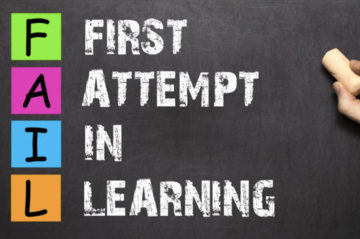
You should be thinking five to 10 years out and asking how can you run experiments with small teams that have the risk appetite to try and fail, try and fail. I often hear ‘fail fast’--I really like the mindset of learn fast. Failure is when you don’t learn anything.
Frank J. Diekmann is Cooperator in Chief of CUToday.info and can be reached at Frank@CUToday.info. Mr. Diekmann is also author of the new book, ‘501 Name Tags: Everything You Need to Know About Business Can be Learned at a Conference & Forgotten in the Trade Show.” For info: www.501nametags.com.