

By Frank J. Diekmann

Perhaps the biggest reason some refuse to place any faith in global warming, or even the more politically accepted “climate change,” is the very same reason even those who do believe aren’t as worried as maybe they should be: the “change” is so slow. Almost imperceptible. Gradual. That massive glacier built snowflake by snowflake is just there, as it has been for tens of thousands of years or longer. Until it’s not.
For whatever reason, our evolving environment and all its life-altering consequences came to mind as I pondered this year’s CUNA Governmental Affairs Conference (GAC). GAC is the climate change of credit unions. It’s monolithic and slow moving and just there, like a fifth season for CU folks. Change is occurring, but… And like climate change, its effects will be felt most by the smallest among us, while the decisions about what to do about it will be made by the largest. But in the end it will affect everyone.
As they might to visit a glacier, credit union reps journey from across the country on annual pilgrimages to see GAC and marvel at it and shoot pictures of it year after year after year, in some cases returning for so long they bring their children and then grandchildren along—revealing their age by pointing out how this CU glacier used to be up the hill on Connecticut Avenue when it was smaller and now, decades later, it’s grown to fill a convention center.
Just like that glacier, no one ever remembers a specific year or point in time GAC changed; they just looked up at some point and realized it had—usually too late.
But if their view–or yours–of how CUNA’s GAC has evolved and changed is all about the size of the audience filling the chairs, then like that glacier you’re not seeing where the real change is occurring—at the bottom, where the pressure is most intense and the friction can be found.
It’s Not About Audience Size
It isn’t the obvious size of the audience that deserves your attention; it’s the size of the assets represented by those CUs where the real consequences will be felt.

When GAC was still held at the Washington Hilton, hailing from a billion-dollar credit union was like riding a pink unicorn into the exhibit hall. Today, a billion-dollars in assets and $7 will get you a cup of coffee at the convention center Starbucks.
That matters because across town the banking industry has coalesced with new energy around an old message that credit unions have outgrown their “mission,” now even decrying “ice cream vendors” pay more in taxes than multi-billion-dollar credit unions. (The fact most banks acquired by CUs haven’t paid corporate income taxes is the real cherry on top of that sundae.)
Just last week the National Taxpayers Union called for congressional hearings for what the Independent Community Bankers of America described as “mounting evidence suggesting credit unions have outgrown their tax-exempt status.”
Credit unions may continue to come calling in Washington by painting themselves as Norman Rockwell’s local financial co-op, but CUs aren’t the only ones doing the painting and the bankers are using a number of not-so-small brush strokes to broad brush all credit unions. One of those brush strokes, for example: bank acquisitions.
‘There Might be a Problem’
It wasn’t all that long ago the idea of dedicating a GAC breakout session to CUs buying banks would have been laughed at as if part of a Capitol Steps song-and-dance routine. No more. When the $10.4-billion Suncoast CU bought the $746-million Apollo Bank in 2019, ironically, bankers made every effort to ensure Congress “opened their eyes” to what is taking place.
“I think there might be a problem,” said Rep Bill Huizenga.
“Some of the largest credit unions may need to comply with CRA,” added Rep. Steve Stivers.
Perhaps the congressmen were just throwing meat to their banker constituencies and their PACs. And perhaps not.
Just as a glacier “calves” by losing small pieces of itself that by themselves are inconsequential but over time add up, the banking industry has sought to calve credit unions by claiming it is only targeting the “largest” credit unions. The ICBA, for instance, said last week “it’s poor tax policy to continue to allow 5% of credit unions to reap an estimated 75% of the industry’s tax-exemption benefits.”
That 5%, by the way, is primarily the CUs in attendance at GAC, where the midsize and small CUs are frequently spoken of but seldom seen.
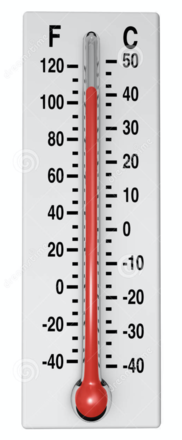
Room is Getting Warm
As I wrote here earlier, another couple of changes have been taking place each year, a half-degree here, a whole degree there, with few noticing the room is getting awfully warm. Until now.
The first is this: that audience I mentioned above? It shares something else in common with a glacier: it's old and white. And while I don't know the gender identity of your average glacier, we can safely say the GAC audience is primarily male. This continues to be true even though the composition of CU membership has changed faster than the temperature.
And then there's another big snowmelt. For the first time in the survey’s history, in 2019 the University of Michigan’s American Customer Satisfaction Index found credit unions finishing behind banks in a rating of consumer service. Behind banks!
That glacier didn’t melt in a day. It did so in drips. “Members” who are members thanks only to an indirect loan. Drip. A name change. Drip. A merger. Drip. Each drop eroding perceptions around the bond to a credit union, and CU leadership so intently looking out the front door for a disruptive flood they never paid attention to the drips at the back.
Talk about where advocacy should really be taking place. That singular piece of news should be the subject of every keynote address during GAC, with breakout sessions dedicated to getting into the service-issue weeds. Regretfully, I fear the Customer Satisfaction Index findings will never be mentioned during the meeting; instead the six-figure, big name keynote speakers will babble on from high atop the glacier with no idea how the climate is changing for credit unions.
This week there will be many in the audience who either are oblivious to what’s slowly taking place or who remain outright CU climate change deniers themselves. Those same people will accuse you of being an alarmist, and tell themselves that isn’t water rising at the feet of credit unions, it’s just a few raindrops.
Frank J. Diekmann is Cooperator in Chief at CUToday.info and can be reached at Frank@CUToday.infoor @FrankCUToday.