

By J. Mark McWatters
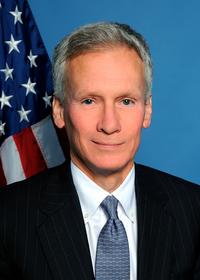
As the president has made his intent to nominate my successor on the NCUA Board, I will soon wrap up six-years as a board member. I congratulate Kyle S. Hauptman on his nomination and wish him the very best during the confirmation process.
It has been my distinct honor and privilege to serve as the chair and as a board member of the NCUA. I wish to thank each of you who have assisted me on a vast array of issues over my tenure. The list is very long and grows each day. To the extent I have succeeded, it’s because of you. Otherwise, it’s on me.
I wish to express special thanks to my chief of staff, Sarah Vega, and my executive administrative assistant, Katie Supples. Without them and the NCUA staff, particularly former Executive Director Mark Treichel and former Deputy Executive Director John Kutchey, nothing would have happened. When people inquire as to how Sarah, Katie, and I managed the NCUA during my chairmanship, the answer is simple: We didn’t. Policy and regulatory initiatives and direction came from my office that we asked Mark and John to implement. We trusted them implicitly as did the senior staff.
The tone comes from the top and with the right touch as well as the ability to share any credit and take responsibility for your actions, positive results follow. It’s not that difficult – teamwork, trust, respect, and a strong sense of inherent fairness is pretty much all it takes. My advice to NCUA board members and staff is to replace references to “I” with “we.” It’s not all about you and everyone knows that.
Reasonable Minds May Differ…
I also wish to offer many thanks to former Chair Rick Metsger and his chief of staff, Mike Radway, who proved, along with members of my office and the NCUA staff, that it is indeed possible to manage a federal agency for over three years in a collegial, collaborative, and bipartisan manner where it is understood that reasonable minds may differ and that the best ideas must always prevail, even if they are not your ideas. Imagine that. I endeavored to ascertain that the people who developed the best ideas received recognition for their work and contribution, because it was always about the mission of the agency and not for my personal credit.
Credit unions have faced many challenges over my tenure, most recently the demands of serving their members and providing a safe work environment for their staff during the unprecedented time of the Covid-19 pandemic. Over the past three months I have spoken with leaders of the credit union community about their response to and struggles with the pandemic. They all expressed their firm commitment to the safe and sound operation of their institution, serving the financial needs of their members, and protecting their staff. We discussed the demands of maintaining sufficient levels of liquidity and capital while remaining ever mindful of further adverse circumstances that may develop unexpectedly in the near future.
This is easier said than done and I very much appreciate and respect their forthrightness, dedication, and tenacity. To a person, these leaders thoughtfully embody the “People Helping People” mantra of the credit union movement. As the economic uncertainty continues, it is important to acknowledge that we are all in this together and, in many respects, it’s a day-at-a-time process.
A Surprise
During these conversations I was surprised to learn that some credit union leaders were not aware that the NCUA, hopefully, is nearing the point where it will begin remitting distributions to former members of the failed corporate credit unions – U.S. Central, WesCorp, Members United, Southwest, and Constitution. Although this is not proprietary information and is disclosed on the agency’s website, it does not jump off the page and, as such, merits further discussion.
Page 4 of “Corporate Asset Management Estates Recoveries and Claims, as of 12/31/2019” found on the NCUA website here, outlines the potential future distributions from the Asset Management Estates of the five failed Corporates. Specifically:
- Item B7 notes the following Projected Repayments of Membership Capital: U.S. Central, $1.666 billion; Members United, $493 million; Southwest, $404 million, and Constitution, $36 million;
- Item B9 notes the following Projected Repayments of Paid in Capital: Members United, $79 million; and
- In addition, the following Potential Liquidating Dividends are projected: Members United, $16 million; and Southwest, $299 million.
These amounts were projected as of Dec. 31, 2019 and, of course, may change before any distributions are actually remitted. In any event, these projected distributions will most likely exceed the distributions made from the merger of the Temporary Corporate Credit Union Stabilization Fund (TCCUSF) into the National Credit Union Share Insurance Fund (NCUSIF).
Of Critical Importance
It is critically important to note that the possibility of these future distributions arose from the prescient actions of past NCUA board members and agency staff. During the financial crisis of 2008/2009, NCUA Chair Mike Fryzel worked to design and develop the policies and infrastructure of the NCUA Guaranteed Notes (NGN) program and the mortgage-backed securities (MBS) lawsuits that laid the cornerstone for these potential distributions. Without the NGN program and the MBS lawsuits it is unlikely that any of the recent past or projected distributions would occur. NCUA Chair Debbie Matz then worked to further design, develop, and implement these policies, programs, and lawsuits. During my chairmanship, NCUA Chair Rick Metsger and I merged the TCCUSF into the NCUSIF thereby permitting, without premium assessment to any credit union:
- The payment of nearly $900 million in distributions to credit unions
- The funding of over $700 million in reserves for credit union losses
- The dramatic improvement in the safety and soundness of the NCUSIF
Most importantly, AMAC and other NCUA staff members worked tirelessly for over a decade to implement these NCUA board policies and prudently manage the assets held in the Corporate Asset Management Estates.
I wish to express my sincere thanks to my former board colleagues and the NCUA staff for their vision and wisdom in staying the course when others were calling for the agency to “fire-sell” the corporate assets and refrain from wasting time and resources on “frivolous” lawsuits. These so-called pundits were way off the mark. I am pleased that my tenure on the NCUA Board has lasted long enough to witness the fruits of the labor of those who have come before me.
The Hope Moving Forward
It is my hope that the agency will begin making distributions to the former members of the failed Corporates as soon as is prudently and legally possible and will continue the distributions until the funds are exhausted. Today, during the pandemic, the former corporate members would no doubt welcome any such distributions.
In closing, as the NCUA begins contemplating a return to the workplace, we should remain mindful of the safety of our staff and that it’s far better to maintain the status quo than risk our most valuable asset, our people.
We must follow the science even if we may not welcome the immediate consequences.
J. Mark McWatters is a member of the NCUA board, including having served as chairman.